
Tank vs. Tankless Water Heaters: Which is Better?
Tank vs. Tankless Water Heater: Which Should You Choose?
A tank water heater stores hot water continuously and delivers it at high flow. A tankless unit heats water only when you open a tap, then shuts off. For Twin Cities homeowners, the right choice depends on household size, budget, water hardness, and how a Minnesota winter changes the real-world performance of each system.
Have you ever stepped into a hot shower only to run out of hot water before you could rinse out the shampoo? When it comes to providing your Twin Cities home with hot water, you have two main options: a traditional tank water heater or a modern tankless water heater. At Northern Benjamin Franklin Plumbing, a locally owned and operated Twin Cities plumbing company, we’re here to help you understand the differences so you can make an informed decision.
The Traditional Tank Water Heater: Tried and True
Most people grew up with a traditional tank water heater that stood in the basement or in a utility closet. Tank water heaters are constantly heating and storing hot water so it’s ready for immediate use. Cold water from the home’s main water line enters the water heater near the bottom, where a gas burner or electrical heating element turns up the temperature. As the water heats, it rises to the top of the insulated storage tank. When you turn on the tap for your hot shower, the hot water is drawn from a pipe located near the top of the storage tank and delivered to its destination.
A tank water heater works like a large insulated thermos. Even with good insulation, the water cools over time. That’s why the unit is equipped with an adjustable thermostat that monitors the water temperature and turns on the heating element to reheat as needed. As you draw hot water from the top, the system pulls in new cold water and repeats the cycle.
What’s good about tank water heaters? Tank water heaters are tried and true, and many of our customers like to stick with what they know. They carry a lower upfront cost compared to tankless models, and installation is relatively straightforward. Tank water heaters are also built for high demand, depending on the size of the tank. If you have several people who need hot showers in the morning, the capacity of a tank may be the right fit.
What are the drawbacks? Because water is constantly heated and stored, tank water heaters experience standby heat loss - consuming energy even when no one is using hot water. Tank heaters also have a limited capacity. Once the hot water supply runs out, you wait for the tank to recover. And tank heaters take up floor space, whether they’re in the basement, utility closet, or garage.
The Tankless Water Heater: On-Demand Efficiency
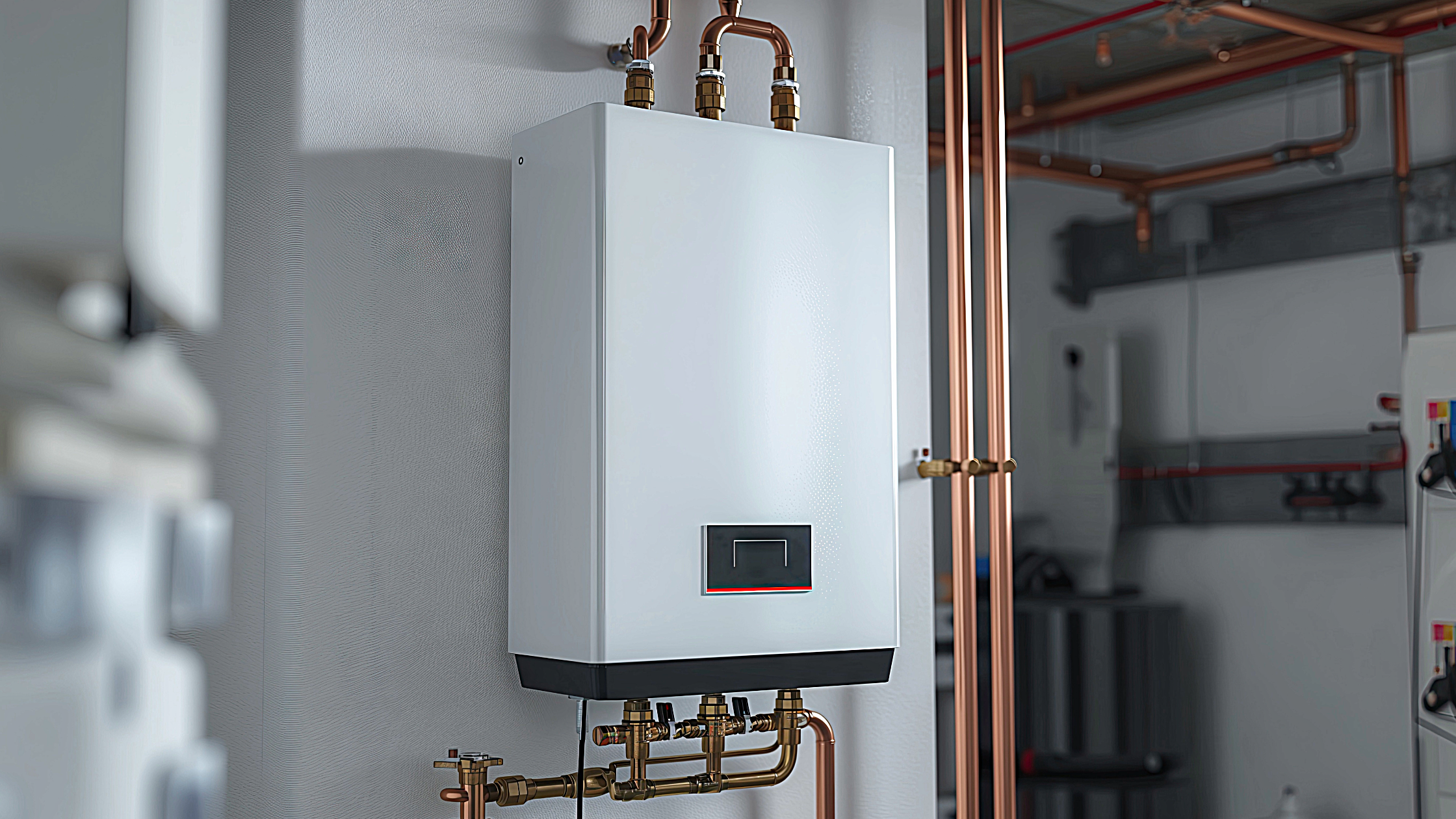
Tankless water heaters operate differently from their tank-based counterparts. Instead of storing and continuously heating a large volume of water, they activate only when there is demand for hot water. When you turn on the hot water tap, a flow sensor inside the unit triggers the heating elements. Gas or electric heating elements rapidly heat the water and send it to the faucet or appliance. When you close the tap, the flow sensor tells the heating elements to shut down. No storage tank needed.
Tankless water heater benefits: The most popular benefit is endless hot water - no more cold showers during our chilly Minnesota winters. Tankless units also use less energy, because they only heat water when you need it. According to the U.S. Department of Energy, tankless water heaters can be 24 to 34% more energy-efficient than storage tank units for households using 41 gallons or less of hot water per day. These units also last longer than most tank models, typically 20 years or more. And they mount to a wall, freeing up floor space.
Tankless water heater drawbacks: Upfront cost is higher, and installation can be more involved - both add to the total. Flow rate is limited. If hot water is running in several locations at once, you may notice a drop in temperature or pressure. And in Minnesota specifically, there are two cold-climate factors worth knowing before you buy: sizing for cold groundwater, and condensate freeze risk. Both are covered below.
A note on payback period. Consumer Reports examined the break-even point for switching from a gas tank to a gas tankless water heater, using estimated installation costs and local natural gas rates as inputs. (Source) That figure gets cited widely. The math is sound; the gas rate is from 2019. At current energy prices, with available rebates, the timeline narrows. And if you are replacing a failing tank, the real comparison is tankless versus another tank - not tankless versus doing nothing. At that decision point, lifespan and operating cost matter more than a payback table built on seven-year-old gas prices.
Cold-Climate Sizing: What Changes in a Minnesota Winter
This is the detail most national comparison articles skip entirely - and it matters for anyone replacing a water heater in the Twin Cities.
Manufacturers publish flow-rate specifications assuming a 77°F inlet water temperature. Minnesota groundwater is significantly colder in January and February, according to a Minnesota-based contractor covering cold-climate tankless installations. (Source) That gap - well below standard test conditions - can meaningfully cut a rated unit’s real-world output. A unit sized for a national average climate may not keep pace with a Minnesota household’s morning demand.
The regional standard: oversize by 20 to 30% beyond what a standard capacity calculator suggests for a warmer climate. A licensed plumber familiar with Minnesota conditions can run the heat-rise math for your household size before recommending a specific model.
One additional point: whole-home electric tankless is not practical in most Twin Cities homes. The temperature rise required from cold MN groundwater demands amperage that most residential panels cannot supply. For on-demand hot water in this climate, gas condensing tankless is the correct choice.
Condensate and freeze risk. Condensing gas tankless water heaters - the high-efficiency models that vent through PVC pipe - produce acidic condensate as a byproduct. In an unheated Minnesota utility room or garage, the condensate drain line can freeze during a hard winter and shut the unit down. According to Navien, a leading tankless manufacturer, these units should be installed in a heated space, or the condensate drain line must be heat-traced. (Source) Where the unit goes in the house is a real decision, not an afterthought.
Hard Water and Your Water Heater: Minneapolis vs. St. Paul
Water hardness is a maintenance factor for heat exchangers, and it varies sharply across the Twin Cities.
Minneapolis treated water runs approximately 15 grains per gallon (GPG), which is considered hard. St. Paul Regional Water Services lime-softens its supply from over 20 GPG down to 5 GPG before it reaches customers, according to Hill Water, a Twin Cities water treatment company. (Source) That is a meaningful difference.
For Minneapolis homeowners with a tankless water heater, annual descaling of the heat exchanger is required maintenance. Scale buildup restricts flow, degrades efficiency, and shortens the unit’s lifespan. Most manufacturers require documented annual maintenance to keep the warranty valid.
If you are on Minneapolis water and considering tankless, ask about a whole-home water softener at the same time. Pairing the two protects the investment.
If you are on St. Paul water, the city’s lime-softening process handles most of the scale risk for you. Your maintenance requirements are simpler.
For tank water heaters in either city, anode rod maintenance remains important in hard-water conditions - but the day-to-day management is less demanding than maintaining a tankless heat exchanger on Minneapolis-level water hardness.
Minnesota Rebates in 2026
This is information missing from every national page-one result. It changes the financial comparison.
CenterPoint Energy (natural gas customers): For 2026, CenterPoint offers a rebate of up to $750 on a qualifying gas tankless water heater replacement (UEF 0.87 or higher). A qualifying gas tank replacement (UEF 0.64 or higher) is eligible for up to $250. Equipment must be AHRI- or ENERGY STAR-listed. (Source: Metro Heating’s Minnesota Rebate Guide)
Xcel Energy (electric customers): Xcel offers a rebate on a qualifying ENERGY STAR heat pump water heater, with higher amounts available through Demand Management program enrollment, and an additional stackable bonus when paired with qualifying insulation or air sealing work. (Source: Metro Heating’s Minnesota Rebate Guide)
Heat pump water heaters. The Xcel rebate stack brings heat pump water heaters into the conversation as a third option. They pull heat from surrounding air rather than generating it directly. A.O. Smith reports they use 70% less electricity than a conventional electric tank unit. (Source) Bradford White notes they run 3 to 4 times more efficiently than a standard electric tank and typically qualify for utility rebates and federal tax credits. (Source) If you are on Xcel and have the space, they are worth a conversation.
These programs carry eligibility requirements and change annually. Call (763) 296-1844 and our team can help you determine what you qualify for before you buy.
Permits: What Minnesota Law Requires
Any water heater replacement in Minnesota requires a permit. Under Minnesota Plumbing Code (MN Rules Ch. 4714) and MN Stat. §326B, the work must be performed by a licensed plumber. A gas connection requires a separate gas permit. The Minnesota homeowner exemption does not cover gas connections.
Skipping the permit voids your homeowners insurance and can create problems at resale. This is not a minor technicality.
When you work with Northern Benjamin Franklin Plumbing, permit handling is part of the job. You don’t have to manage the paperwork yourself.
The Minnesota Department of Commerce also publishes a consumer water heating guide at mn.gov if you want to read the state’s own guidance.
Which Water Heater Option is Best for You?
Are you still undecided? Ask yourself these questions to determine which water heater option is best for you:
What’s your budget? If upfront cost is a concern, a traditional tank heater is the more accessible choice. A tankless unit costs more upfront but uses less energy and typically lasts longer. Available rebates can close part of that gap.
How much hot water does your family use regularly? If you’re tired of running out of hot water, a tankless water heater may be the superior choice. The on-demand supply is its biggest advantage.
What is your water hardness? If you’re on Minneapolis water at around 15 GPG, plan for annual descaling on a tankless unit, or budget for a softener at the same time. If you’re on St. Paul water, this is a smaller concern.
How much space do you have? Tank water heaters need their own dedicated space. Tankless models can be easily mounted on a wall.
If you want to explore water heater options, reach out to Northern Benjamin Franklin Plumbing at (763) 296-1844 to schedule an appointment. Northern Benjamin Franklin Plumbing is your hot water experts, offering complete plumbing services for Twin Cities homes and businesses.
Key Takeaways
- A tank water heater stores hot water continuously; a tankless unit heats water on demand and never runs out.
- In Minnesota, size a tankless unit for 38-42°F groundwater in winter - not the 77°F inlet temperature used in manufacturer specifications. Oversize by 20 to 30%.
- Condensing gas tankless units (PVC vent) produce a condensate drain that can freeze in an unheated utility room or garage. Installation location is a real decision point.
- Minneapolis water runs approximately 15 GPG. Annual descaling is required maintenance for a tankless heat exchanger. St. Paul water (5 to 7.6 GPG after city treatment) is significantly softer.
- CenterPoint offers up to $750 on a qualifying gas tankless replacement in 2026. Xcel offers up to $1,100 on a qualifying heat pump water heater. Figures via Metro Heating’s Minnesota Rebate Guide.
- Any water heater replacement in Minnesota requires a permit and a licensed plumber. Gas connections are not covered by the homeowner exemption.
- Call (763) 296-1844 for a real quote and help navigating rebate eligibility.
Need a technician now?