
Water Heater Pilot Light Won't Stay Lit? Here's Why
Key Takeaways
- A water heater pilot light that won’t stay lit is almost always a thermocouple or thermopile problem, not a gas valve problem.
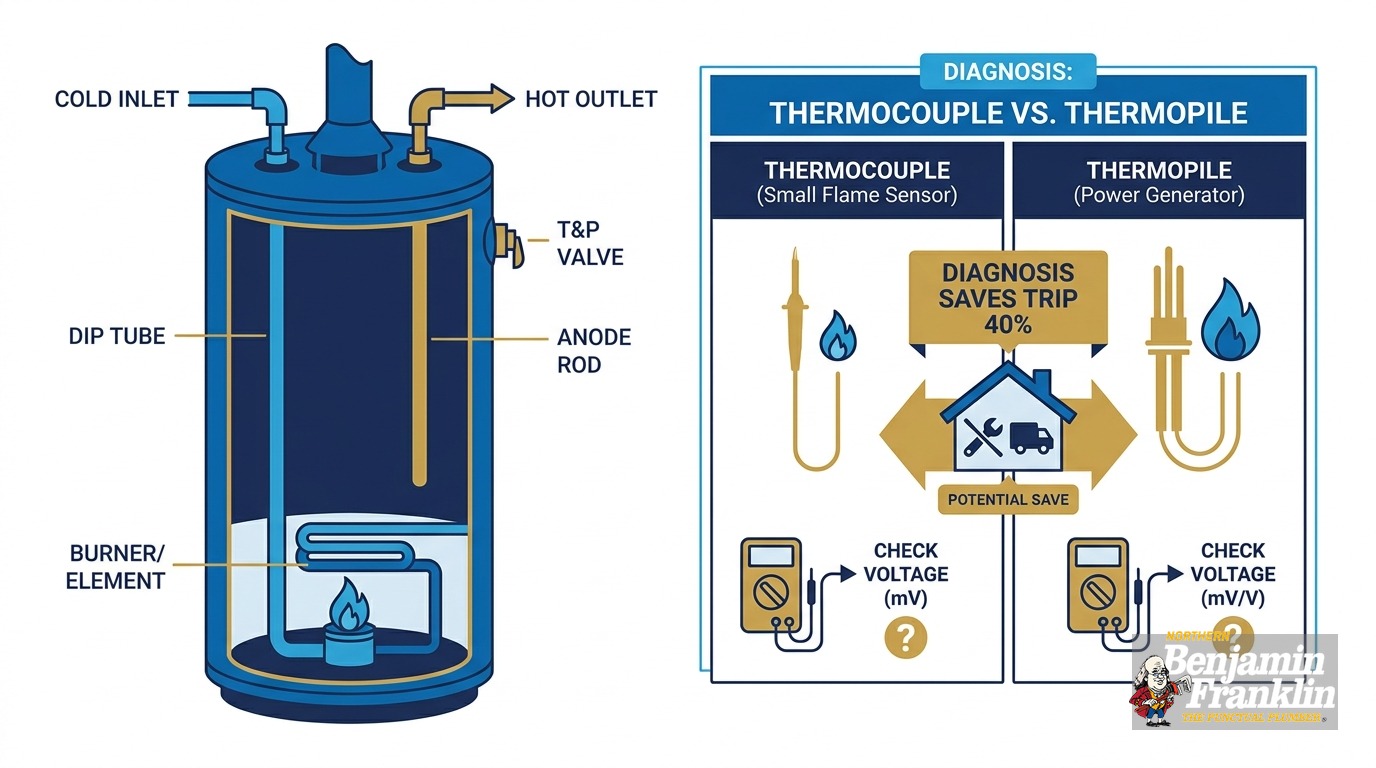
- Thermocouples (standing-pilot tanks with dial thermostats) and thermopiles (digital-display tanks) are different parts. They fail differently and are not interchangeable.
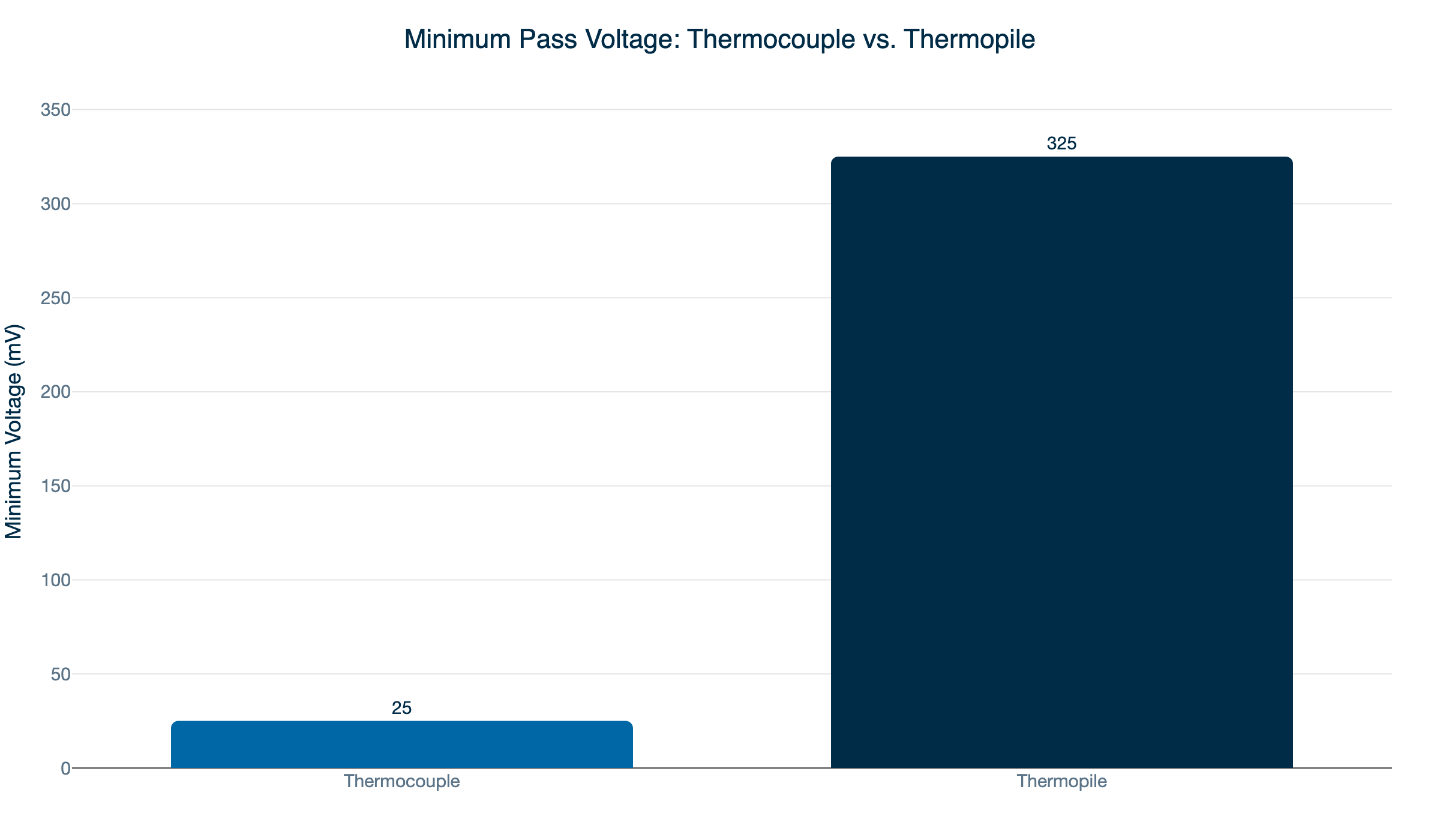
- You can test either one with a basic multimeter. A thermocouple below 25 millivolts has failed. A thermopile below 325 millivolts has failed.
- In tightly sealed Minnesota homes, negative pressure from exhaust fans or a running dryer can snuff a standing pilot. This cause is almost never mentioned in national guides.
- A thermocouple or thermopile swap is a maintenance repair and does not require a permit in Minnesota. Replacing the water heater unit does.
- If you smell gas when the pilot won’t light, leave the house and call your gas company. Do not troubleshoot.
- Northern Benjamin Franklin Plumbing is locally owned and operated in the Twin Cities. Call (763) 296-1844 or book online if you want a plumber on-site today.
Why Won’t My Water Heater Pilot Light Stay Lit?
The short answer: The pilot keeps going out because the gas valve is not receiving the signal to stay open. That signal comes from a heat-sensing device called a thermocouple or thermopile. When it is dirty, misaligned, or failed, the valve closes and the pilot dies.
The pilot light on a gas water heater does more than ignite the burner. It heats a small metal sensor mounted in the flame. That sensor generates a small electrical voltage. The gas valve reads that voltage and stays open. When the voltage drops below a minimum threshold, the valve closes and cuts off gas flow.
This is a safety system working as intended. A water heater pilot light won’t stay lit because something in the chain from flame to valve has broken - not because the valve itself is defective. In most cases, that broken link is something inexpensive and fixable before you make a phone call.
There are four causes, and they cost very different amounts to address. Working through them in order is how you avoid buying the wrong part or scheduling a service call you don’t need.
Thermocouple vs. Thermopile: What’s the Difference?
The short answer: A thermocouple is a single-junction sensor producing 25-40 millivolts. It holds open a simple mechanical gas valve. A thermopile is a series of junctions producing 300-750 millivolts. It powers the electronic control board on water heaters with digital displays. They look similar but are not interchangeable parts.
Most national guides skip this distinction entirely. If you search “water heater thermocouple replacement” and buy a standard $20 thermocouple for a tank that uses a thermopile, the new part will not solve the problem. The control board on a digital-display heater needs several hundred millivolts. A single thermocouple junction produces 25-40.
How to tell which type you have:
- Standing-pilot tank, no display, simple dial thermostat: you have a thermocouple.
- Digital display, electronic ignition, or programmable temperature settings: you have a thermopile.
- If you are not sure, pull the model number from the label on the side of the tank and search it. Most manufacturer sites list the sensor type for every model number.
Thermocouples are widely available at hardware stores for $15-25. Thermopiles run $25-50 and must match the control board in your specific heater. Honeywell/Resideo gas control specifications confirm the minimum operating threshold for a thermocouple valve at around 25 millivolts. A thermopile board typically will not open the valve below 325 millivolts.
Getting this identification right before you buy a part saves a second trip to the hardware store.
How Do I Test a Thermocouple or Thermopile?
The short answer: Set a digital multimeter to millivolts DC. Touch the probes to the thermocouple leads or the thermopile terminals while the pilot is burning. A thermocouple reading below 25 millivolts has failed. A thermopile reading below 325 millivolts has failed. No special tools are required.
Here is the full test procedure:
- Light the pilot following the instructions on the heater label. Hold the reset button down for at least 60 seconds to allow the sensor to heat up fully.
- While holding the button, clip your multimeter probes to the two leads on the thermocouple, or to the two terminals on the thermopile.
- Read the display. For a thermocouple, look for 25 millivolts or above. For a thermopile, look for 325 millivolts or above.
- Release the button. If the reading was above threshold and the pilot stays lit, the sensor is working. If the pilot dies when you release the button and the reading was below threshold, the sensor has failed.
One important note before you replace anything: If the reading is borderline - say, 22 millivolts on a thermocouple or 310 millivolts on a thermopile - clean the sensor tip before buying a new part. Carbon soot or mineral scale on the thermocouple tip reduces voltage output even when the sensor itself is structurally intact. A soft cloth or fine emery cloth, plus a gentle repositioning of the tip so it sits squarely in the center of the pilot flame, often brings a borderline sensor back into spec. This fix costs nothing.
The Four Causes, in Order
Work through this list before buying anything or scheduling a service call.
1. Clogged pilot orifice
The pilot orifice is a small hole, roughly the width of a pin. It clogs easily. In suburban Twin Cities communities served by groundwater - Edina, Plymouth, Burnsville, Eagan, and others drawing from deep aquifers - water hardness commonly runs 18 to 28 or more grains per gallon. That mineral scale builds up inside the orifice and on thermocouple tips over time. Dust and spider webs also accumulate in the pilot assembly, particularly in tanks in unconditioned utility rooms.
Fix: a short burst of compressed air into the orifice, or a fine wire to clear the opening. Cost: $0. A small or yellow pilot flame (it should be blue with a small yellow tip at most) suggests a clogged orifice before anything else.
2. Dirty, kinked, or misaligned thermocouple or thermopile
The thermocouple tip needs to sit in the hottest part of the pilot flame. If a previous service visit or a tank bump shifted the bracket, the tip runs cooler than it should and produces less voltage. This is more common than most homeowners expect.
Fix: loosen the bracket nut, reposition the tip, and run the multimeter test again. Clean soot from the tip with fine emery cloth. Cost: $0. This solves the problem a significant share of the time without any parts.
3. Failed thermocouple or thermopile
If repositioning and cleaning do not bring the voltage reading up, the sensor has failed. This is the most common cause of a pilot that re-lights but dies the moment you release the reset button. The sensor heated up, held the valve open while you held the button, and then failed to sustain enough voltage on its own.
Fix: replace the thermocouple or thermopile. A thermocouple is $15-25 at most hardware stores. A thermopile runs $25-50 and must be matched to your control board model. This is a maintenance repair. It does not require a permit in Minnesota (more on that below). Most homeowners with basic DIY comfort can complete this in 30-45 minutes with a wrench and a multimeter.
4. Failed gas valve or combustion air problem
If you have worked through all three steps above and the pilot still will not stay lit, the gas valve itself may have failed, or there is a combustion air problem. Both of these require a plumber. A failed gas valve is integrated with the thermostat on most storage heaters, which means replacing it can approach the cost of a new unit. At that point, a repair-vs-replace conversation makes more sense than a parts order.
A Minnesota Factor Most Guides Miss
Here is a cause you will not find in any of the national content farms.
Minnesota’s energy code, based on the 2021 International Energy Conservation Code, requires new residential construction to achieve tight air sealing - 3 ACH50 or better. Older Twin Cities homes that have been insulated and air-sealed over the past 15 years trend in the same direction. A tighter house is a more energy-efficient house. It is also a house where a standing-pilot water heater in a sealed mechanical room can have its pilot snuffed by negative pressure.
Here is the mechanism. Your range hood, bath exhaust fans, dryer, and fireplace all push air out of the house. If makeup air cannot enter fast enough to replace it, the house goes slightly negative relative to outdoors. That pressure difference draws air through every available path - including down the flue of your water heater. A sustained backdraft extinguishes the pilot.
The fix is not a new thermocouple. Minnesota Rules Chapter 4715, the Minnesota Plumbing Code, references the Fuel Gas Code for combustion air sizing: a mechanical room with less than 50 cubic feet per 1,000 BTU/hr of appliance input needs supplemental air supply. A combustion air duct to the outside, or a louvered door on the mechanical room, addresses the root cause.
If your pilot keeps going out during or right after you run a range hood, bath fan, or clothes dryer, negative pressure is a strong suspect. That is a diagnosis a local plumber can confirm quickly in person - and one a generic online guide will never surface.
Is a Pilot That Smells Like Gas a Different Problem?
The short answer: Yes. A gas smell when the pilot won’t light is not a thermocouple problem. Leave the house immediately, leave a door open on your way out, and call CenterPoint Energy (or your gas supplier) from outside. Do not flip switches, light a match, or troubleshoot.
A pilot that won’t stay lit due to a thermocouple failure produces no gas smell. The gas valve closes the moment it loses the voltage signal. That is the safety system functioning exactly as designed.
A gas smell with a non-lighting pilot means gas is flowing somewhere without igniting. That points to a leaking valve or supply line issue. Treat it as a gas emergency, not a water heater repair.
The CPSC recommends carbon monoxide detectors on every level of any home with a gas appliance. A failing gas valve that allows gas to flow without a flame, or a flue obstruction that prevents combustion gases from venting, can produce dangerous carbon monoxide levels. If you do not have a CO detector in the space where your water heater lives, that is the first fix - before any pilot light troubleshooting.
When Does Replacing a Water Heater Make More Sense Than Fixing the Pilot?
The short answer: If the heater is 10 or more years old and the gas valve or thermocouple has failed, run the repair-vs-replace math. The labor to replace a gas valve on an aging heater can approach the cost of a new unit. A new high-efficiency unit will also cost less to operate each month.
The ENERGY STAR program lists heat pump water heaters as using roughly 70% less energy than a standard electric model. High-efficiency gas storage units with a Uniform Energy Factor of 0.67 or higher are also listed. Both Xcel Energy and CenterPoint Energy offer rebate programs for Minnesota homeowners on qualifying units. Exact rebate amounts change, so check the current rebate pages before you purchase.
For a standard tank-style water heater, the general guideline is: if the repair cost exceeds half of a new unit’s installed cost and the heater is past the 10-year mark, replacement usually wins over the life of the appliance. Our team can walk through that math on-site. Our water heater repair service page covers what to expect from an in-home diagnosis and what the repair-vs-replace conversation typically looks like.
If you want a full comparison of water heater types before you decide, our complete guide to water heater types for Twin Cities homeowners covers tank, tankless, and heat pump options side by side.
What Requires a Permit in Minnesota?
The short answer: A thermocouple or thermopile swap is a maintenance repair and does not require a permit. Replacing the water heater unit - even with an identical model - is an alteration under Minnesota Statute 326B.43 and requires a permit plus a licensed plumber.
Minnesota Statute 326B.43 gives the Plumbing Board authority over “all new plumbing installations, including additions, extensions, alterations, and replacements.” A full unit swap falls inside that definition. A homeowner who replaces a water heater without a permit can face complications at resale, during insurance claims, or when an inspector finds the unpermitted work.
A thermocouple or thermopile is a component - roughly equivalent to replacing a faucet washer. You are not installing or replacing a plumbing appliance. No permit is needed for that repair in Minnesota.
This is the kind of local regulatory detail a nationally syndicated guide will not flag. Knowing it before you start saves both money and headaches.
One note for homeowners in hard-water suburbs: if you are replacing the thermocouple more often than you expect, mineral scale is likely the cause. Hard water shortens the life of every component inside the tank, not just the anode rod. Our post on anode rods, hard water, and water heater life explains the full picture and what you can do to slow the damage.
Get a Fast Answer from a Local Plumber
If you have worked through the four-cause list and the pilot still will not stay lit - or if you would rather not troubleshoot a gas appliance yourself - we are a local call away.
Northern Benjamin Franklin Plumbing is locally owned and operated in the Twin Cities. Our On-Time Guarantee(R) means we show up in the window you choose. If we run late, “If there is any delay, it’s you we pay!” - that is $5 for every minute we are late, up to $300, in writing.
Call (763) 296-1844 or book online through our water heaters page to schedule a diagnostic visit. We serve Minneapolis, St. Paul, Blaine, Bloomington, Brooklyn Park, Coon Rapids, Maple Grove, and the full Twin Cities metro.
If the diagnosis points toward a full replacement and the cost is a factor, ask us about financing options. We offer payment plans for larger water heater jobs so the expense does not have to land all at once.
Frequently Asked Questions
What causes a water heater pilot light to not stay lit? +
What is the difference between a thermocouple and a thermopile? +
Can I replace a thermocouple myself in Minnesota? +
When should I call a plumber instead of replacing the thermocouple? +
Need a technician now?