
Kitchen Sink Smells Like Sewage? Find the Cause Fast
Key Takeaways
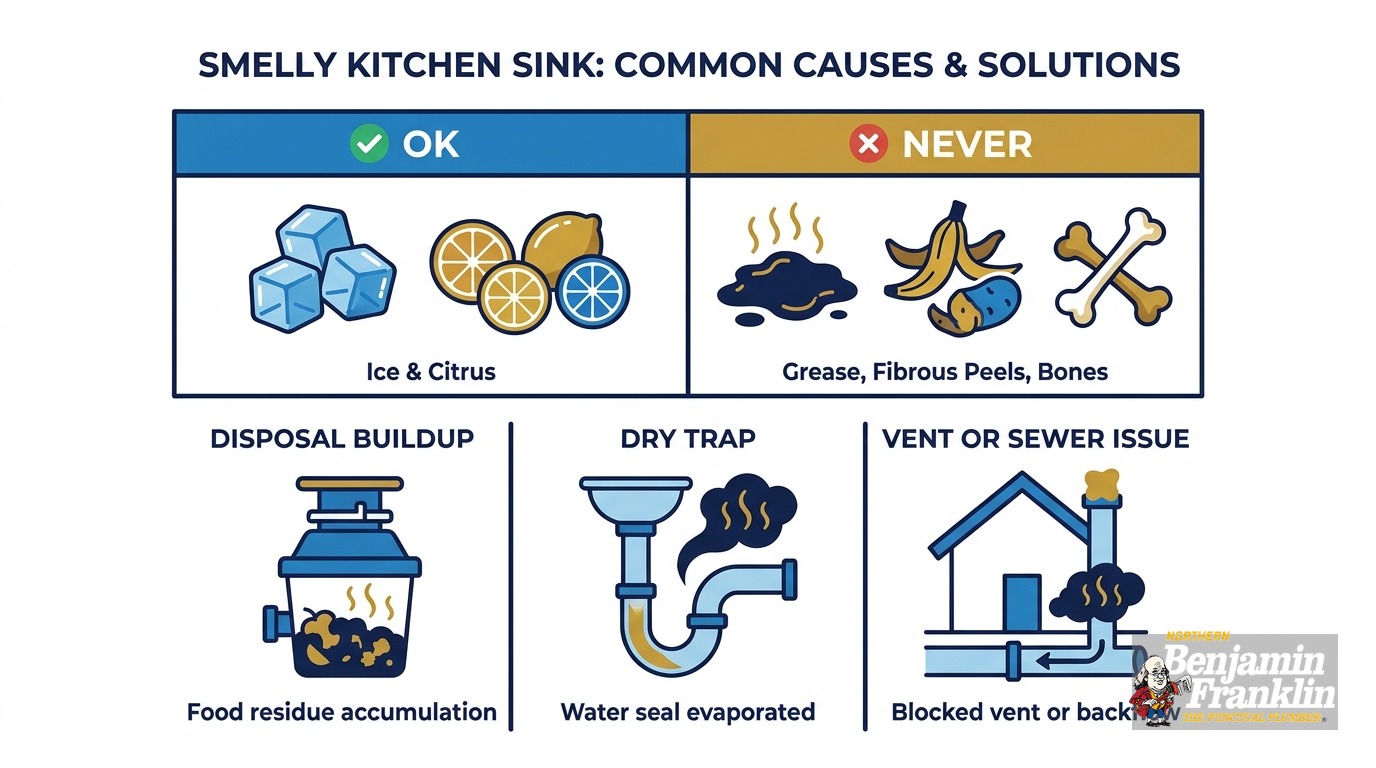
- Three causes explain most sewage smells at a kitchen sink: disposal or drain buildup, a dry trap, and a vent or sewer problem.
- A smell at one sink that appears only when the disposal runs points to buildup.
- A smell at a rarely used sink that stops after you run water points to a dry trap.
- Gurgling, slow draining, or smells at several fixtures point to a vent or sewer problem.
- In very cold weather, frost can form at the end of the roof vent and block it.
- Never put heat tape on an attic vent pipe. It can create a fire hazard.
- Sewer gas can contain hydrogen sulfide, so a lasting smell deserves a fix and not just air freshener.
- Call (763) 296-1844 or book online when the checks below point past a simple cleaning.
Why Does a Kitchen Sink Smell Like Sewage?
A kitchen sink smells like sewage for one of three reasons. Food may be rotting in the disposal or drain. A P-trap may have dried out. Or a vent or sewer line problem may be letting gas into the home. Where and when the smell shows up tells you which one.
You walk into the kitchen and catch it. A sour, rotten odor rises from the sink. Most homeowners fear the worst right away: a broken sewer line and a huge bill.
Usually the cause is smaller, but not always. All three causes can smell almost alike, and a smell alone doesn’t tell you where it started.
A few simple checks will sort it out. Each takes a few minutes and needs no tools. You’ll know whether to scrub, pour, or call.
We are Northern Benjamin Franklin Plumbing, a locally owned and operated Twin Cities plumbing company. We see this call often, especially after the first hard freeze. Minnesota winters add one cause that most online guides skip: a frost-blocked roof vent.
How Can You Tell Disposal Buildup, a Dry Trap, and a Vent Problem Apart?
Match the pattern to the cause. A smell at one sink only when the disposal runs means buildup. A smell at an unused sink that stops after running water means a dry trap. Gurgling, slow draining, or smells at several fixtures mean a vent or sewer problem.
Work through the steps in order. Stop when one matches what you see.
Step 1: Check where the smell lives.
- Smell at the kitchen sink only, and nowhere else in the home? Start with buildup or a dry trap.
- Smell at the kitchen sink and at a bathroom sink, shower, or floor drain? Think vent or sewer.
Step 2: Check when the smell appears.
- Smell only when you run the disposal? Think buildup.
- Smell all the time, even with the sink idle? Think buildup in the drain, a dry trap, or a vent problem.
- Smell that comes and goes with cold snaps or wind? Think vent.
Step 3: Check what the drains are doing.
- Water drains at a normal speed and makes no noise? Buildup or a dry trap is more likely.
- Water drains slowly or you hear gurgling? A vent or sewer problem is more likely.
Step 4: Run the water test.
- Run water in the smelly sink for a full minute. If the smell fades and stays gone, the trap was probably dry.
- If the smell returns within hours, buildup or a vent issue is the better guess.
No single check is perfect. Two or three matching clues together give you a solid answer.
Could Food Buildup in the Disposal or Drain Be the Cause?
Yes, and it is the most common cause. Food scraps, grease, and soap film collect on disposal walls, under the splash guard, and in the drain pipe. As they rot, they smell like sewage. The odor often gets stronger when you run the disposal.
Buildup is a cleaning problem, not a plumbing failure. The disposal grinds food but doesn’t scrub itself. Over weeks, a slimy layer coats the parts you can’t see.
Signs of buildup:
- The smell is strongest right at the drain opening.
- The odor jumps when you run the disposal or the water.
- Only the kitchen sink smells. The rest of the home is fine.
- Water drains at a normal speed, or only a little slower than usual.
- You grind fibrous scraps, coffee grounds, or greasy food often.
What to do first:
- Turn off the disposal and unplug it, or switch off its breaker. Never put your hand in a disposal that has power.
- Use a flashlight to look under the rubber splash guard. This spot is often the dirtiest.
- Scrub the splash guard and the visible drain opening with a brush, dish soap, and hot water.
- Restore power. Run cold water and grind a handful of ice cubes to knock film off the walls.
- Flush the drain with hot tap water for a minute or two.
Skip the harsh chemical drain cleaners. They can damage pipes and fittings, and they are hard on skin and eyes if they splash back. Never mix cleaning products.
Grease cools, hardens, and coats the pipe from the inside. Over time it narrows the drain and traps food. Our guide on preventing grease clogs in kitchen drains covers habits that keep the line clear.
If a deep cleaning clears the smell for good, you found the cause. If the odor returns in a day or two, the buildup may sit farther down the pipe. Our team can clear the line and inspect the disposal. See our garbage disposal services for repair and replacement options.
Is a Dry P-Trap Letting Sewer Gas Into Your Kitchen?
It can be. The P-trap is the curved pipe under the sink. It holds a small plug of water that blocks sewer gas. If that water evaporates or drains away, gas can rise through the pipe. A dry trap often smells strongest at sinks you rarely use.
The Illinois Department of Public Health notes that sewer drains with dry traps can allow hydrogen sulfide gas to enter the home. That water seal is what keeps the gas out.
Your main kitchen sink gets used every day, so its trap is rarely dry. A dry trap in a kitchen usually looks like one of these:
- A wet bar, kitchenette, or second sink that sits idle most weeks.
- A kitchen in a basement, in-law suite, or lake cabin.
- A home that sat empty during a long trip.
- A trap that lost its seal because of a slow leak or a siphon.
North Dakota State University Extension explains that one way sewer gas gets in is through dried-out water traps in basement floor drains. The same source says rarely used sink, shower, and tub drains can also lose their seal.
The fix is simple. Run water down the drain for a minute. The trap refills and the seal returns. NDSU Extension advises that you pour a quart of water into the drains every three to four weeks. Put a reminder on your calendar for rarely used drains.
Heated Minnesota homes get very dry in winter after months of furnace use. Water in an idle trap can disappear faster than you expect. Check those seldom-used drains each fall.
Floor drains work the same way, and a dry basement floor drain is a very common smell source. We cover it in our post on dry floor drain traps and basement sewer smells.
If the smell fades after you refill the trap and stays gone, you solved it. If the trap keeps going dry even at a busy sink, something else is pulling the water out. That often points to a venting problem.
What Does a Plumbing Vent Problem Smell and Sound Like?
A vent problem usually comes with sound. You may hear gurgling when water drains. The sink may drain slowly. Smells may show up at more than one fixture. Vents let air into the drain system, so a blocked vent can disturb the water seals in your traps.
Every drain in your home connects to a vent pipe that runs up through the walls and out the roof. It lets fresh air in so water can flow smoothly. It also lets sewer gas escape safely above the roof.
When the vent is blocked, the system can’t breathe. Water moving through the drain may pull air from the nearest trap. That can weaken the water seal and let gas into the room. You may also hear the trap gurgle as it fights for air.
Signs of a vent problem:
- Gurgling sounds from the sink, tub, or toilet.
- Slow draining at several fixtures.
- Sewage smells at more than one location.
- A toilet that flushes poorly or bubbles when another fixture drains.
- Smells that come and go with the weather.
Buildup stays local. Vent trouble spreads. If your kitchen sink gurgles and the bathroom drains slowly too, buildup in the disposal is not the full story.
We explain these symptoms in more depth in our guide to gurgling drains and plumbing vent problems. Our post on toilets that will not flush because of a clog or a vent problem shows how the same issue appears in a bathroom.
Vents fail for several reasons. Leaves, nests, or debris can plug the top. A pipe can crack or come loose inside a wall. And in Minnesota, frost can close the opening in deep winter.
Can Winter Frost Block a Plumbing Vent in Minnesota?
Yes. In very cold weather, moisture in sewer gas condenses and forms frost or ice at the end of the vent. That can narrow or close the opening. NDSU Extension says a gurgling toilet or poor flushing can signal this problem. It is a real Twin Cities winter cause.
Warm, moist air rises from your drains and travels up the vent pipe. At the roof, it meets bitter air, and the moisture freezes at the rim. Layer by layer, the frost builds. The NDSU source describes how moisture in sewer gas condenses and forms frost or ice at the end of the sewer vent.
A narrow vent opening blocks faster. Minnesota’s plumbing code addresses this. Under the state’s vent termination rule, vent terminals must be not less than 2 inches in diameter and not smaller than the required vent pipe. The same rule says vents must terminate not less than 12 inches above the roof.
The rule also covers pipe size changes. Any change in diameter must happen inside the building, at least 12 inches below the roof, in an insulated space. That keeps the narrowest part of the pipe away from the coldest air. A vent that was changed or patched poorly can freeze more easily.
What the cold-weather pattern looks like:
- Gurgling and odors start during a deep freeze.
- The problem eases on a warmer day.
- It comes back with the next cold snap.
- Several fixtures act up, not just the kitchen sink.
What NDSU Extension says you can do:
- Hot water poured onto and into the roof vent can melt the ice. Use extra caution on an icy or snowy roof.
- An insulating sleeve or fiberglass wrap around the attic portion of the pipe can help.
- Insulated vent caps are a more lasting fix, according to the same source.
A snowy, icy Minnesota roof is dangerous, and a fall can cause serious injury. If you are not comfortable up there, don’t go. Call us instead. A trained technician has the gear and the experience to do this safely.
Pipes in cold attics and exterior walls face the same winter stress. Our guide to winterizing your plumbing covers other freeze risks around the home.
What Should You Never Do When a Vent Is Frozen?
Never wrap an attic vent pipe in heat tape. NDSU Extension warns that heat tape on sewer vents in the attic can create a fire hazard. Do not climb onto an icy roof alone, and do not use open flame to thaw a pipe.
Frozen vents tempt people into quick fixes, and some of those fixes are risky.
- Do not use heat tape on attic vent pipes. The NDSU source states plainly: “Do not use heat tape on sewer vents in the attic because it can create a fire hazard.”
- Do not work on a slick roof. Wait for safer conditions or send a professional.
- Do not use a torch or open flame. Attics hold dry wood and insulation.
- Do not ignore the problem. A blocked vent can keep weakening your trap seals.
- Do not cut or reshape a vent. The code sets size and height rules for good reason.
Use insulation, not heat tape. Consider an insulated vent cap. And let a licensed plumber look at repeat freezing. A vent that ices over every winter likely needs a permanent fix.
When Is the Smell Really a Sewer Line Problem?
Suspect the sewer line when smells and symptoms spread beyond the kitchen. Slow drains in several rooms, gurgling, floor drain backups, or sewage odors that never go away all point past the sink. A problem in the main line needs a camera inspection to confirm.
A sewer line problem usually shows up as a pattern, and the kitchen sink is rarely the only sign. Watch for these clues:
- Several fixtures drain slowly at the same time.
- Water backs up in a floor drain or tub when you run the washer or dishwasher.
- Toilets bubble when sinks drain.
- Sewage odor lingers near the basement, even after you refill the traps.
- The smell shows up in more than one season, not just in deep cold.
Common causes include tree roots, a sagging section of pipe, a cracked line, or a heavy blockage. Older Twin Cities homes often have older pipe materials, and those can fail with age. Our posts on tree roots in sewer lines and cast iron drain pipe failure signs show what that can look like.
A camera inspection shows what is happening inside the pipe, so you aren’t guessing. You can learn more on our page for sewer line cleaning and in our post on sewer camera inspections in the Twin Cities.
If the smell seems to come from the house in general and not the drain, read our guide to a sewer gas smell in the house that is not the drain.
Who Is Responsible When the Problem Is in the Sewer Line?
It depends on where the problem sits. Homeowners typically maintain the pipes on their own property. The public sewer belongs to the city or utility. Minneapolis, for example, tells residents they must maintain parts of their sanitary sewer pipes, vents, and traps.
Ownership decides who pays and who calls whom, and few people ask about it at first.
The City of Minneapolis says that you must maintain parts of your sanitary sewer pipes, vents and traps. That includes the fixtures and pipes under your sink. The same page says a homeowner with a backup can contact Sewer Maintenance to learn whether the problem is in the public sewer. The page describes that service as free.
If the city finds that the public sewer is not the problem, the page says a professional contractor may need to assess it. That is where a plumber comes in.
Two cautions. First, we have not reviewed every city’s rules. St. Paul and the suburbs may handle this differently, so check your own city’s utility page or call the public works office. Second, the Minneapolis page does not spell out where homeowner ownership ends on the lateral line. Ask the city before you assume.
If you suspect the main line, take these steps in order:
- Note which fixtures smell, gurgle, or drain slowly.
- Check whether a floor drain or tub backs up.
- Call your city’s sewer maintenance office if you live in a city that offers the check.
- Call a licensed plumber for a camera inspection of your private line.
If the camera finds damage, you will need options and numbers that fit your home. We never guess at costs over the phone. Pipe material, depth, access, and restoration all change the scope. Larger jobs like a sewer line replacement often come with financing options, so ask us when we quote the work. Our pages on sewer line replacement and trenchless sewer line replacement explain the process.
Is Sewer Gas in Your Kitchen Dangerous?
It can be. Sewer gas may contain hydrogen sulfide, which has a rotten-egg smell. The Illinois Department of Public Health says lower concentrations can cause eye irritation, a sore throat, and cough. Very high levels can be deadly. A faint kitchen smell is rarely an emergency, but do not ignore it.
Most kitchen smells come from rotting food or a dry trap. Those are a nuisance and a sign that something needs attention, not usually a crisis.
Still, the health facts are worth knowing. The Illinois DPH page states that at low levels, hydrogen sulfide has a strong odor similar to rotten eggs. You can smell it at lower levels than may cause health effects, which makes the odor a useful early warning.
The same page says lower concentrations can cause eye irritation, a sore throat and cough. It also warns that breathing very high levels can cause death within just a few breaths. A typical smelly sink doesn’t produce those levels, but they explain why the page stresses prevention.
On prevention, the Illinois page is clear: make sure plumbing fixtures and pipes are installed and maintained properly. A sound trap, a clear vent, and a tight drain line keep gas out of your living space.
When to act fast:
- Anyone in the home has headaches, nausea, or irritated eyes and throat that improve when they leave.
- The smell is strong and spreads through the house.
- You also see sewage backing up from a drain.
- You have a pet or a family member who is very sensitive to odors or fumes.
If you feel unwell, open windows, leave the area, and get fresh air. Call for medical help if symptoms are serious. Then call a plumber. Don’t stay in the home and try to troubleshoot.
What Does a Plumber Check When Your Kitchen Sink Smells Like Sewage?
A plumber works through the same sorting process you just did, with better tools. We check the disposal and drain, the trap, the vent path, and the main line when clues point there. The goal is to find the real source, not mask the smell.
When you call us, we start with a few questions. We ask where the smell shows up, when it started, and what the drains are doing. Your answers shape the visit.
On site, a typical visit may include:
- Disposal and drain inspection. We look for buildup, grease, and wear in the disposal and tailpiece.
- Trap check. We confirm the P-trap holds water and has no leaks or loose joints.
- Airflow and drain test. We run fixtures to see how air and water move through the system.
- Vent review. We look at the vent path and the roof termination when symptoms suggest a block.
- Line clearing or camera work. If the clues point to the main line, we clear or inspect it.
You get a clear explanation of what we found. We show you the cause, explain the fix, and give you the options. If the fix is a simple cleaning, we tell you that. If it is a vent or line repair, we explain why.
For smaller drain blockages, see our drain clearing service. For broader repair needs, our plumbing repair page lists what we handle.
How Do You Keep the Smell From Coming Back?
Build a few small habits. Clean the disposal on a schedule, keep rarely used traps filled, and watch for early signs of vent trouble in winter. Insulate attic vent pipes safely, and schedule a plumber visit if odors or gurgling repeat.
Prevention costs less than repairs, and most of it takes minutes.
Weekly and monthly habits:
- Run cold water while the disposal runs, and for a few seconds after.
- Skip grease, coffee grounds, and fibrous scraps in the disposal.
- Scrub the splash guard and drain opening once a month.
- Grind ice cubes now and then to scour the walls.
Seasonal habits:
- Pour a quart of water into rarely used drains every three to four weeks, as NDSU Extension suggests.
- Check seldom-used sinks and floor drains each fall, before the heating season dries them out.
- Listen for gurgling and watch for odors during the first hard freeze.
- Ask a plumber about insulating the attic section of the vent or adding an insulated cap, if your vent has frozen before.
For more on keeping the disposal fresh, read our post on garbage disposal maintenance tips. Our guide on how to prevent drain clogs before they start adds more daily habits.
A short maintenance visit can also catch a loose trap, a worn disposal, or a failing vent connection before it smells. Learn more about plumbing maintenance with our team.
When Should You Call Northern Benjamin Franklin Plumbing?
Call when the easy fixes do not work. That means the smell returns after cleaning, the trap will not hold water, or the drains gurgle or run slowly. Call right away if you see sewage backing up, feel ill, or suspect a frozen vent.
You don’t have to wait for an emergency. If you are unsure which of the three causes you have, we can help you sort it out.
We are locally owned and operated, and we serve homeowners across the Twin Cities. We know the older homes, the cold snaps, and the spring runoff that stress local plumbing. We also know how much a smelly kitchen disrupts a busy household.
We back our work with the On-Time Guarantee(R). We arrive in the window you pick, or we pay you $5 for every minute we are late, up to $300. In plain words: “If there is any delay, it’s you we pay!”
Here is how to reach us:
- Call (763) 296-1844.
- Book online at your convenience.
- Tell us where the smell shows up, when it started, and what the drains are doing.
A bad smell in the kitchen is a useful clue. When it points past a simple fix, our team will find the real cause and fix it right.
Frequently Asked Questions
Why does my kitchen sink smell like sewage only when the disposal runs? +
How do I know if a P-trap has dried out? +
Can cold weather make a kitchen sink smell like sewage? +
Should I use heat tape on a frozen plumbing vent in the attic? +
Is a sewage smell from my kitchen sink dangerous? +
Need a technician now?