
Water Heater Making Noise? Decode Every Sound and Act Right
Key Takeaways
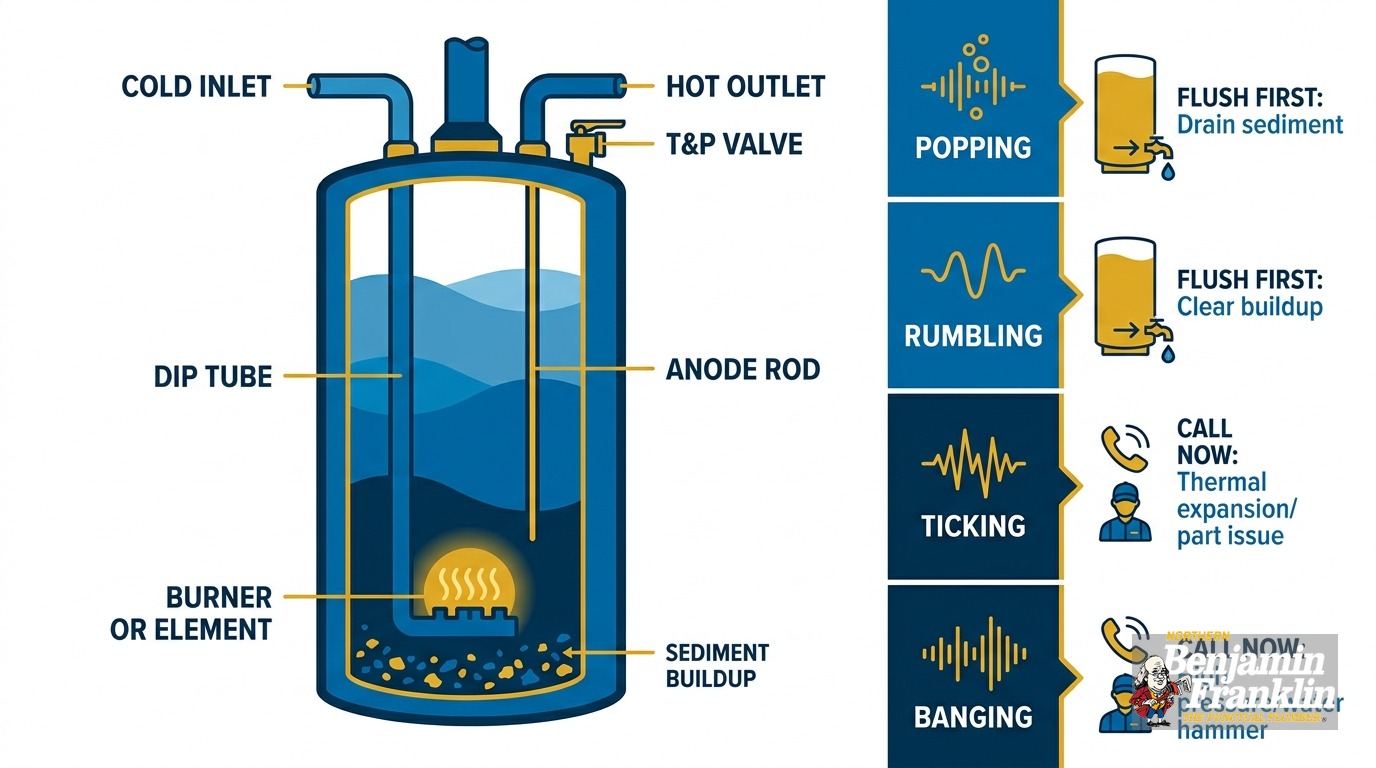
- A water heater making noise is trying to tell you something specific. Different sounds point to different causes and different responses.
- Soft ticking or clicking: normal thermal expansion of pipes and tank metal; no action needed.
- Gentle humming: normal element vibration on electric units; tighten the element if it becomes loud.
- Popping or crackling: sediment buildup at the tank bottom; flush the tank first.
- Low rumbling or sustained boiling sound: heavy sediment with serious efficiency loss; call and schedule service.
- Hissing from the tank body: possible internal leak or failing element; call now.
- Hissing or popping near the T&P valve on the side of the tank: a pressure safety emergency; call now.
- Screeching or high-pitched whine: restricted flow through a valve or inlet; call now.
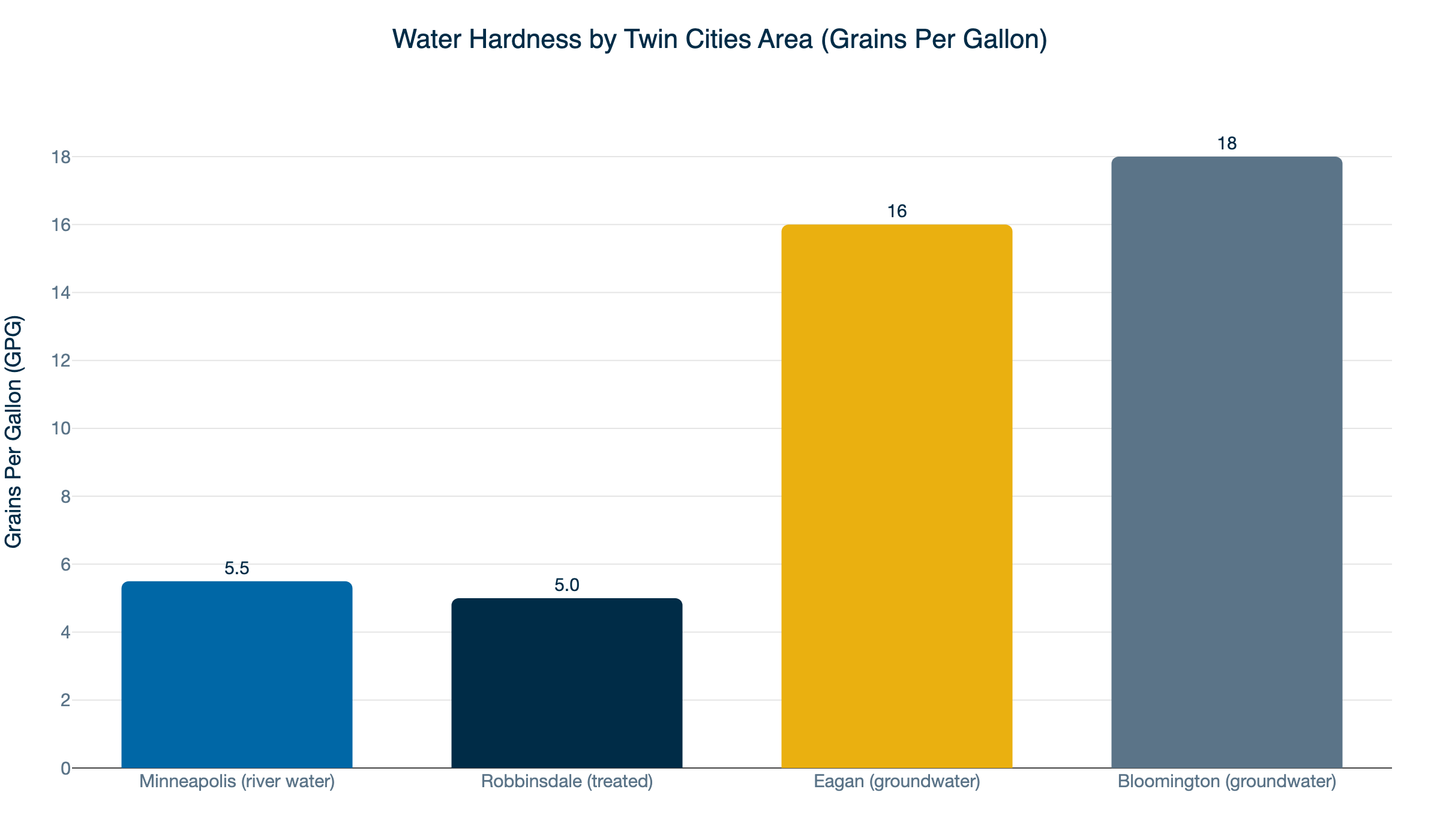
- Twin Cities suburban homes on hard groundwater accumulate sediment up to three times faster than Minneapolis homes on treated river water.
- Minnesota requires a permit to replace a water heater. We handle that on every job.
Why Is My Water Heater Making Noise?
Most water heater noises come from one of three sources: mineral sediment at the tank bottom, thermal expansion of metal parts, or a pressure or valve problem. Knowing which sound you are hearing tells you whether to flush first, watch and schedule, or call a plumber today.
Your water heater does not make noise for no reason. The tank, heating element, pipes, and pressure components all respond to heat and flow. Some sounds are completely normal. Others signal a problem that will cost real money in energy bills or equipment damage if you ignore it. A few are safety emergencies that need a technician the same day.
The good news is that most sounds have a clear cause. Once you name what you are hearing, the right response follows.
Water Heater Making Noise: Which Bucket Is Yours?
A water heater making noise usually points to sediment, thermal expansion, or a pressure problem. Sort your sound into one of three buckets - flush first, watch and schedule, or call now - before doing anything else. The right bucket tells you whether to grab a garden hose or pick up the phone.
Here is the framework:
- Flush first. The noise points to sediment. A tank flush may clear it. If the sound returns quickly or does not clear after flushing, that becomes a “call now.”
- Watch and schedule. The sound is low-risk today but worth addressing before it gets worse. Add it to your maintenance calendar.
- Call now. The noise signals a safety risk or a failure that flushing will not fix.
Walk through the sections below, find your sound, and you will know which bucket applies.
What Does Popping or Crackling Mean?
Popping and crackling are the most common water heater noises in homes with hard water. Sediment at the bottom of the tank gets between the heating surface and the water above it. Heat turns that trapped water into steam bubbles that force through the mineral crust. Flush first; if the noise continues, call a plumber.
To understand why flushing works and why it does not work forever, it helps to know what is actually happening inside the tank.
Over time, minerals from your water supply settle on the tank floor and form a hardening layer. Calcium and magnesium carbonates are the main culprits. The U.S. Department of Energy estimates that sediment can reduce water heater efficiency by up to 25%. Water heating accounts for roughly 18% of a home’s energy bills. A sediment-loaded tank costs you money every month - not just wear over time.
When the burner or electric element fires, it heats water through that mineral layer. The water closest to the heat superheats and turns to steam. Those bubbles force through the crust. That pop-and-crackle is exactly what you are hearing. The tank is not in immediate danger. But the efficiency hit and the added stress on the heating surface are real and compounding with every cycle.
The fix is a flush. The City of Blaine, MN recommends flushing your water heater every one to three years, depending on your unit type and water source. For a step-by-step walkthrough, see our guide on how to flush sediment from your water heater.
Here is the angle most articles skip: sediment is not only an efficiency problem. The CDC confirms that Legionella bacteria grow between 77 and 113 degrees Fahrenheit and that sediment provides a habitat for them inside a tank. The agency recommends keeping your water heater at or above 120 degrees to inhibit bacterial growth. OSHA recommends 140 degrees for stronger protection. At 140 degrees, Legionella die within 32 minutes.
If your tank has been running cool and has accumulated sediment, you have a potential health concern on top of an efficiency problem. We cover the temperature-safety relationship in detail: water heater temperature setting and Legionella prevention.
What Does Rumbling Sound Like, and Why Does It Matter?
Rumbling is a deeper, more sustained version of popping. It means the sediment layer is thick enough that water beneath it is actively boiling. Your heater is working far harder than it should be. Call and schedule service; at this stage, a standard DIY flush may not fully clear the problem.
Think of popping as early-stage sediment and rumbling as late-stage. By the time you hear a sustained low boil or a rolling rumble, the mineral crust may have hardened into a layer that a hose-and-drain flush will not break up. A plumber can do a more thorough service and assess whether the tank is worth repairing or past its useful life.
How old is too old? Most water heater manufacturers consider 8 to 12 years the threshold at which continued noise, visible moisture at the base, or repeated element failures point toward replacement rather than another repair. Your heater’s manufacture date is encoded in the serial number on the label. Our guide on decoding water heater serial numbers shows you how to find it in under two minutes.
Is That Hissing Near the T&P Valve Dangerous?
Yes. Hissing or popping near the temperature and pressure relief valve on the side of the tank is a safety emergency. The valve is cycling, which means pressure or temperature inside the tank has reached a dangerous level. Call a plumber now. Do not wait to see if it settles on its own.
The T&P valve is the tank’s final defense against overpressure. It is designed to open and release water when conditions inside become dangerous. If that valve is hissing or cycling, it is working exactly as designed - which means something inside the tank is badly wrong.
Hissing from the tank body itself, not the valve, is also a call-now situation. That can indicate an internal leak, a failing heating element, or a fitting releasing water under pressure.
Under Minnesota Plumbing Code Rule 4715.2210, the T&P valve must meet ANSI Z21.22 standards. Its discharge pipe must terminate within 18 inches of the floor. No shutoff valve may sit between the valve and the tank. Setting the heater above 210 degrees Fahrenheit is a code violation. These requirements exist because an overpressure event in a residential tank is a serious physical hazard, not an inconvenience.
If your T&P valve is active, do not monitor it. Call (763) 296-1844.
What About Ticking, Humming, and Banging?
Soft ticking is normal thermal expansion - metal pipes and tank walls move as they heat and cool. A gentle hum is a normal vibrating electric element. Banging at the start or end of a hot water draw is usually water hammer or thermal expansion in the supply lines. None are emergencies, but banging is worth addressing.
Here is the breakdown for each:
Soft ticking or clicking: Metal expands when heated and contracts when it cools. Pipes and tank walls do this every heating cycle. It is normal physics. If the ticking escalates to a persistent rattle or transitions to a rumbling sound, re-read the sediment sections above.
Gentle humming: Electric water heaters have a heating element that can vibrate lightly if it is not fully torqued against the tank. Common on older units and usually nothing urgent. If the hum becomes loud or high-pitched, that shifts to a call-now situation.
Banging at the start or end of hot water use: This is typically water hammer. A pressure wave travels through your supply lines when flow stops or starts suddenly. It can also come from a supply line that is constrained and expands as hot water passes through it. A plumber can install a water hammer arrestor or adjust your pressure reducing valve. We go deeper on the causes and the fixes in water hammer and banging pipes.
Screeching or high-pitched whine: Water is being forced through a partially closed or restricted valve or inlet fitting. Call now.
Why Twin Cities Homes Build Sediment Faster
Not all water is the same, and that difference matters directly for your flush schedule and your tank’s lifespan.
Minneapolis finished water measures around 94 parts per million - roughly 5.5 grains per gallon. That is moderately hard. The city’s treatment plant removes a significant amount of hardness from Mississippi River water before it reaches your tap.
Communities drawing from the Prairie du Chien-Jordan aquifer run much harder. Bloomington measures around 18 grains per gallon and Eagan around 16. Robbinsdale’s well water once measured 24 grains per gallon before the city built a central softening plant and brought it down to 5. A Bloomington homeowner without a water softener accumulates sediment at roughly three times the rate of a Minneapolis customer on treated river water.
The EPA’s 2026 water softener guide confirms that hard-water scaling “decreases heat conductivity, meaning that water heaters operate less efficiently” and shortens equipment service life. If you live in a suburb drawing from groundwater, that is a direct statement about your tank.
Every city publishes an annual water quality report. Minneapolis posts its analysis on the city website. Saint Paul Regional Water Services publishes theirs at stpaul.gov. Look yours up and find your hardness level in grains per gallon. If you are consistently above 10 to 12 GPG and do not have a softener, your water heater is paying a tax on that hardness every year.
How Often Should You Flush Your Water Heater?
Minneapolis homeowners on treated river water can usually flush every two to three years. Suburban homeowners on harder groundwater - Eagan, Bloomington, Shakopee, parts of Minnetonka - should flush annually. The City of Blaine says this on their public works site. Your exact schedule depends on your water hardness and unit type.
A flush is manageable for most homeowners. Connect a garden hose to the drain valve at the tank bottom. Run it to a floor drain or outside. Let it flow until the water runs clear. Our step-by-step guide walks through the full process: how to flush sediment from your water heater.
One step most homeowners skip: check the anode rod while you have access. The anode rod is a sacrificial metal rod inside the tank that protects the lining from corrosion. In hard water, it depletes faster than the manufacturer’s standard schedule assumes. You can flush the tank every year and still lose years of tank life if the anode rod fails unnoticed. We cover what to look for and when to replace it in our anode rod and hard water guide.
When Should I Replace Instead of Flush?
Replace rather than flush when noise continues after a thorough professional flush, the unit is 8 to 12 or more years old, moisture appears at the base, or the heating element fails repeatedly. Minnesota requires a permit for replacement. We handle that paperwork.
A well-maintained tank in moderate water can last 12 to 15 years. A tank that has never been flushed in a hard-water suburb may degrade in 7 to 8 years. When sediment has calcified into a hard crust, a flush cannot clear it. At that point, replacement is the practical call.
When you do replace, you have real choices. Traditional tank water heaters carry lower upfront costs. Tankless models deliver hot water on demand and typically carry longer service lives. We compare both options for Twin Cities homeowners in tank vs. tankless water heaters.
Under Minnesota Plumbing Code Chapter 4714, replacing a water heater requires a permit. A licensed plumber must pull it, do the installation, and have it inspected. We handle the permit process on every replacement we do.
What Happens If You Ignore Water Heater Noise?
Ignoring sediment noise leads to higher energy bills, a shorter tank lifespan, potential Legionella risk, and eventually a failed tank. In T&P valve situations, ignoring the sound is a physical safety hazard. The cost of a flush is a small fraction of the cost of an emergency replacement.
Here is the progression when sediment goes unaddressed:
- Popping starts. Efficiency drops. Energy bills climb.
- The sediment layer thickens. The rumbling deepens. The element or burner runs harder and longer every cycle.
- The tank lining overheats at the bottom and begins to break down.
- Rust discolors the hot water. Discoloration is a sign the problem is already past the early stage.
- The tank fails. Cold water - and, often, a wet floor around the heater.
None of this is inevitable. A regular flush schedule and one annual anode rod check are all it takes to stay ahead of it. Most homeowners who get hit by a tank failure late in the season were hearing sounds months earlier and did not act on them.
We’re Locally Owned, and We Show Up on Time
Northern Benjamin Franklin Plumbing is locally owned and operated right here in the Twin Cities. We serve Minneapolis, St. Paul, Blaine, Bloomington, Eagan, Brooklyn Park, Maple Grove, Coon Rapids, and the surrounding metro.
We back every appointment with the On-Time Guarantee(R). We arrive in the window we commit to - or we pay you $5 for every minute we are late, up to $300. “If there is any delay, it’s you we pay!”
If your water heater is making noise and you are not sure which bucket it falls into, call us. We can help you diagnose over the phone and schedule a technician fast.
Call (763) 296-1844 or book a water heater service appointment.
Frequently Asked Questions
What causes a water heater to make a popping or crackling noise? +
Is a hissing water heater dangerous? +
How often should I flush my water heater in the Twin Cities? +
Does Minnesota require a permit to replace a water heater? +
Need a technician now?