
Toilet Flapper Replacement: Fix a Running Toilet for $5
Key Takeaways
- A toilet running at 200 gallons per day adds roughly $78 to a Minneapolis water-sewer bill each month. A replacement flapper at the hardware store costs about $5.
- Confirm it’s the flapper before buying anything. The finger-push test and dye test together take under 15 minutes.
- Toilet flapper replacement requires no permit under the Minnesota State Plumbing Code and no special tools.
- Twin Cities water uses chloramine as a disinfectant, which degrades natural rubber faster than free chlorine. Spend $2-3 more on a silicone or chloramine-resistant flapper.
- The EPA recommends replacing flappers at least every five years as preventive maintenance, even when no leak is obvious.
Is That Running Toilet Really Costing You Money?
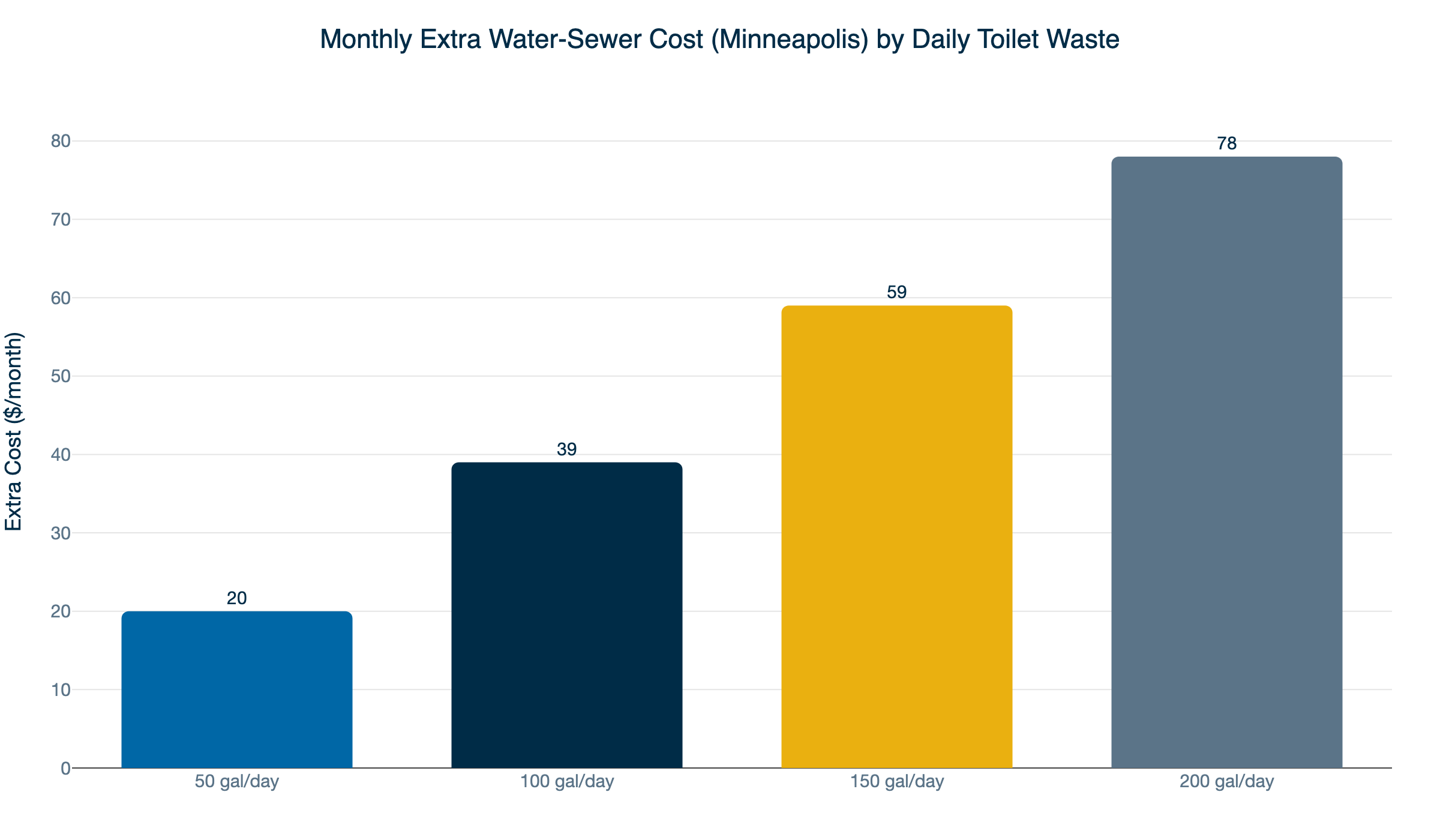
Yes. A toilet leaking at 200 gallons per day adds roughly $78 per month to a Minneapolis water-sewer bill. That is the cost of a worn flapper running unaddressed for 30 days, repeated every month until someone fixes it.
The EPA’s WaterSense program estimates that household leaks waste an average of 180 gallons per week, or about 9,400 gallons per year. Toilets are among the most common culprits. Most toilet leaks trace directly to a worn or degraded flapper.
In Minneapolis, the combined water and sewer rate is $9.80 per 748 gallons as of 2026, according to the City of Minneapolis utility billing page. A toilet running at 200 gallons per day consumes roughly 6,000 gallons per month, about eight billing units. At current Minneapolis rates, that adds approximately $78 to your water-sewer bill every single month.
A silicone replacement flapper runs about $5-8 at any hardware store.
The math alone is reason enough to diagnose this quickly. The next section shows you how to confirm the flapper is actually the problem before you spend anything.
What Is a Toilet Flapper?
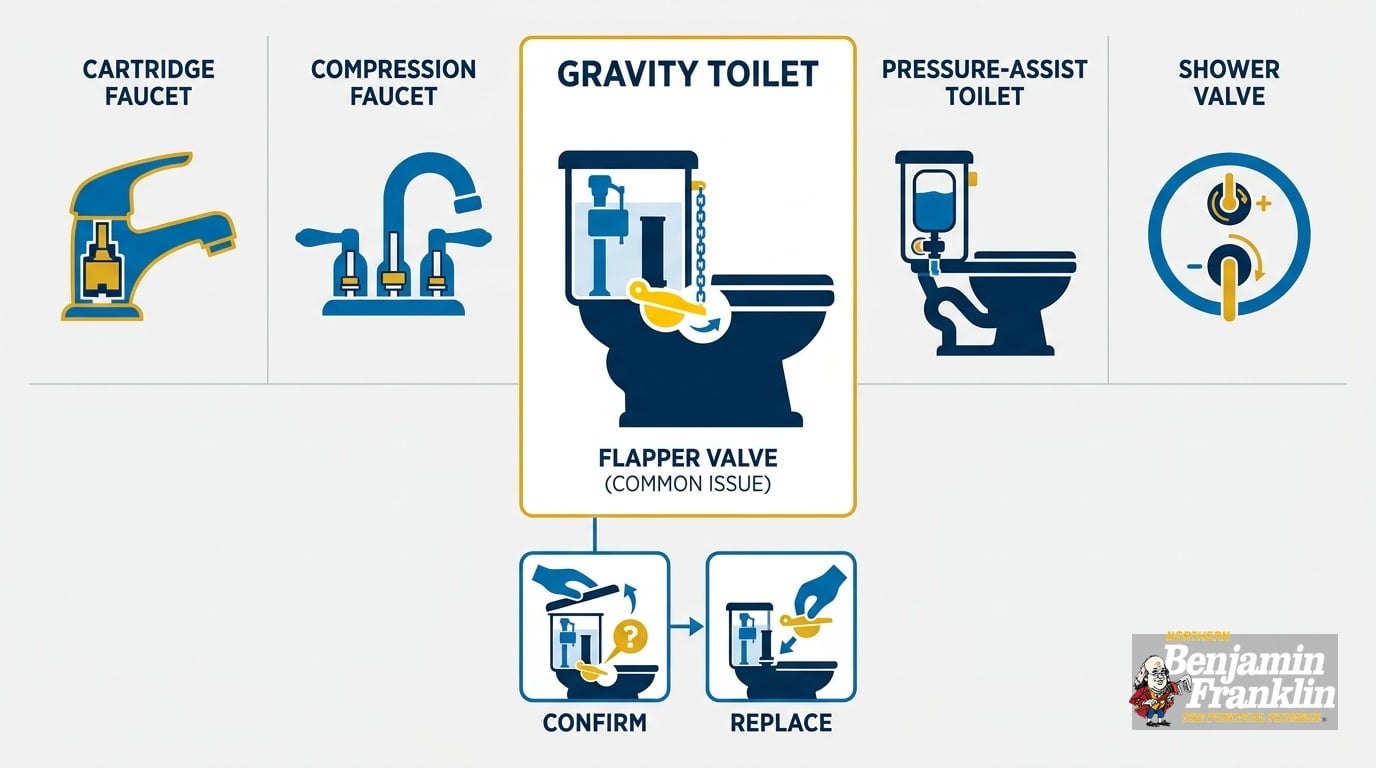
The flapper is the rubber or silicone valve at the bottom of the toilet tank that controls water flow into the bowl. When it degrades and loses its seal, water trickles through continuously - whether or not anyone has touched the handle.
When you flush, the flapper lifts and water drops from the tank into the bowl. When the flush is done, the flapper falls back onto a rubber seat and seals the tank. The fill valve then refills the tank to the set water level.
Over time, the flapper’s rubber deteriorates. It warps, hardens, or develops mineral deposits along the seating surface. When the seal is imperfect, water trickles from the tank into the bowl around the clock. The fill valve senses the slow drop in water level and kicks on to refill. That cycle repeats continuously. The part is inexpensive. The water it wastes over weeks and months is not.
Is It the Flapper or the Fill Valve?
Press down firmly on the flapper while the toilet is running. If the sound stops, the flapper is not sealing. If the sound continues despite pressure on the flapper, the fill valve may be running too long. These are different problems with different fixes - confirm which one you have before buying parts.
A constantly running toilet has two main causes. Fluidmaster’s diagnostic guide draws the distinction clearly: if water is rising up into the overflow tube (the tall vertical tube in the center of the tank), the fill valve is overshooting its set point. That is a fill valve problem, not a flapper problem. If the water level is stable and sitting below the top of the overflow tube, but the toilet still runs, the flapper is not sealing.
The finger-push test. Remove the tank lid and set it aside. Let the toilet run. Press down firmly on the flapper with one finger. If the running stops while you are pressing, the flapper is the culprit.
The dye test. Add a few drops of food coloring to the tank. Do not flush. Wait 10 minutes. If color appears in the bowl, water is passing through the flapper. The EPA cites this dye test as the standard at-home method for confirming a flapper leak.
Run both tests before buying anything. The finger-push test takes about 10 seconds. The dye test takes 10 minutes of waiting. Together they tell you whether you are looking at a $5 flapper or a fill valve replacement.
Ghost Flushing vs. Constant Running: What Is the Difference?
Constant running means the fill valve never stops after a flush. Ghost flushing - also called phantom flushing - means the toilet briefly refills on its own every 20-60 minutes with no one touching it. Both point to the flapper, but ghost flushing is the subtler version and the one homeowners most often miss.
If your toilet sounds like it suddenly flushed and then goes quiet, only to repeat the same sound an hour later, that is ghost flushing. Here is what is happening: the flapper is leaking slowly, too slowly to hear as a trickle. Water drips from the tank into the bowl. Over time, enough water drains that the fill valve triggers. The tank refills. The sound stops. Then the cycle begins again.
Homeowners often notice the sound but attribute it to a quirk of the building. It is worth a closer look. The same two tests above will confirm whether the flapper is the cause.
What Size Flapper Do You Need?
Check the model number stamped inside the tank lid. Most toilets manufactured before roughly 2005 use a 2-inch flapper. Toilets made after that often use a 3-inch flapper. “Universal” flappers fit many models, but not all - matching by manufacturer model number is the most reliable method.
A flapper that does not match the flush valve seat will not seal, regardless of quality. Most cases of “I replaced the flapper and it still runs” come down to a sizing mismatch.
The model number is usually stamped into the inside of the tank lid or cast into the back wall of the tank. Take that number to a hardware store or look it up on the toilet manufacturer’s website to confirm the correct flapper size. If the old flapper is still in one piece, bring it with you. Hardware store staff can usually match it by sight.
An informal check: lay a standard credit card over the drain opening at the bottom of the tank. A credit card is about 3.375 inches wide. If the opening is clearly smaller than the card, you are likely looking at a 2-inch seat. If the opening is close to the card’s width, you probably have a 3-inch seat.
A Twin Cities-Specific Upgrade Worth $2 More
Most plumbing guides skip this detail entirely.
Minneapolis, St. Paul, and the majority of Twin Cities metro water utilities use chloramine - not free chlorine - as their secondary disinfectant. Chloramine is effective for water treatment, but it is chemically harder on natural rubber than free chlorine is. This is a documented concern in plumbing trade literature, and it matters for anyone buying a replacement flapper in this market.
A natural rubber flapper in a chloramine-treated water supply degrades faster. It stiffens, develops micro-cracks, and loses its seat seal sooner than it would in a system using free chlorine. Silicone flappers or those labeled “chloramine-resistant” cost $2-3 more at any hardware store. In a Twin Cities home, that extra cost buys a longer service life and fewer return trips to the hardware store.
Look for “silicone” or “chloramine-resistant” on the packaging. If you cannot find it on the shelf, ask a store employee. These flappers are stocked at every major hardware retailer.
How to Do a Toilet Flapper Replacement
Shut off the supply valve behind the toilet, flush once to drain the tank, unhook the old flapper from the side pegs and chain, snap the new flapper onto the same pegs, reconnect the chain with about a half inch of slack, turn the water back on, and run the dye test to confirm the seal. Plan on 15-20 minutes.
This is routine maintenance. No permit is required under the Minnesota State Plumbing Code. You need the correctly sized replacement flapper, a pair of disposable gloves if you prefer them, and a small towel.
Step 1: Shut off the water supply.
The supply valve is the oval or round handle on the wall behind and below the toilet, on a short braided or rigid line. Turn it clockwise until it stops. Flush once to drain the tank.
One note for older Twin Cities homes: if that valve has not been turned in several years, mineral buildup can prevent it from closing fully. If the tank keeps refilling after you close the valve, do not force the valve handle. Shut off the main whole-house water supply instead. Our post on finding and testing your main water shutoff valve walks through locating yours before you need it under pressure.
Step 2: Remove the old flapper.
Unclip the chain from the flapper arm. Slide both rubber ears off the side pegs on the overflow tube. Lift the flapper out.
While the tank is empty, run a finger around the rubber seat the flapper seals against. Mineral deposits on the seat prevent even a new flapper from sealing. If you feel scale or rough deposits, wipe the seat with a damp cloth. In hard-water areas of the Twin Cities metro, this step matters. If the seat itself is visibly cracked or pitted beyond what a wipe can fix, the flush valve assembly may need to be replaced - a more involved repair, but one a licensed plumber can handle in a single visit.
Step 3: Snap the new flapper on.
Slide the flapper’s rubber ears onto the side pegs. Press both ears fully onto the pegs. Connect the chain to the handle arm. Leave about a half inch of slack. Too much slack and the flapper will not lift fully on a flush. Too little slack and the flapper will not seat completely after the flush.
Step 4: Restore water and test.
Turn the supply valve counterclockwise. Let the tank fill completely. Flush once and watch the flapper drop back into place. It should seat cleanly without lifting at one edge or wobbling.
After the tank refills, drop a few drops of food coloring into the tank. Wait 10 minutes without flushing. No color in the bowl means the seal is good. If color appears again with the new flapper installed, check that both ears are fully on the pegs and that the chain slack looks right. If both are correct and the dye test still fails, the flapper may be the wrong size for your flush valve seat.
How Often Should You Replace a Toilet Flapper?
The EPA recommends replacing the flapper at least every five years, even without a visible or audible leak. In Twin Cities homes with chloramine-treated water, natural rubber flappers may wear out faster than that baseline.
According to the EPA, an old or worn flapper can cause a toilet to flush on its own or silently leak thousands of gallons per year. A regular replacement schedule prevents that from happening between visible failures.
If your home’s flappers are approaching five years and you do not know when they were last swapped, the dye test is a fast way to check each toilet without any disassembly. Drop food coloring in the tank, wait 10 minutes, check the bowl. A few minutes per toilet, and you either confirm everything is fine or catch a slow leak before it compounds on your water bill.
For other small plumbing repairs that add up to real savings, our post on leaky faucets, running toilets, and small fixes that save big in the Twin Cities covers several more worth knowing.
When the Flapper Is Not the Problem
If you replaced the flapper, confirmed a good seal with the dye test, and the toilet still runs, the fill valve is the more likely cause. The fill valve is the taller assembly next to the overflow tube that controls the water level in the tank. Fill valve replacement is also a DIY-manageable job for most homeowners, though it takes a bit more time than a flapper swap.
If the toilet is older and has been repaired more than once in recent years, it may be worth stepping back to look at the whole picture. Our guide to toilet repair versus replacement walks through how to weigh that decision. Toilets manufactured before 1994 can use up to 6 gallons per flush. A WaterSense-certified toilet uses 1.28 gallons per flush - about 20% less than the federal 1.6-gallon standard. If your toilet keeps needing repairs, a full replacement may be the better long-term call.
When to Call a Plumber
Flapper replacement is a reasonable DIY job for most homeowners. A few situations call for a professional.
- The supply valve behind the toilet will not close fully and you are not comfortable shutting off the main water supply.
- The flush valve seat is visibly cracked, corroded, or damaged.
- After replacing both the flapper and the fill valve, the toilet still runs.
- Water is pooling on the floor at the base of the toilet - a sign of a failed wax ring or loose tank bolts, not a flapper issue.
- The toilet rocks or shifts, or the porcelain has visible cracks.
Northern Benjamin Franklin Plumbing is locally owned and operated and serves the Twin Cities metro: Minneapolis, St. Paul, Blaine, Bloomington, Brooklyn Park, Coon Rapids, Maple Grove, and the surrounding area. Our team handles everything from a single running toilet to complete toilet repairs and replacements.
We back every service call with the On-Time Guarantee(R): we arrive in the window you scheduled, or we pay you $5 for every minute we are late, up to $300. “If there is any delay, it’s you we pay!”
Call (763) 296-1844 or book online.
Frequently Asked Questions
How do I know if my toilet flapper needs replacing? +
How long does a toilet flapper last? +
What size flapper do I need? +
Can I replace a toilet flapper myself? +
Need a technician now?