
Toilet Leaking at Base: Wax Ring or Flange Problem?
Key Takeaways
- Water at the base after flushing almost always signals a failed wax ring.
- A rocking toilet is a warning sign. If a new wax ring fails within a year or two, the flange is likely the real problem, not the ring.
- Minnesota’s frost depth runs 42 to 60 inches. Concrete slabs move seasonally, and that movement can crack cast iron flanges in older Twin Cities homes.
- Some wax ring failures stay invisible for months, sending wastewater into the subfloor rather than pooling on the floor. These ghost leaks cause serious structural damage before you notice them.
- Minnesota law allows homeowners to do their own plumbing, but drain work requires a permit.
- Replacing a wax ring is DIY-manageable. Repairing or replacing a flange is plumber territory.
Toilet Leaking at the Base: Wax Ring or Flange?
A puddle at the base of your toilet after every flush has a short list of causes. Most guides stop at “replace the wax ring” and call it done. That fix works when the ring is the only problem. But a toilet leaking at the base in a Twin Cities home is often a sign of something that a new ring will not fix permanently: a cracked cast iron flange, a connection that frost heave has shifted out of alignment, or a hidden leak draining into your subfloor for months with no visible pooling at all.
This post walks through what is actually happening, how to diagnose it with four questions, and where the line is between a repair you can handle yourself and a job that needs a licensed plumber.
Why Does a Toilet Leak at the Base?
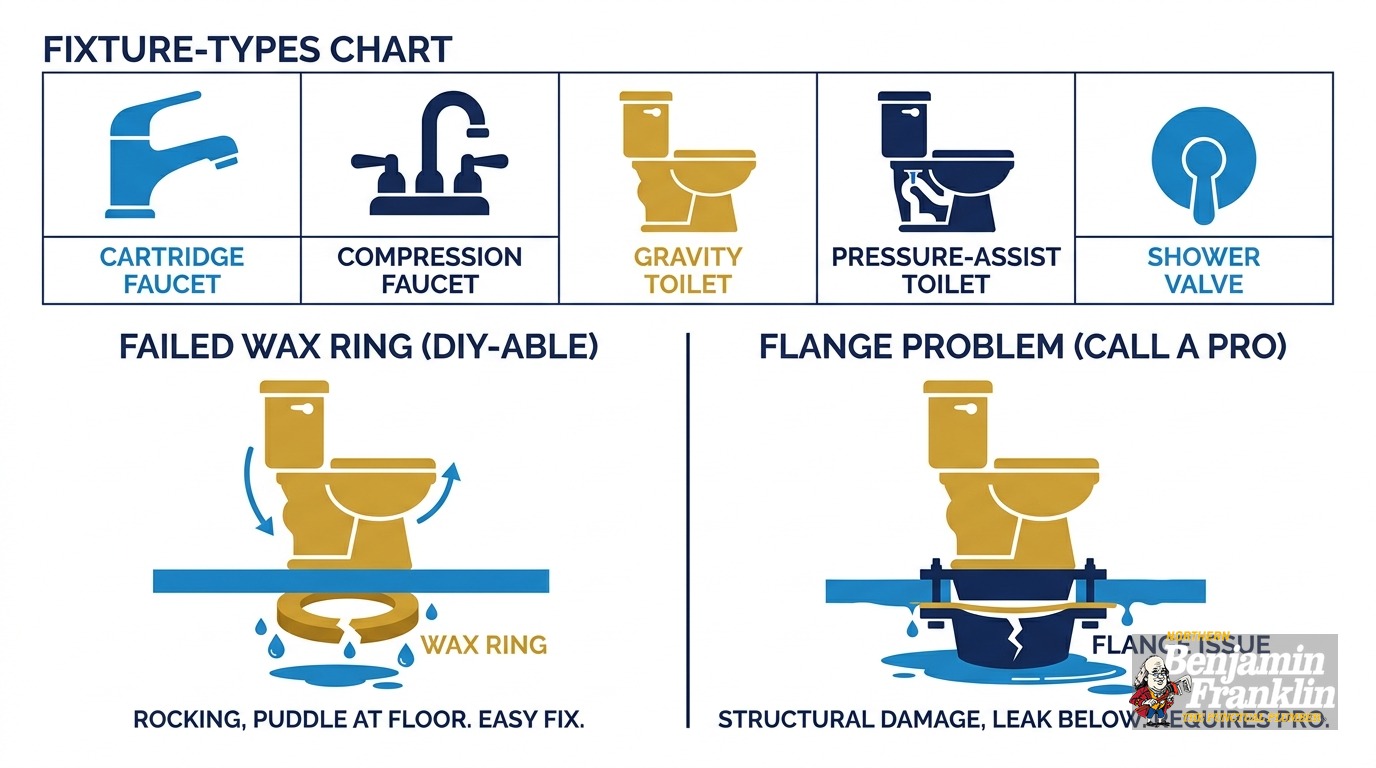
The wax ring under the toilet has failed, letting wastewater escape at the floor connection with every flush. Wax has no memory: once shifted or compressed out of position, it cannot re-seal itself.
The wax ring sits between the bottom of your toilet and the closet flange, a collar anchored to the drainpipe in the floor. When the seal is intact, every flush drives waste directly into the drain. When the seal breaks, some of that water escapes sideways at floor level. Once a wax ring is compressed or shifted by a rocking toilet, it cannot re-seal itself. The leak will not improve on its own.
The ring is rarely the root cause on its own. Two things drive wax ring failure:
- Toilet movement. Any rocking or lateral shifting works the ring out of compression. The toilet does not need to move much. A small amount of play, repeated thousands of times, breaks the seal.
- Flange problems. A low, cracked, or corroded flange prevents the toilet from sitting level and secure. Movement follows, and the ring fails with it.
When the same ring fails twice, look past the ring. Something underneath it is the real problem.
How Do You Tell If It’s the Wax Ring or the Flange?
Run four quick checks. The location and timing of the water, whether the toilet rocks, whether a new ring has already failed, and the age and floor type of your home will point to the answer.
1. Where does the water appear, and when?
Water at the base only after flushing means the ring is leaking under pressure. Water that appears between flushes is more likely a supply line drip, condensation on the tank, or an overflow issue. Check the supply line connection and the tank first before pulling the toilet.
2. Does the toilet rock?
Press down on each side of the bowl. Even slight movement means the toilet is not solidly anchored. A rocking toilet will eventually destroy any wax ring you put under it. The rocking, not the ring, is the problem to solve first.
3. Has a new wax ring already failed?
If the leak returned within a year or two of a ring replacement, the flange is almost certainly the culprit. The flange must sit within 1/4 inch of the finished floor surface for the ring to compress and seal correctly. A flange that sits lower than that cannot do its job regardless of which ring you buy. A flange extender raises the connection to the right height. Another new ring will not solve the problem.
4. How old is the house, and what is the floor material?
Pre-1980 Twin Cities homes almost universally have cast iron closet flanges. Cast iron fails differently than PVC. It cracks along the bolt slot as it corrodes over decades. Once the bolt slot is compromised, nothing holds the toilet firmly in place, and no ring will stay compressed. A flange reinforcement ring can save a mildly cracked cast iron flange. A flange that is heavily corroded or has a broken bolt seat needs full replacement.
Why Are Minnesota Homes More Vulnerable to This Problem?
Minnesota’s frost depth ranges from 42 to 60 inches. Concrete slabs on grade have no footing below the frost line. They move seasonally, and that movement cracks under-slab drain connections and shifts toilet flanges in ways that a wax ring swap alone will not fix permanently.
A plumber in a warmer climate almost never sees frost heave crack a closet flange. In the Twin Cities, it happens. Many suburbs built between the 1950s and 1980s sit on concrete slab-on-grade foundations. The slab has no footing below the frost line. Frost pressure can lift and shift it each winter. When it settles in spring, it sometimes lands in a slightly different position.
Minnesota DLI’s frost-protected foundations fact sheet documents the seasonal movement risk for slab construction in this climate. DBS Repair, a Twin Cities foundation contractor, puts it plainly: “No way is a slab in Minnesota not going to move, someday.” When the slab moves, the drainpipe embedded below it can shift with it. The closet flange anchored to that pipe cracks or pulls out of alignment. A new wax ring on a cracked flange is a short-term fix at best.
Cast iron makes this worse. PVC flanges flex under lateral stress and can absorb some seasonal movement without cracking. Cast iron does not flex. Movement that a PVC flange might tolerate for years will eventually fracture cast iron. Blaine, Coon Rapids, Brooklyn Park, and much of Maple Grove saw their fastest residential growth between 1955 and 1985. A large share of that era’s single-family homes sit on slab foundations. If your home is in one of these areas and was built in that window, the cast iron flange risk is worth taking seriously. A plumber inspecting the flange during any toilet repair adds almost no time to the visit and can prevent a much larger job later.
For context on how older pipe materials hold up in Twin Cities homes, the post on replacing galvanized pipe in older Twin Cities homes covers the housing stock conditions in detail.
What Is a Ghost Leak, and Should You Be Worried?
A ghost leak is a wax ring failure where wastewater follows the drainpipe downward into the subfloor instead of puddling visibly at floor level. It can go undetected for months and cause serious structural damage before any visible sign appears.
Most homeowners picture a base leak as something they step in. That is the visible version. The invisible version is more damaging. When the wax seal fails on a low flange, wastewater can follow the drainpipe downward into the subfloor rather than escaping at floor level. Porous plywood subfloor absorbs gallons before any ceiling stain, soft spot, or musty smell appears above or below.
By the time visible signs show up, the damage is well underway. Wet plywood warps and delaminates. Joists can begin to soften. Mold establishes quickly in wet wood cavities. A repair that would have cost a few hundred dollars as a wax ring job can become a subfloor replacement project with mold remediation on top of it.
Watch for these signs that a ghost leak may be active:
- Soft or spongy floor near the toilet base
- Discoloration around the base or the floor trim
- A persistent musty smell in the bathroom that ventilation does not clear
- Water stains on the ceiling below a second-floor bathroom
- Unexplained increases in your water bill without another identified cause
If any of these are present, do not wait. Get the toilet pulled and the subfloor inspected before the damage spreads. The longer wet wood sits in an enclosed space, the more the scope of repair grows.
Can You Replace a Wax Ring Yourself? What Minnesota Law Says
Minnesota law allows homeowners to do plumbing work on their own residence. Drain work requires a permit and inspection. A straightforward wax ring swap is DIY-manageable. Any work that involves the drainpipe or flange connection belongs with a licensed plumber.
Minnesota Statute 326B.46, Subd. 1a(a) is the homeowner exemption. You may do plumbing work on your own home without a contractor license. That does not mean permit-free. Under Minnesota Plumbing Code Chapter 4714, drain work, including any alterations to the flange or its pipe connection, requires a permit and must pass inspection.
A wax ring swap where you lift the toilet, replace the ring, and reset the toilet without touching the flange or pipe is within DIY range for most homeowners. The process:
- Close the supply valve and flush the toilet to empty the tank and bowl.
- Disconnect the supply line. Remove remaining standing water from the bowl with a sponge.
- Remove the two flange nuts and lift the toilet straight up. Set it on cardboard to protect the floor.
- Scrape all old wax from the toilet horn and the flange surface.
- Inspect the flange carefully: look for cracks, broken bolt slots, rust, and height. It must sit within 1/4 inch of the finished floor.
- Press a new wax ring onto the toilet horn. Lower the toilet straight down onto the flange bolts and apply firm, even downward pressure to compress the ring.
- Hand-tighten the flange nuts, alternating sides, until the toilet does not rock. Stop there. Overtightening cracks the porcelain base or the flange.
Stop at step 5 if the flange is cracked, corroded, or sitting too low. That is where DIY ends and licensed work begins.
When You Need a Plumber for a Toilet Leaking at the Base
A plumber is the right call when the flange is cracked or corroded, when a fresh wax ring has already failed, or when you suspect water reached the subfloor. These are structural and pipe-access repairs, not ring swaps.
Call a plumber when:
- The toilet rocks after tightening and a fresh wax ring still leaks
- You can see rust, visible cracks, or broken bolt slots at the floor connection
- The flange sits more than 1/4 inch below the finished floor
- The floor near the toilet feels soft or spongy
- The bathroom is on the second floor (subfloor access from below is limited, and water spreads faster in these situations)
- The home was built before 1980 on a concrete slab (cast iron flange, elevated frost heave risk)
Flange problems are also more likely to surface right after a hard winter. Spring is a useful time to check your toilet for subtle movement even without an active leak. A flange that started to crack during the freeze-thaw cycle may hold for another season or fail within months. There is no way to know without pulling the toilet and looking.
Flange replacement in an older Twin Cities home often involves cutting the old cast iron pipe connection and fitting a new flange into the existing drain stack. That work requires permits and inspection. A repair ring can stabilize some cracked flanges, but not one connected to a pipe that has shifted out of alignment or one where the corrosion has reached the bolt slots.
If subfloor damage is present, the plumber coordinates with a contractor on the structural repair. Leaving wet wood in the floor is a mold risk. Address it while the floor is already open.
If the damage extends to the slab itself, the post on slab leak detection and repair in the Twin Cities covers what that repair involves.
Does Water Hardness Affect Your Toilet Flange in the Twin Cities?
Hard water leaves mineral deposits inside the flange collar and around the wax ring seat over time. This matters more in Saint Paul and many suburbs than in Minneapolis, where treated water is moderately soft.
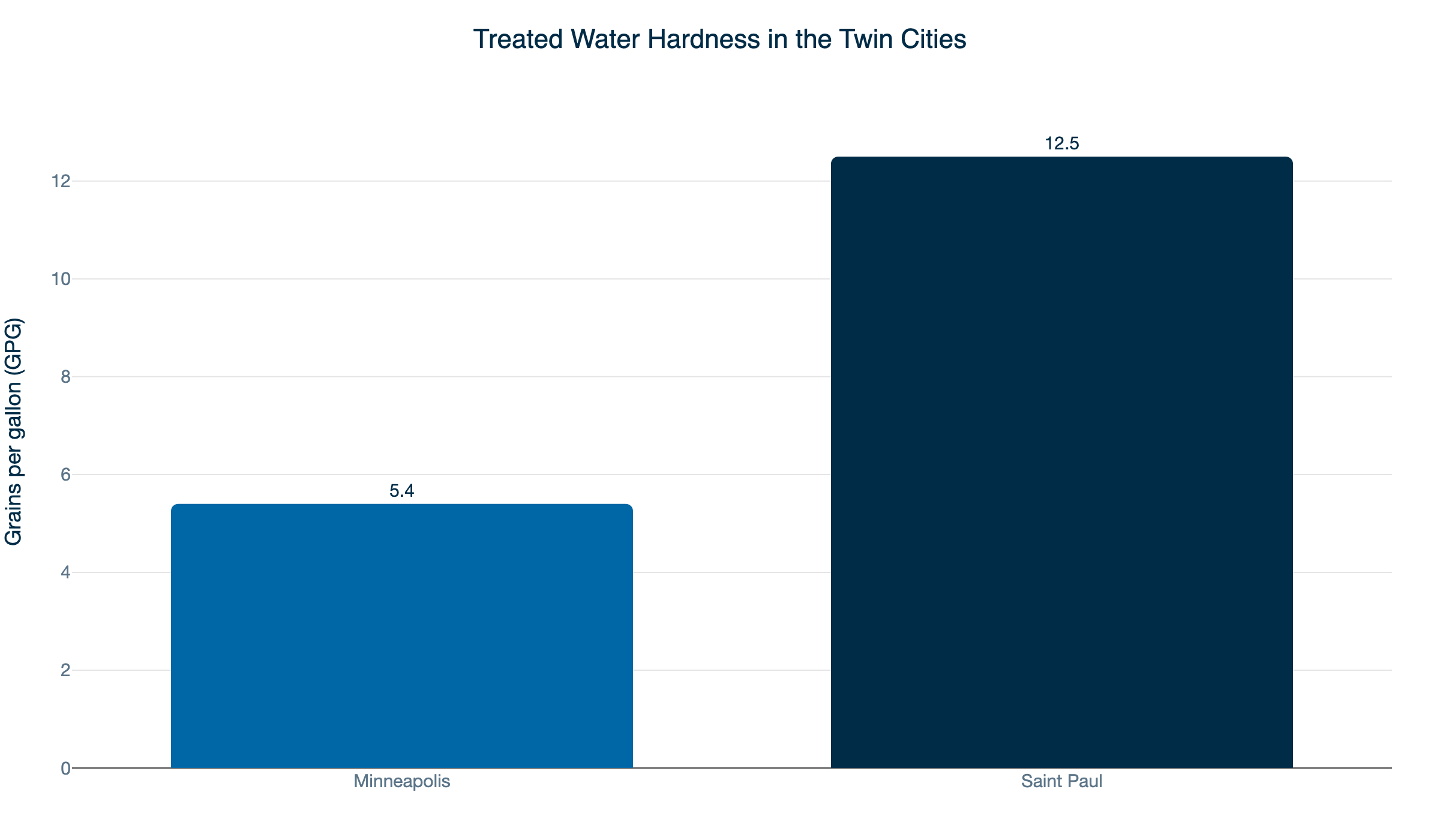
Minneapolis treated water runs at 92 ppm (5.4 grains per gallon). The city removes roughly 65,000 pounds of hardness minerals per day. Minneapolis city customers have relatively low mineral scaling risk throughout the drain system.
Saint Paul tells a different story. Saint Paul Regional Water draws from the Mississippi watershed and delivers treated water at approximately 213 ppm (12.5 grains per gallon). That is hard water by standard classification. Over years of use, the mineral deposits it leaves inside a cast iron flange collar can build up and trap debris around the wax ring seat, adding stress to an aging connection. Many suburban supplies run harder still, particularly homes on private wells in outlying municipalities.
Hard water does not cause a closet flange to fail on its own. But it contributes to the buildup and corrosion that shortens the life of an older cast iron flange, particularly in homes that are already managing frost heave movement. If your home is on Saint Paul municipal water, a suburban supply with high hardness, or a private well, mention it when you call for service. It gives the plumber useful context before the toilet comes up.
For the full Twin Cities water hardness picture by municipality, the post on water hardness in Minneapolis and Saint Paul has city-by-city data.
What to Expect When You Call Northern Benjamin Franklin Plumbing
Northern Benjamin Franklin Plumbing is locally owned and operated in the Twin Cities. Our plumbers know the housing stock: the cast iron flanges common in Blaine, Brooklyn Park, Coon Rapids, and the rest of the postwar suburban build-out; the frost heave patterns on slab foundations; the mineral load difference between a Minneapolis city line and a Saint Paul supply.
When you call (763) 296-1844, you get a plumber who will diagnose the full floor connection, not just hand you a new wax ring and hope it holds. If the flange is the problem, we tell you before we start work so you know what you are approving. If the repair requires a permit, we pull it.
Every appointment is backed by the On-Time Guarantee(R). You choose your arrival window. We arrive in it. If there is any delay, it’s you we pay! That is $5 for every minute we are late, up to $300, written into the service agreement.
To schedule service for a toilet leaking at the base, visit our toilet repair and installation page or call (763) 296-1844. We will assess the full connection and give you a clear picture of what the repair involves before any work begins.
Frequently Asked Questions
What causes a toilet to leak at the base? +
Can a homeowner replace a wax ring in Minnesota? +
How do I know if my toilet flange is cracked? +
What is a ghost leak under a toilet? +
Need a technician now?