
Plumber to Install a Toilet: What to Expect in Minnesota
Key Takeaways
- A clean toilet swap takes a licensed plumber 1-2 hours. A damaged flange or corroded shutoff valve pushes that to 2-4 hours.
- Full toilet replacement in Minnesota generally requires a permit and inspection. Swapping a fill valve or flapper does not.
- National labor averages run $224-$533, with a $374 average, per HomeAdvisor. Those are national figures, not our prices. Call (763) 296-1844 for a real Twin Cities quote.
- EPA data shows WaterSense toilets save the average family nearly 13,000 gallons per year compared to older models.
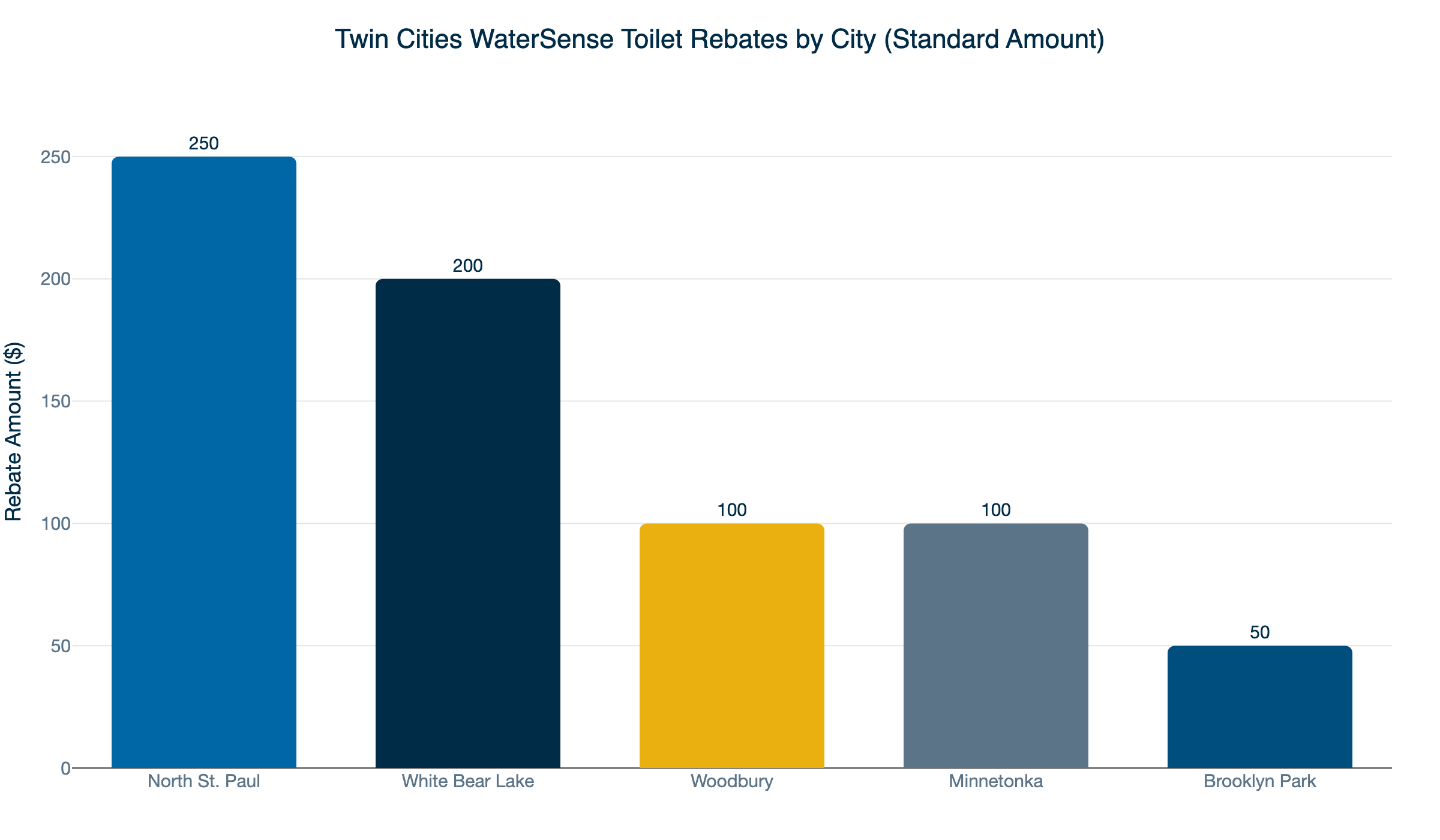
- Several Twin Cities cities offer WaterSense rebates ranging from $50 to $250 per toilet.
- We are locally owned and operated, backed by the national Benjamin Franklin Plumbing franchise. Our On-Time Guarantee(R) means we arrive in your scheduled window, or we pay you $5 for every minute we are late, up to $300.
When you hire a plumber to install a toilet, the job looks simple from the outside. The plumber arrives, swaps the fixture, and leaves. In practice, a licensed plumber follows a specific sequence. What they find once the old toilet comes off the floor determines how long the job takes. It also determines whether the project stays a clean one-hour call or turns into a half-day repair. This guide covers what happens on install day and how long it takes. It also explains what it costs in the Twin Cities, the Minnesota permit requirements, and the local rebate programs that can offset the price.
What Does a Plumber Do When Installing a Toilet?
A licensed plumber works through seven steps: shut off the water, drain the fixtures, remove the old toilet, inspect the flange, set a new wax ring, secure the new toilet, and test the full assembly. On a clean swap with no complications, that sequence takes 1-2 hours.
Here is what each step looks like in practice.
Shut off and drain. The plumber closes the supply valve behind the toilet and flushes twice to empty the tank and bowl. Any standing water gets sponged out before the toilet moves. A tank with water left in it becomes heavy and unpredictable the moment it lifts off the floor.
Disconnect the supply line. The braided line running from the shutoff valve to the tank disconnects at both ends. The plumber checks the shutoff valve at this point. In pre-1990s homes across the Twin Cities, supply valves are often calcified from years of mineral exposure. Minneapolis finished water hardness is approximately 5.8 GPG as of January 2026. Saint Paul runs approximately hard water levels noted in its water quality report. That level of hardness is enough to leave deposits inside older shutoff valves. A plumber replaces the shutoff if it does not operate cleanly. That adds a small parts cost but prevents a bigger problem later.
Remove the old toilet. The floor bolts come out, the toilet lifts free, and the old wax ring gets scraped clean. A standard toilet weighs 60-100 pounds. Ask when you book whether haul-away of the old unit is included in the base price or billed separately.
Inspect the flange. The flange is the fitting anchored to the floor. The toilet bolts to it and seals against it. A cracked flange cannot hold the wax seal. A flange set at the wrong height will not compress the ring evenly. Both problems require repair before the new toilet sets. Skipping that step leads to leaks at the base. A slow base leak that goes unnoticed can rot subfloor material well before it shows. If your toilet has been leaking at the base, a failed wax seal on a damaged flange is often the cause.
Set the wax ring. A new wax ring seats on the flange opening. It creates the watertight seal between the toilet horn and the drain pipe. Some installs use a wax-free rubber gasket instead, particularly when the flange height needs adjustment. Either approach works when applied correctly.
Secure the toilet. The toilet lowers straight down over the floor bolts, centers on the flange, and presses into the wax ring with firm downward pressure. The nuts tighten until snug. Overtightening cracks porcelain. The plumber checks for any rocking before moving on. A toilet that rocks even slightly will break the wax seal under normal use.
Reconnect and test. A new supply line connects the shutoff valve to the fill valve on the tank. The valve opens, the tank fills, and the plumber watches the base and all connections through several flush cycles. The job is not done until everything is dry and stable.
How Long Does It Take a Plumber to Install a Toilet?
A clean toilet swap takes 1-2 hours. A damaged flange, a corroded shutoff valve, or a wall-mount toilet can push the job to 2-4 hours. The timeline depends almost entirely on what the plumber finds after the old toilet comes off.
The two most common time-extenders in older Twin Cities homes:
- A damaged flange. Homes with cast-iron drain stacks from the 1950s and 1960s can develop cracked or corroded flanges. Repair adds at least 30-60 minutes and parts.
- A stuck shutoff valve. Pre-1990 shutoff valves sometimes cannot close fully, or they begin to drip once they have been operated. Replacement happens on the spot.
Wall-mount toilets are in a different category entirely. The tank conceals inside the wall in a carrier frame. Installing one from scratch means opening the wall if that frame is not already there. If you are considering a wall-mount model, factor in a substantially different scope of work and timeline before committing.
What Does It Cost to Hire a Plumber to Install a Toilet?
According to HomeAdvisor, the national average labor cost for toilet installation is $374, with a range of $224-$533. Bob Vila reports that old toilet removal and haul-away runs an additional $50-$200 when not included in the base quote. These are national benchmarks. They reflect what plumbers charge across the entire country. For an actual price on your Twin Cities job, call (763) 296-1844 or book a toilet installation online.
The main variables that affect the final cost:
- Flange condition. A damaged flange adds labor and parts before the new toilet can set properly.
- Shutoff valve. Corroded or calcified shutoff valves get replaced on site when needed. Our post on shutoff valves that are stuck or failing explains what those look like and why replacement is the right call.
- Toilet type. A standard two-piece floor-mount toilet is the simplest install. One-piece models are heavier and more awkward to maneuver. Wall-mount toilets are a separate scope of work.
- Fixture supply. A plumber-supplied toilet carries a markup over retail. Some homeowners buy their own toilet and have the plumber install it. Either approach works. Confirm which way you are going before the appointment.
- Removal and haul-away. A standard toilet weighs 60-100 pounds. Ask whether disposal of the old unit is included in the quote or billed separately.
- Supply line and shutoff valve. New supply lines are standard. A new shutoff valve is added when the existing one cannot be reliably operated.
If you are still deciding whether to repair or replace, our toilet repair vs. replacement guide walks through how to make that call.
Financing is available for larger plumbing work. Ask when you schedule.
Does Replacing a Toilet in Minnesota Require a Permit?
Yes, in most cases. Minnesota DLI states that full toilet replacement generally requires a permit and inspection. The permit waiver for one- and two-family homes applies only to replacing internal working components, like fill valves and flush valves. Replacing the entire toilet is a full installation under Minnesota plumbing code.
MN DLI plumbing code guidance also requires that everyone performing interior plumbing installations be a licensed plumber or a registered apprentice.
Why does this matter to you as a homeowner?
Insurance. Unpermitted plumbing can give an insurer grounds to deny a water damage claim. If a base leak from unpermitted toilet work damages your subfloor, your policy may not cover the repair.
Home resale. An inspector will flag open or missing permits. Buyers can require unpermitted work to be inspected or corrected before closing. That costs more than pulling the permit the first time.
Safety and liability. Work that does not meet code creates legal exposure that stays with the property.
Minnesota Plumbing Code (Chapter 4714) also sets minimum clearances. A toilet needs at least 15 inches of clearance from the centerline to any side wall. It also requires a 30-inch-wide minimum space and 24 inches clear in front. If a bathroom remodel is moving the toilet location, those clearances must be met in the new position.
The inspection typically happens after the installation is complete. The inspector checks the work against code requirements, including clearances and the connection to the drain. A passing inspection is the permanent record that the job was done correctly.
A licensed plumber pulls the permit as part of the job. You do not have to manage that process yourself.
How Much Water Is Your Old Toilet Actually Wasting?
According to the EPA, toilets account for nearly 30% of average indoor home water use. The volume by era tells the story clearly. Pre-1980 toilets used about 5 gallons per flush. Toilets made between 1980 and 1994 used about 3.5 GPF. Federal code set a 1.6 GPF maximum starting in 1994.
WaterSense-certified toilets use 1.28 GPF or less. The EPA estimates that switching from an older high-volume model saves the average family nearly 13,000 gallons per year. That translates to more than $170 annually on water and sewer bills, or about $3,400 over the toilet’s lifetime.
If your home was built before 1994 and the toilets have never been replaced, the math is clear. The old fixtures are costing you real money every single day.
Hard water accelerates the problem. Mineral deposits inside aging fill valves and flush valves cause phantom running and incomplete flushes. A WaterSense toilet with a fresh supply connection eliminates that source of waste at the same time. If a running toilet is already on your list, the decision to replace versus repair is often closer than it looks.
Twin Cities Rebate Programs for WaterSense Toilets
Several Twin Cities municipalities are paying homeowners to replace older toilets with WaterSense-certified models. The programs are funded in part through the Metropolitan Council Water Efficiency Grant Program. The Met Council funded 42 municipalities in 2024-2026 with $1.5 million in grants. Total payouts across all cycles reached $2.7 million through September 30, 2025. The new 2026-2028 grant cycle opened July 1, 2026 and expanded coverage to include flushometer-valve toilets.
Here is what active programs currently offer across the metro:
- Brooklyn Park: $50 per WaterSense toilet, up to 2 per household. Income-qualified households can receive up to $400 covering both purchase and installation.
- North St. Paul: Up to $250 for a WaterSense replacement toilet.
- White Bear Lake: A per-toilet rebate, up to 2 per residence, for a limited time.
- Woodbury: Up to $100, first come, first served.
- Minnetonka: 75% of cost, up to $100, for purchases after July 2026.
Check your city’s program before you buy the toilet. Most rebates require a WaterSense-certified model and a post-installation application. Funding is limited, and expiration dates vary by city.
Your plumber can confirm whether the model you are considering carries the WaterSense certification. Most major brands offer certified options across a wide range of price points. If your city is not listed above, check directly with your water utility. Many more Metro cities have programs tied to the same Met Council grant cycle.
When Should You Call a Plumber to Install a Toilet?
Call a plumber any time the full toilet unit is being replaced, not just a component. That covers:
- Replacing an aging toilet with a newer, more efficient model
- Installing a comfort-height or ADA-compliant toilet
- Adding a toilet to a new bathroom or remodeled space
- Replacing a toilet after a sewer backup or water damage event
- Addressing a toilet that rocks, leaks at the base, or has a cracked bowl or tank
DIY toilet installation is not prohibited in Minnesota for homeowners working in their own homes. But a licensed plumber handles the permit, passes the inspection, and is accountable for the work. When the flange turns out to be cracked or the shutoff valve fails mid-job, a plumber on site solves it. A DIY installer facing the same problem at 6 p.m. is in a much harder spot.
Do not wait on a toilet that rocks, runs, or has any movement at the base. A small leak at the wax ring will rot subfloor material before you ever see it as a surface problem.
Call Northern Benjamin Franklin Plumbing at (763) 296-1844 or book a toilet installation online. We are locally owned and operated, backed by the national Benjamin Franklin Plumbing franchise. Our On-Time Guarantee(R) gets us to your door in the window you choose. If there is any delay, it’s you we pay!
Frequently Asked Questions
Does replacing a toilet require a permit in Minnesota? +
How long does it take a plumber to install a toilet? +
Can I get a rebate on a new WaterSense toilet in the Twin Cities? +
Need a technician now?