
Why Crawl Space Pipes Freeze in Minnesota (And What to Do)
Key Takeaways
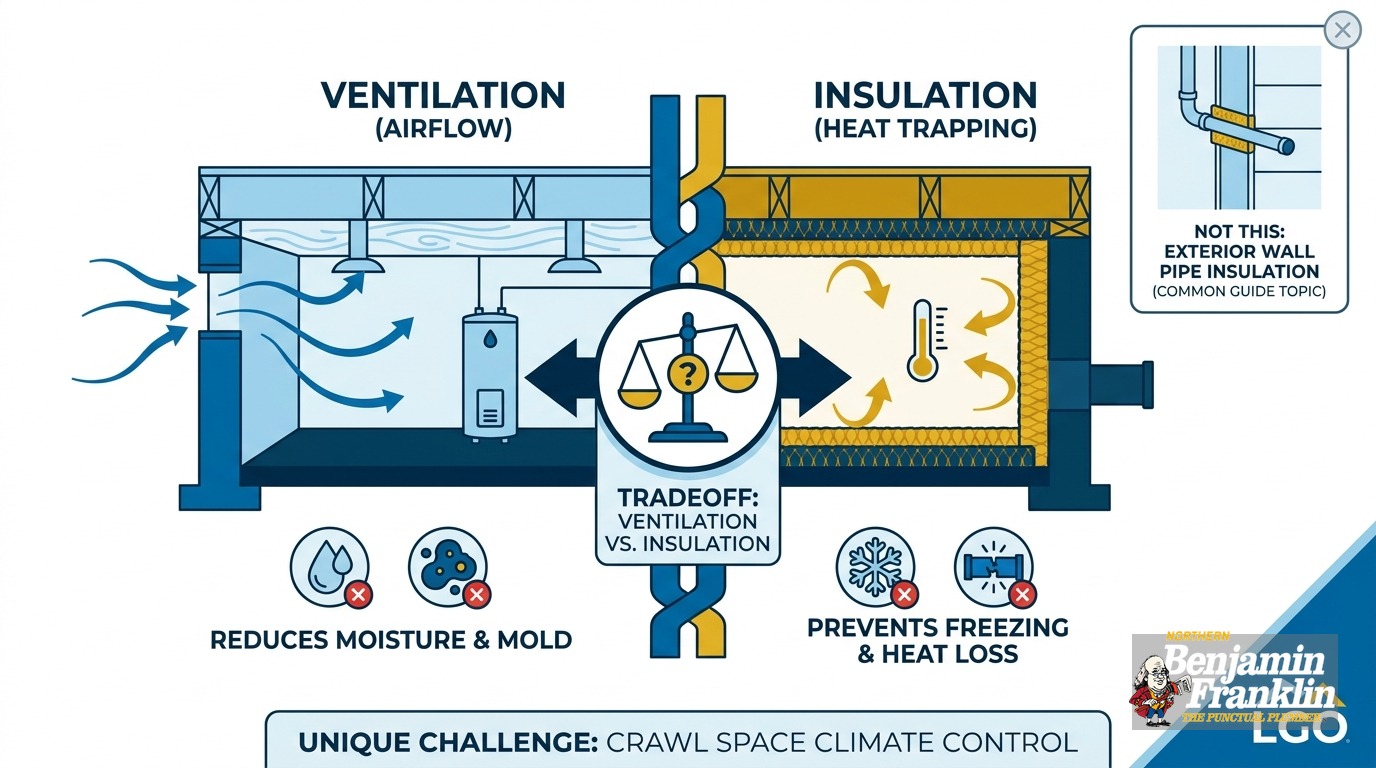
- Open foundation vents connect a Twin Cities crawl space directly to outdoor air. On polar vortex nights, that air reaches -20°F or colder.
- Pipe insulation slows heat loss from the pipe surface. It does not stop cold-air infiltration into the crawl space itself.
- Sealing and conditioning a crawl space treats the root cause. Pipe insulation alone treats the symptom.
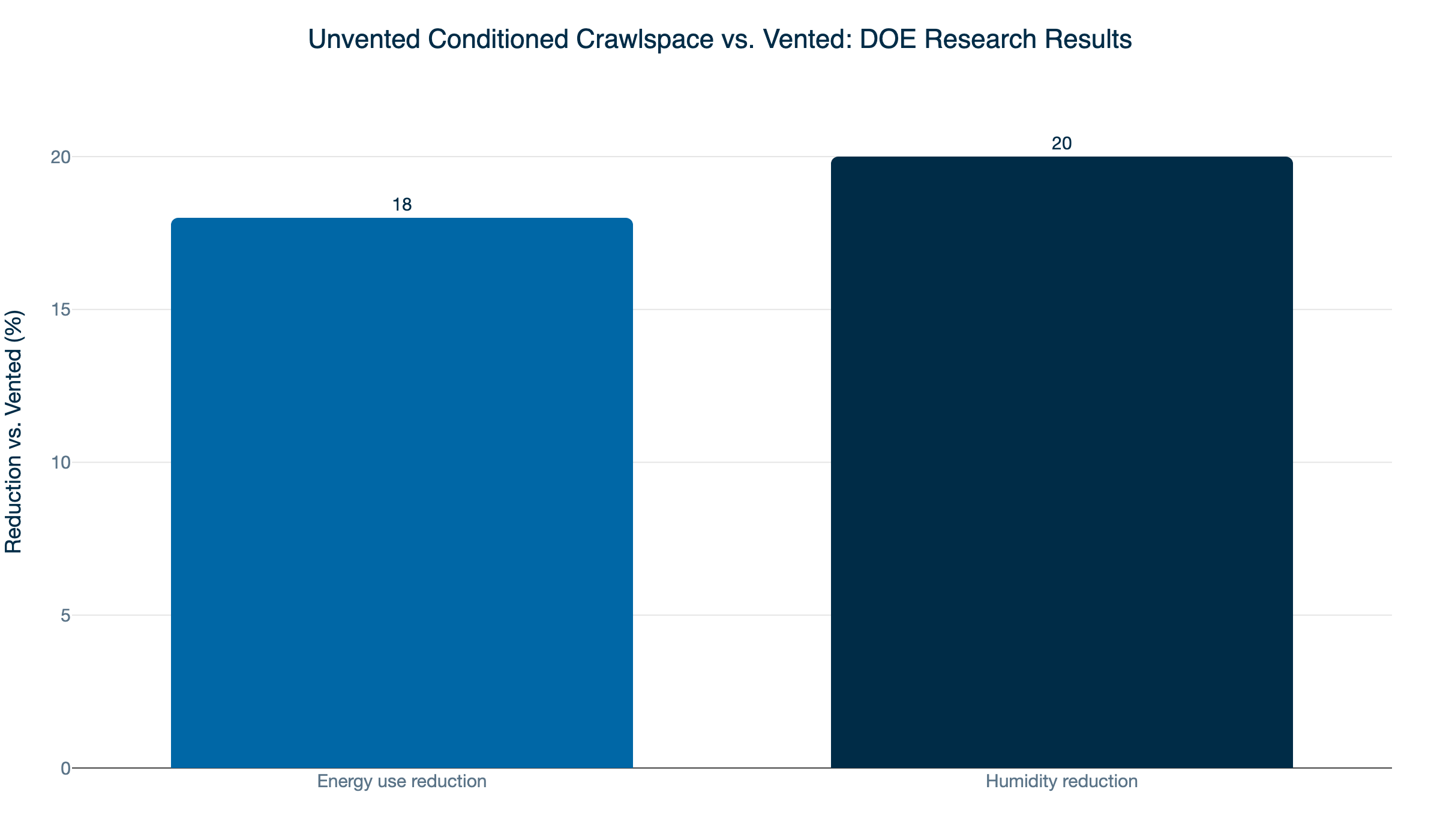
- DOE Building America research found unvented conditioned crawlspaces use 15% to 18% less energy for heating and cooling than vented ones.
- The Twin Cities falls in Zone II for frost depth per Minnesota building code. Northern Minnesota reaches 60 inches.
- If a supply line freezes, shut the main water immediately and apply gentle heat from the faucet end toward the frozen section.
- If pipes burst or you cannot locate the freeze, call a licensed plumber.
The Real Problem Is the Crawl Space, Not Just the Pipe
Crawl space pipes freeze when the space holding them is cold enough to pull heat out of the water faster than the water moving through the pipe can replace it. In a home with open foundation vents, the crawl space temperature tracks outdoor temperatures closely. That is the core problem. Foam around the pipe does not change what is happening to the air around the foam.
Homes built before the 2009 International Residential Code update have vented crawl spaces by default. The rule allowing unvented conditioned crawlspaces as a code-compliant alternative has been in the IRC for over 15 years. Many existing homes in Minneapolis, St. Paul, and the surrounding suburbs were never converted. A home with vented crawl spaces and supply lines running through that space has the combination behind most crawl space freeze calls.
Wrapping those pipes in foam is a reasonable step. It is still a partial step. The other half is changing what the crawl space itself is doing.
How Does a Vented Crawl Space Put Your Pipes at Risk?
Open foundation vents pull outdoor air directly through the crawl space. In Minnesota, that air is well below freezing through January and February. Pipe sleeves slow heat loss, but cold air circulating a few inches away can still freeze an exposed supply line on the coldest nights.
The logic behind venting was reasonable. Cross-ventilation was thought to remove moisture before it could damage floor framing. The problem is that a continental climate like Minnesota’s breaks that logic at both ends of the calendar.
In July, outdoor air in the Twin Cities is often more humid than crawl space air. Opening the vents imports warm, moist air into a cooler space. That air condenses on framing and pipes, creating the moisture problem venting was meant to prevent. In January, those same vents import outdoor air that can stay well below 0°F for days at a time.
The 2009 IRC revision allowed sealed, conditioned crawlspaces as a code-compliant alternative. Research showed that venting does not reliably solve moisture problems in this climate. It also creates a serious freeze liability in winter. The revision is over 15 years old. Many Twin Cities homes built before then still have open foundation vents by default.
If you are not certain whether your crawl space is vented, look for small screened openings set into the foundation wall at or near grade level. Those are foundation vents. If they are open right now, outdoor air has a direct path to your supply lines.
What Is a Conditioned Crawl Space, and How Is It Different?
A conditioned (unvented) crawl space is sealed from outdoor air and brought into the home’s thermal envelope. The space stays above freezing year-round. Pipes inside it are no longer living next to outdoor-temperature air.
Converting a vented crawl space to conditioned requires three things.
Sealing the foundation vents. Temporary covers work for one season. A proper encapsulation seals the vents permanently and closes the outdoor air pathway.
Insulating the crawl space walls, not the floor above. IRC Section R408.3, per the PNNL Building America Solution Center, requires wall insulation to extend from the floor to finished grade, then continue at least 24 more inches vertically or horizontally along the foundation. In Minnesota’s Climate Zones 6 and 7, the required R-values for those walls run to R-15/19 depending on assembly type.
Installing a vapor retarder and managing humidity. A 6-mil polyethylene vapor retarder covers the ground floor of the space. Seams overlap at least 6 inches and are taped. Conditioned air supply or a dehumidifier manages moisture inside the sealed space.
DOE Building America research compared vented and unvented crawlspaces directly. Homes with unvented designs used 15% to 18% less energy for heating and cooling. Humidity in those spaces dropped by more than 20%. Those findings shaped the 2009 and 2012 IRC code revisions.
For pipe freeze prevention, the practical result is straightforward. Your supply lines live in a conditioned space rather than an outdoor air stream. Pipe insulation still adds a useful buffer. But it is no longer fighting the fundamental thermal problem.
How Do You Keep Pipes From Freezing in a Crawl Space?
The most durable protection combines sealing foundation vents, insulating crawl space walls, and keeping the space in the home’s thermal envelope. Pipe insulation alone is a partial fix. Combined with a conditioned crawl space, it adds a meaningful layer of defense on Minnesota’s coldest nights.
Here is the layered approach for Twin Cities homeowners.
Seal the foundation vents before winter. Magnetic vent covers, rigid foam cut to fit the vent opening, or commercial vent plugs cut most outdoor air infiltration for the season. These are stopgap measures. An encapsulation project seals them permanently.
Insulate exposed pipes across their full run. Use foam pipe sleeves matched to the pipe diameter. Cover the full length, not just the sections closest to the exterior wall. Joints and fittings lose heat faster than straight pipe. For sleeve ratings and installation guidance, our post on preventing freeze risk with pipe insulation in Minnesota homes goes into the details.
Close rim joist gaps and penetrations. Spray foam or caulk closes most of the gaps around the rim joist, utility penetrations, and small foundation cracks. An energy auditor can find the spots that are easy to miss on your own.
Know what pipe material you have. PEX has more burst resistance than copper when a freeze does occur, but it still freezes. The difference is in what happens when it freezes. Our post on whether PEX pipes freeze in Minnesota explains what that distinction means in practice for homes that have been partially or fully repiped.
Hold the thermostat at 55°F or above on very cold nights. Heat from the living space conducts through the floor above the crawl space. It is not a substitute for crawl space conditioning. It does extend the buffer on extreme cold nights.
Locate your main water shutoff before winter. If a pipe freezes and bursts before you catch it, cutting the supply quickly limits water damage. Our guide on locating and testing your main water shutoff valve walks through finding and operating the valve before an emergency.
For the permanent fix, plan a crawl space encapsulation project before the next heating season. The energy savings from reduced heat loss often make a significant dent in the project cost over several years. The freeze protection is the more immediate return.
When Should You Worry About Freezing Pipes?
Start watching when outdoor temperatures fall below 20°F, especially with sustained cold lasting more than 24 hours. A crawl space with open foundation vents tracks outdoor readings closely. The risk window for exposed supply lines opens earlier than most homeowners expect.
The 20°F threshold is not a guarantee of a freeze. It is the point where pipes in unprotected or poorly conditioned spaces become vulnerable. Factor in wind direction: a 20°F day with a persistent northwest wind drives cold air through foundation vents faster than a still night at -5°F.
The Twin Cities metro averages multiple nights per year below 0°F. Polar vortex events reach -20°F or lower. The frost depth in the metro is specified in Minnesota Rules 1303. Northern Minnesota reaches 60 inches. These are not abstract engineering figures. They represent the thermal environment that plumbing in this state operates in every winter.
Understanding how outdoor temperature thresholds translate to real freeze risk helps you act before the cold arrives. Our post on what temperature causes pipes to freeze in a Minnesota house covers the specific thresholds by pipe material and exposure type.
Signs that a supply line may be freezing:
- A faucet delivers only a trickle or stops completely while other fixtures in the house run normally.
- Water pressure drops suddenly at one area of the home without an obvious cause.
- You spot frost or ice on a visible section of crawl space pipe.
- A fixture that ran fine yesterday delivers nothing this morning.
If any of these appear on a cold morning, check the crawl space for frost on pipes, wet spots on the vapor barrier, or ice at fittings. Acting before a crack forms keeps a manageable thaw from becoming a water damage claim.
Does Minnesota Code Require Crawl Space Insulation?
Minnesota code allows crawl space walls to carry the insulation load when the space is not vented to the outside, per MN Rule 1322.1102. That is the code-side permission for the conditioned crawl space design. In Climate Zones 6 and 7, wall R-values run to R-15/19 depending on assembly type.
The Minnesota Plumbing Code at MN Rules 4714.0609 requires that supply and yard piping be buried below the maximum local frost depth. In the Twin Cities metro, that practical burial depth is 54 inches minimum. The requirement applies to outdoor and yard piping. But the underlying principle applies to crawl space pipes as well: plumbing in this climate needs protection from the thermal conditions around it.
Any encapsulation or conditioning project in Minnesota typically requires a building permit. Minneapolis and St. Paul run their own permit offices. Most suburbs go through the Minnesota Department of Labor and Industry. A contractor who proposes sealed-vent work without mentioning permits is worth a direct question before the project begins.
The permit step also matters for insurance and future sale. An unpermitted conversion can complicate a homeowner’s insurance claim if a problem develops later. In a competitive Twin Cities real estate market, a properly permitted encapsulation is a verifiable and documented upgrade.
What Should You Do If Your Crawl Space Pipes Have Already Frozen?
Shut the main water supply first, then open the affected faucet. Apply gentle heat from the faucet end toward the frozen section. Do not use open flame. Do not pour boiling water directly on the pipe. If you find water damage or cannot locate the freeze, call a plumber.
Here is the step-by-step.
1. Shut the main water supply. A pipe that has cracked will flood the crawl space when the ice melts. Cutting the water first limits the damage. You may not know the pipe has cracked until you restore pressure after the thaw.
2. Open the faucet on the frozen line. Water needs somewhere to go as the ice releases. A closed faucet can increase pressure behind the thawing section and widen an existing crack.
3. Apply gentle heat from the faucet end toward the suspected freeze. A hair dryer, electric heat tape rated for direct pipe contact, or a portable space heater pointed at the visible frozen section all work. Working from the open faucet toward the freeze lets meltwater escape rather than building pressure behind the thaw point.
4. Avoid open flame, heat guns at close range, and boiling water. Sudden high heat can crack copper fittings. Open flame near crawl space framing and vapor barrier material is a fire risk.
5. Check for damage after the thaw. Watch for dripping at fittings, wet spots on the ground, or a slow pressure drop over the first hour after water flows again. A pipe that thaws without visible leaking may still have a small internal crack that worsens under normal water pressure.
If the frozen section is behind framing, if you cannot identify where the ice is, or if water is already visible when the pipe lets go, stop and call a plumber. A supply line leak inside a crawl space can release significant water before it shows up in the living area above. Our burst and frozen pipe repair team handles these calls throughout the Twin Cities metro.
When to Call Northern Benjamin Franklin Plumbing
Northern Benjamin Franklin Plumbing is locally owned and operated in the Twin Cities. We serve Minneapolis, St. Paul, Blaine, Bloomington, Brooklyn Park, Coon Rapids, Maple Grove, and communities throughout the metro.
Our team handles frozen pipe emergencies, burst pipe repairs, and supply line evaluations for homes with vented crawl spaces that have not been converted to a conditioned design. If your crawl space has never been assessed for winter freeze risk, a plumbing inspection before the coldest months is the right time to find out where you stand.
We back every appointment with our On-Time Guarantee(R): arrive in the window you pick, or we pay $5 for every minute we are late, up to $300. “If there is any delay, it’s you we pay!” That promise means when you need someone at your home on a cold morning, we show up when we said we would.
Call (763) 296-1844 or book online to schedule.
Frequently Asked Questions
What can I pour down the drain to unfreeze pipes? +
Need a technician now?