
Burst Pipe Insurance Claim Minnesota: What to Document First
Key Takeaways
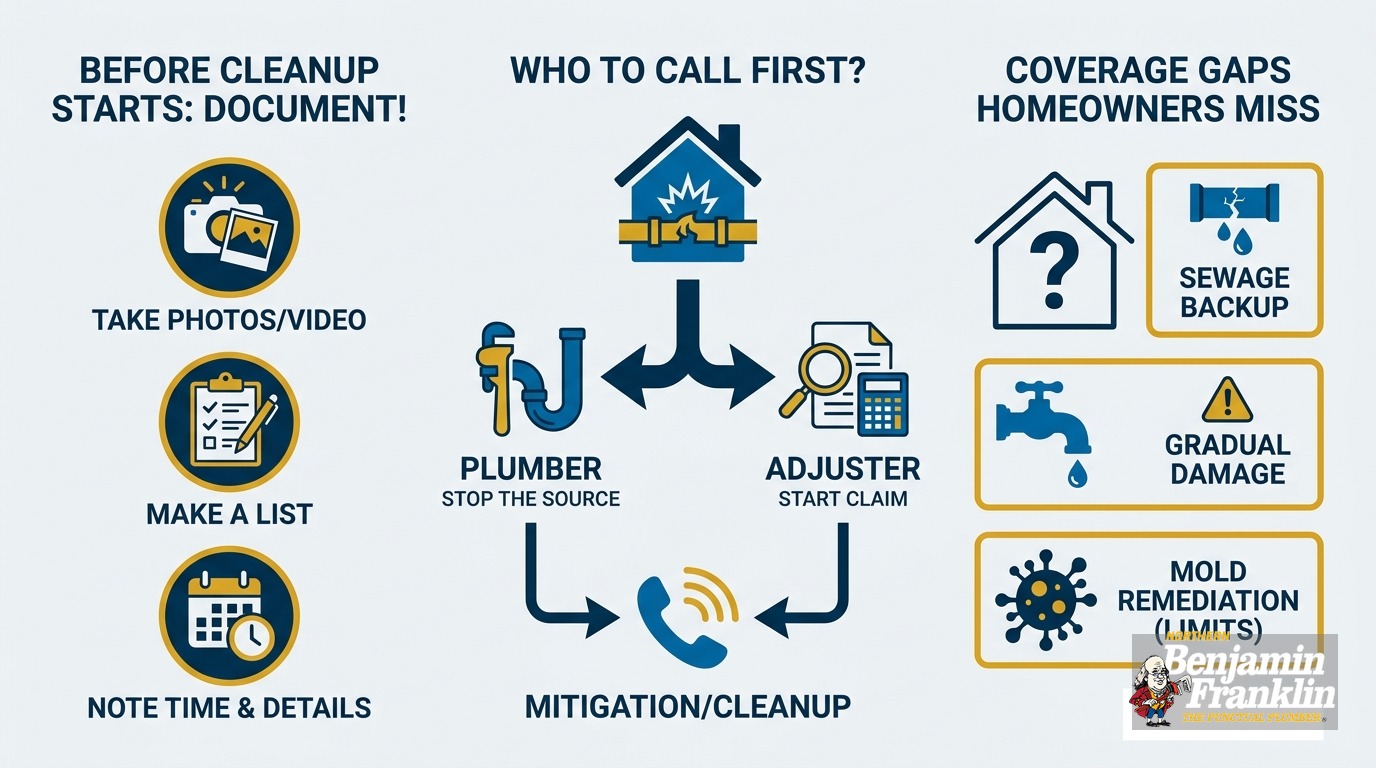
- A burst pipe insurance claim in Minnesota lives or dies on documentation done before cleanup begins.
- Call a licensed plumber first. Their written description of the failure is the backbone of your claim.
- Never say “flood” to your adjuster. Your claim is for a sudden pipe failure - a covered peril.
- Standard policies pay for the structure the water damaged (drywall, flooring, cabinets), not the broken pipe itself.
- Five gaps kill Minnesota claims: vacancy over 30-60 days, thermostat below 55°F, evidence of a slow leak, excluded sewer backup or surface water, and an uninsured underground service line.
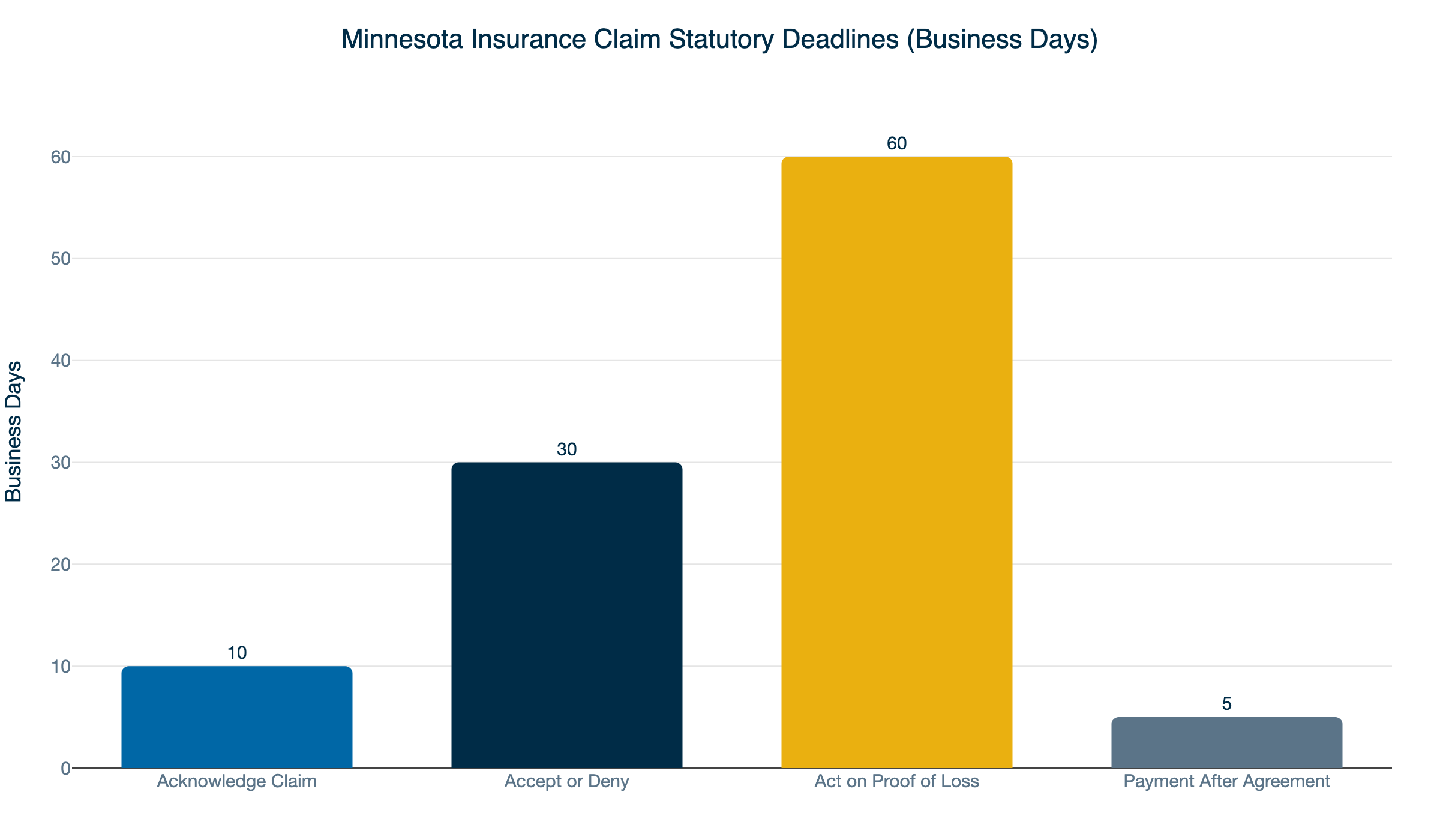
- Under Minn. Stat. § 72A.201, your insurer must acknowledge your claim within 10 business days and accept or deny it within 30.
- Keep the thermostat at 55°F or above when you leave. A setting of 50°F has been cited in denied claims.
Homeowners insurance does cover burst pipe damage in Minnesota - in most cases. But whether a claim pays, and how much it pays, depends almost entirely on what you do in the first few hours after the break. This guide covers exactly what to document before cleanup starts, whether to call the plumber or the adjuster first, and the five coverage gaps that catch Twin Cities homeowners off guard every winter.
Do Insurance Companies Pay Out for Burst Pipes?
Yes, in most cases. Standard homeowners policies cover sudden, accidental water damage from a burst pipe. What they pay for is the structure the water damaged - drywall, flooring, cabinets, insulation. The broken pipe itself is typically not covered.
Water expands approximately 9% in volume when it freezes. Rigid copper pipe cannot flex, so the expansion fractures it. That physics - sudden, accidental, attributable to a freeze event - is what makes most burst pipe losses insurable.
The word that trips homeowners up is “flood.” Flood damage is excluded from standard homeowners policies. A burst pipe is not a flood. It is a sudden pipe failure. The moment you say “flood” to your adjuster, you hand them language from the exclusion column. Use “burst pipe” or “frozen pipe failure” throughout the claims process.
According to homeinsuranceclear.com, standard deductibles now commonly run $1,000-$2,500. The practical threshold for filing is around $8,000 or more. A borderline claim can raise future premiums by more than the payout is worth. Get a repair estimate before you decide whether to file.
Why You Should Call the Plumber Before the Adjuster
Most homeowners reverse the order. They call their insurer first, then scramble for a plumber. The better sequence is the opposite - and it matters more than most people realize.
The pipe that failed is physical evidence. Once it is cut out and replaced, the mechanism that caused the break is gone. Your adjuster needs documentation of what happened, not a verbal summary after the fact.
A licensed plumber who arrives first can do several things the adjuster cannot:
- Stop the water and limit further damage
- Photograph the failed section before cutting it out
- Write down the failure mechanism - where the pipe ran, what material it was, whether it sat near an exterior wall or in an unheated space
- Note the pipe condition, surrounding insulation, and any obvious contributing factors
- Provide a written repair scope the adjuster can reference
The documentation timing matters critically. According to homeinsuranceclear.com, one Minnesota homeowner who documented the break on video before calling their insurer had an adjuster on site by Wednesday and an $18,500 claim paid in three weeks. A contrasting case - where cleanup began before the adjuster arrived - resulted in a four-month resolution and an $11,000 outcome on a comparable loss.
The plumber does not file the claim. But their written work order is the backbone of it.
Northern Benjamin Franklin Plumbing is locally owned and operated and responds to freeze emergencies across the Twin Cities metro. With the On-Time Guarantee®, we arrive in the window you choose or we pay $5 for every minute we are late, up to $300. If there is any delay, it’s you we pay!
What to Document Before Cleanup Starts
This is the list that competitors skip. Run through all five categories before the drying equipment runs and the walls close.
1. Video walk-through of every affected room
Start recording before you move anything. Walk every room where water reached. Get the ceiling, the walls, the floor, and any standing water. Time-stamp the footage. This establishes the pre-cleanup baseline your adjuster needs to evaluate the full extent of damage.
2. Thermostat history and utility logs
Pull your thermostat’s history log immediately. Smart thermostats store this data in an app. Teamshoreline.com notes that some portals purge thermostat history and utility data within days of the event. If your insurer questions whether the home was adequately heated - and they will ask - this log is your primary defense. Download it now.
3. Security camera and entry logs
If you have a home security system or exterior cameras, pull the footage immediately. It documents when the home was last occupied and confirms the timeline of the event. These logs can also purge on short cycles for cloud-connected systems.
4. Moisture readings from wall cavities
Before any drying equipment runs and before walls are opened, a moisture meter reading from the wall cavities records how far the water traveled. Teamshoreline.com notes this window closes once the drying job is done and the walls go back up. Adjusters sometimes dispute the extent of damage after the fact. A pre-drying moisture map makes that hard to argue.
5. Photos of the pipe itself, before removal
The plumber should photograph the failed section before cutting it out. Ask them to note the pipe location, the material, its proximity to an exterior wall or unheated space, and the appearance of the fracture. Request that these photos and a written description of the failure mechanism appear on the work order. That document travels with your claim file.
For more on how Minnesota winters attack pipes in exterior walls, read about protecting pipes from freeze risk before the next cold snap.
How to File a Claim for Water Damage From Burst Pipes
The short answer: Contain the water, document everything, then call your insurer with your policy number and a precise description: “burst pipe” or “frozen pipe failure,” not “flood.”
Here is the full sequence:
- Shut off the main water supply. If you are unsure where your shutoff is, read this before winter sets in.
- Call a licensed plumber to stop the water, document the failure, and begin emergency mitigation.
- Document. Run through the five-category checklist above before cleanup begins.
- Call your insurer’s claims line - not an agent’s personal number. Have your policy number ready. Report a burst pipe or frozen pipe failure. Get your claim number and the adjuster’s direct contact in writing.
- Ask what your policy requires before demolition begins. Some policies require adjuster inspection before walls are opened. Confirm this in writing before you authorize any demolition.
- Keep all receipts. Emergency plumbing, hotel stays if the home is uninhabitable, and meals if you cannot use the kitchen may qualify as additional living expenses (ALE) under your policy. Save every receipt from the moment the pipe failed.
- Get a detailed, itemized repair estimate. Estimates that omit the wall opened to access the break are typically short. Teamshoreline.com identifies this as one of the most common reasons an initial claim payment falls below actual repair cost. The adjuster’s initial estimate is a starting point, not a final number.
When Does Home Insurance Not Cover Burst Pipes?
The short answer: Coverage is typically denied when the home was vacant too long, the heat was set too low, the damage shows signs of a slow leak rather than a sudden break, or the water source falls into an excluded category - sewer backup and surface water most often.
Here are the five gaps Twin Cities homeowners hit most often.
Gap 1: Vacancy
Most homeowners policies define vacancy as 30-60 consecutive days without occupancy. Homeinsuranceclear.com documents a case where a home was vacant 61 days, sustained $40,000 in burst pipe damage, and the claim was denied in full. If you plan to leave for an extended period, call your insurer first. Ask about a vacancy endorsement or a required check-in schedule. Do not assume winter travel is covered by default.
Gap 2: Inadequate heat
Your policy may require you to maintain a minimum thermostat setting. A 50°F setting was cited in at least one denied claim where the pipe ran through a poorly insulated exterior wall. The standard recommendation is to keep the thermostat at a safe minimum when leaving the home. This is also consistent with what the science supports: pipes can freeze in as little as four to six hours at typical Twin Cities winter temperatures.
Gap 3: Slow leak vs. sudden break
A burst from a freeze event is sudden and accidental - a covered peril. A slow leak that has been dripping for months is not. Insurers inspect the damaged area for signs of long-term moisture: staining patterns, mold behind walls, deteriorated material. If the evidence suggests an ongoing leak rather than a sudden failure, the claim may be denied or reduced significantly.
Mold complicates this. Mold that results directly from a burst pipe is generally covered. Mold from a slow leak is almost never covered, and coverage is commonly capped as an endorsement per teamshoreline.com. If mold is present, document it before remediation begins and be prepared to establish a clear timeline for the originating event.
Gap 4: Sewer backup and surface water
Standard homeowners policies in Minnesota exclude flood, surface water, and water backing up from sewers, drains, or sump pumps. These are not the same event as a burst pipe, but they sometimes occur at the same time - especially during a rapid thaw after a deep freeze. The Minnesota Department of Commerce confirms that sewer backup coverage is an optional endorsement, not a base policy benefit.
If you have a finished basement and no water backup endorsement, read about what a backwater valve does and whether your home needs one before the next thaw season.
Gap 5: The underground service line
The water line running from the city main at the property line to your foundation is your responsibility, not the city’s. Geico’s homeowners resource confirms that standard policies do not cover this underground section. If that line freezes and bursts - and in a metro with a frost line of approximately 60 inches, it happens - you need a service line endorsement. Call your insurer and ask whether you have one.
What Not to Say to an Insurance Adjuster About Water Damage
The short answer: Never say “flood.” Don’t describe the problem as gradual or ongoing. Don’t speculate about cause before the plumber’s report is in hand. Let the documentation do the talking.
Here is the plain list:
- Don’t say “flood.” Your claim is for a burst pipe - a sudden, accidental failure. Flood is an excluded peril. Using the word hands the adjuster language from the denial column.
- Don’t say the damage was “gradual” or “ongoing.” Sudden and accidental is a covered peril. Gradual deterioration is not.
- Don’t guess at the thermostat setting. If you do not know exactly what it was set to, say so. Pull the thermostat history log before that data purges, and provide it to the adjuster once you have it.
- Don’t admit you were away “a long time” without first checking your vacancy threshold. Read your policy’s vacancy definition, then answer questions about occupancy accurately.
- Don’t agree to a repair scope before you have an independent estimate. An adjuster’s initial scope often omits demolition, access work, and full restoration. Get a plumber’s itemized estimate first.
If your claim is denied or significantly underpaid and you believe it was handled in bad faith, Minnesota law gives you recourse. Minn. Stat. § 72A.201 sets binding statutory timelines for insurers. The Minnesota Department of Commerce handles consumer complaints at 651-539-1600 or 800-657-3602 for Greater MN.
Minnesota Statutory Deadlines: Holding Your Insurer Accountable
Most homeowners filing a burst pipe insurance claim in Minnesota do not know that state law sets hard deadlines on the insurer. None of the competing articles on this topic mention them.
Under Minn. Stat. § 72A.201, here is what your insurer must do and when:
- 10 business days after you give notice: acknowledge the claim
- 30 business days after notice: accept or deny coverage
- 60 business days after receiving a properly executed proof of loss: act on it
- 5 business days after a settlement agreement is reached: send payment
Write these dates on your calendar the day you file. If your insurer misses any of them, document the delay and contact the MN Department of Commerce. The deadlines are not suggestions - they are statutory obligations.
The chart above maps these timelines visually. Keep it as a reference when tracking your claim’s progress.
If you want to understand what a winter freeze may have done to pipes you cannot see yet, this guide on hidden plumbing damage after a Minnesota winter walks through the spring inspection sequence room by room.
Should You File? The Deductible Calculation
This step belongs before you pick up the phone, not after.
Homeinsuranceclear.com notes that standard deductibles now commonly run $1,000-$2,500, and the practical filing threshold is around $8,000 or more. Filing a claim below that threshold can raise future premiums by more than the payout is worth over the next several years.
Before you file, run this calculation:
- Get a written repair estimate from a licensed plumber.
- Subtract your deductible.
- Estimate the likely premium increase over the next three to five policy years.
- Compare the net payout against the cumulative premium cost.
If the net number is significant and the damage is clearly sudden and accidental, file. If it is borderline, you can call your insurer’s claims line - without formally filing - and ask a hypothetical: if I filed for approximately this amount of damage, how might it affect my renewal premium? Some adjusters will answer. It is not a guarantee, but it gives you better information than guessing.
To get a real repair estimate before you decide anything, call Northern Benjamin Franklin Plumbing at (763) 296-1844 or book online. Our team is locally owned and operated, and we can give you an honest scope: what broke, how far the water traveled, and what it costs to fix it right. If you call us first, you get the documentation you need for a strong claim and a licensed plumber who knows Twin Cities pipe systems from the inside out.
For the freeze-prevention side of this - what to do before a pipe fails rather than after - read through how to thaw frozen pipes safely in a Minnesota home before the next cold stretch arrives.
Frequently Asked Questions
Do insurance companies pay out for burst pipes? +
How do I file a claim for water damage from burst pipes? +
When does home insurance not cover burst pipes? +
What should I not say to an insurance adjuster about water damage? +
Need a technician now?