
Backwater Valve Basement Minnesota: Code, Permits, Grants
Key Takeaways
- Installing a backwater valve in your basement is likely required under Minnesota code if you have below-grade plumbing in a Twin Cities home.
- A backwater valve blocks sewage from reversing through your sewer lateral into your basement during a city main surcharge event.
- A backwater valve and a backflow preventer are not the same device. They sit on different plumbing systems and solve different problems.
- Minnesota Rules 4715.1160 applies this requirement to drainage piping serving fixtures below the curb sewer crossing elevation. That covers virtually every Twin Cities basement with plumbing fixtures.
- Installation requires a plumbing permit and a licensed Minnesota plumber. The permit is required even if you do the work yourself under the homeowner exemption.
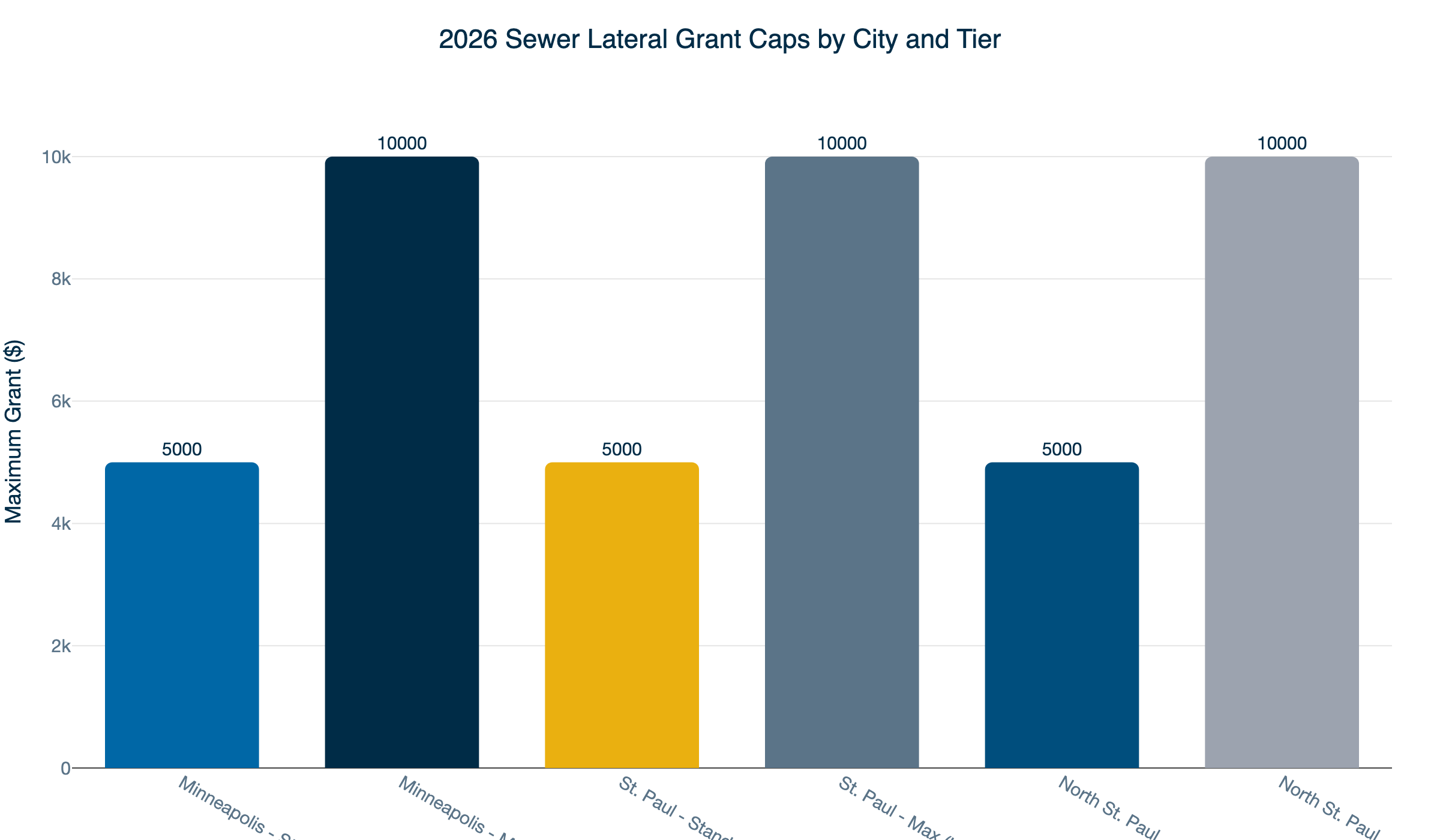
- Minneapolis, St. Paul, and North St. Paul each have sewer lateral grant programs with caps up to $10,000. Some 2026 funds are already fully allocated.
- Northern Benjamin Franklin Plumbing is locally owned and operated in the Twin Cities. Call (763) 296-1844 or book online to schedule a licensed assessment.
What Is a Backwater Valve, and How Does It Work?
A backwater valve is a one-way gate in your sanitary sewer lateral, the pipe connecting your home to the city sewer main. A hinged flap stays open for normal outflow. When city sewer pressure reverses and sewage flows backward, the flap seals shut and blocks sewage before it reaches your basement floor drains.
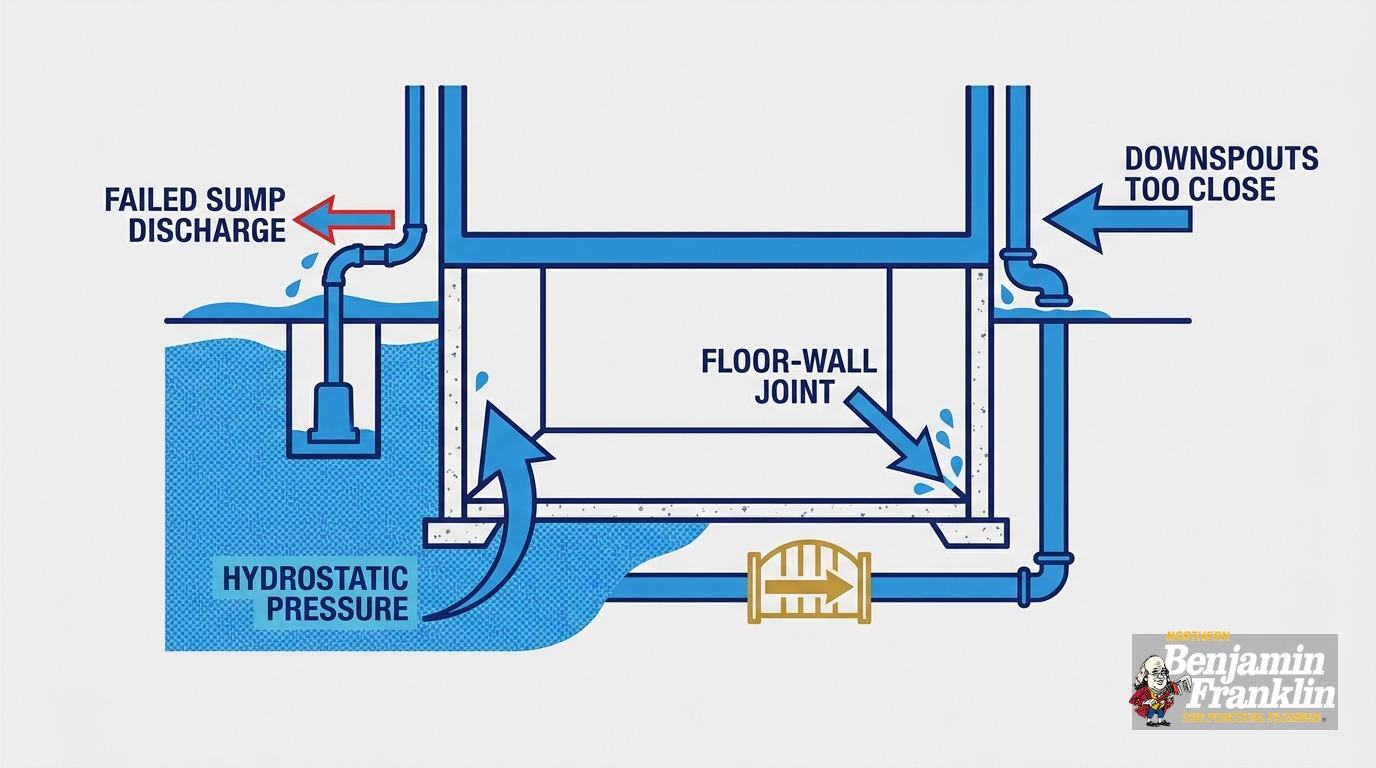
Here is the failure scenario the valve prevents. During a heavy rain or rapid spring snowmelt, the city sewer main can take in more volume than it can move. When the system surcharges, pressure builds and flow reverses in residential laterals. Without protection, that sewage enters your home through the lowest available opening. In a Twin Cities basement, that is typically the floor drain, a toilet, or a utility sink.
The valve itself is a simple mechanical device. There are no electronics and no moving parts beyond the flap. The flap rides on a hinge inside the valve body. Gravity and outward water pressure hold it open during normal flow. When pressure reverses, sewage from the main side pushes the flap against a seat. The seal is mechanical, not electric.
InspectAPedia’s guide to sewer backup prevention identifies three approaches for protecting basement plumbing: standpipes, which contain overflow inside a sealed chamber; backwater valves, which block sewage entirely at the lateral; and ejector pumps above a high point, which physically disconnect basement drainage from the sewer. For most existing Twin Cities homes, a backwater valve is the most direct solution.
One detail matters for installation: the valve must stay accessible after the work is done. Minnesota code requires a bolted cleanout cover that remains reachable for cleaning and inspection. Finishing the concrete floor over the cleanout cover is one of the most common installation mistakes. When the valve eventually collects debris, an inaccessible cover cannot be cleared without major demolition.
Is a Backwater Valve the Same as a Backflow Preventer?
No. A backwater valve sits on your sanitary sewer lateral and stops sewage from reversing into your basement. A backflow preventer sits on your potable water supply line and stops contaminated water from entering your drinking water. They protect different systems. Asking for one when you need the other provides zero protection against the risk you have.
This confusion costs homeowners real money. The mistake, documented clearly by Absolute Drain and Plumbing, plays out like this: a homeowner in a low-lying neighborhood asks for a “backflow preventer” to stop sewage backup. A plumber installs a supply-side backflow preventer. The next heavy rain backs up through the floor drain anyway. The work was done correctly. The wrong device was specified.
Here is the quick way to keep the terms straight:
- A backwater valve is a drainage device. It sits in your sewer lateral. It stops sewage from reversing into your basement.
- A backflow preventer is a supply-side device. It sits on incoming water service lines. It prevents contamination of your potable water supply.
Beyond sitting on different systems, they carry different maintenance requirements. Backflow preventers, specifically RPZ (reduced pressure zone) assemblies and double-check assemblies, require annual testing by a certified backflow assembly tester under Minnesota code. Backwater valves on sewer laterals do not. They need periodic cleaning and must stay accessible, but there is no state-mandated annual testing cycle for a sewer-side backwater valve.
When calling to discuss basement flood protection, be specific. Describe the problem as “sewage backup through the floor drain” and the solution as “a backwater valve on my sewer lateral.” That leaves no room for the wrong device to be ordered.
For more on what annual testing involves and when it applies in Minnesota, our post on backflow preventer testing in Minnesota covers the requirements in detail.
Does Minnesota Code Require a Backwater Valve in Your Basement?
Almost certainly yes. Minnesota Rules 4715.1160 requires a backwater valve on drainage piping serving fixtures located below the elevation where the building sewer crosses the curb or property line. That threshold applies to virtually every Twin Cities home with basement plumbing fixtures.
The code rule is precise about scope. Any fixture that drains below the curb-crossing elevation requires protection. For new construction and remodels that add below-grade dwelling space, the requirements go further. All below-grade fixtures must run on a separate branch drain protected by both a backwater valve and a gate valve. The gate valve sits on the sewer side of the backwater valve.
Minnesota Rules 4714.0710 works alongside Minnesota Rules 4715.1160 to govern the drainage of fixtures below the elevation of the next upstream manhole. Together, these provisions establish the protection framework for below-grade plumbing in the state.
A waiver exists, but it is narrow. Both of these conditions must be met simultaneously: the sanitary sewer receives no stormwater, AND the building sits high enough above the sewer main that backflow flooding is judged impossible by the authority having jurisdiction. In the Twin Cities metro, that second condition is almost never satisfied. MCES infrastructure constraints and the frost-depth placement of basements put most metro homes below the waiver threshold.
The current code framework is Chapter 4714, based on the 2015 Uniform Plumbing Code with Minnesota amendments. It is administered by the Department of Labor and Industry under Minn. Stat. Chapter 326B. Minnesota uses the UPC, not the International Plumbing Code used in many other states. Plumbers who trained in IPC states encounter different venting and fixture requirements here, which is one reason local licensing matters.
Why Virtually Every Twin Cities Basement Qualifies
The code trigger is elevation. Basement fixtures below the curb sewer crossing elevation require protection. In the Twin Cities, frost-depth constraints put nearly every basement below that threshold.
Minnesota requires water service lines to be buried at a minimum of 42 inches below finished grade in most of the state. Northern counties require deeper burial. Sanitary sewer mains are buried at similar depths. The point where a residential sewer lateral crosses the curb typically sits shallower than the basement floor elevation. That relationship puts the basement below the crossing elevation and triggers the code requirement.
The practical test is simple. Does your basement have a floor drain, a toilet, a laundry sink, a utility sink, or any other plumbing fixture? If yes, you have below-grade plumbing. Code requires a backwater valve on the lateral serving those fixtures.
Metropolitan Council environmental services documentation on inflow and infiltration shows a direct relationship between precipitation volume and loading on the metro sewer system. Communities that fail to reduce I/I face ongoing financial surcharges from MCES. That regulatory pressure is the engine behind the grant programs described later in this post.
Older homes in Minneapolis and St. Paul face elevated risk for two reasons. First, they are more likely to lack a valve. Backwater valve installation was not standard practice before the 1990s. Second, older sewer laterals in those neighborhoods are more prone to cracking and excess inflow, which compounds the surcharge risk when the metro system loads up during a storm.
What Causes Sewer Backups in the Twin Cities?
Most sewer backups in the metro happen during heavy rain or rapid spring snowmelt. Volume overwhelms the MCES regional system, pressure reverses in residential laterals, and sewage enters basements through floor drains, toilets, or utility sinks. Twin Cities spring runoff, often compressed into a matter of days, is the highest-risk period of the year.
The underlying driver is excess inflow and infiltration (I/I) in the regional sewer system. Aging infrastructure, improper storm drain connections, and cracked residential laterals allow stormwater to enter the sanitary sewer during rain events. When that added volume arrives faster than the system can process it, the sewer surcharges and pressure reverses.
Spring in the Twin Cities compresses this risk sharply. A full winter’s snowpack can melt in days. Our post on spring runoff and your basement covers what that surge means for sump pumps and floor drains. A backwater valve and a sump pump address different problems and are complementary, not interchangeable. A sump pump handles groundwater infiltrating through the foundation. A backwater valve handles sewage reversing through the sewer lateral. Both can be active in the same storm event.
It is worth confirming the source of basement water before choosing a response. Sewage backup and a simple blocked drain look similar from inside a home. They require different cleanup procedures and carry different health risks. Our post on how to tell a sewer backup from a drain clog walks through the diagnostic steps.
What the Installation Involves
A licensed Minnesota plumber cuts into the sanitary lateral, typically in the basement floor, and installs the valve body in the pipe. The exact location depends on where the lateral exits the foundation wall and the depth of the pipe at that point.
The work requires breaking and removing a section of concrete floor over the sewer pipe. The plumber excavates to the pipe, cuts into the line, and sets the valve body with the flow arrow oriented toward the street. A bolted cleanout cover is then set flush with the finished floor. The concrete is patched around the cover. That cover must remain permanently accessible.
For new construction and remodeled below-grade spaces, a gate valve on the sewer side of the backwater valve is required by code. For existing home retrofits, adding the gate valve is best practice even where the local authority does not require it. The gate valve provides an additional shutoff point for servicing the lateral.
The valve body must be sized to match the lateral pipe. Residential laterals in the Twin Cities are typically four-inch cast iron or PVC. Older homes, particularly those built before the 1960s, often have cast iron laterals. If a plumber opens the floor for a valve installation and finds deteriorating pipe, addressing that section at the same time avoids reopening the floor for a second project. Both scopes are within the normal work order for a drain and sewer plumber.
Most backwater valve installations are completed in a single day. The work does not interrupt water service to the home. The floor drain and protected lateral fixtures will be offline while the valve body is being seated. Once the valve is set and the concrete is patched, the system is back in service.
Do I Need a Permit?
Yes. A plumbing permit is required before installation begins, and work must be performed by a licensed Minnesota plumber. The homeowner exemption in Minnesota law releases you from the licensing requirement for your own home, but the permit and inspection remain mandatory under state plumbing code.
The exemption in Minn. Stat. §326B.42 is frequently misread. It means a homeowner does not need to hold a plumber’s license to perform work on their own home. It does not make the permit optional. Unpermitted plumbing work creates disclosure obligations at resale, can affect title, and can complicate a homeowner’s insurance claim after a sewer loss.
After installation, a local building inspector visits to confirm that the valve is correctly located, that the cleanout cover is bolted and accessible, and that the gate valve is in place where code requires one. The inspection is a field verification, not a major undertaking.
When you schedule a backwater valve installation with Northern Benjamin Franklin Plumbing, our team applies for the permit as part of the project scope. You do not manage the paperwork separately.
Are There Grants That Help Cover the Cost?
Three Twin Cities municipalities have sewer lateral grant programs with caps from $5,000 to $10,000. Minneapolis and St. Paul 2026 funds are largely or fully allocated. North St. Paul has funds available through December 31, 2026. Eligibility depends on location, income, and project scope. Confirm scope with your city’s public works department before applying.
Minneapolis Private Sewer Lateral Grant
Metropolitan Council funds this program. The 2026 application window ran March 2-20 and is now closed. Awards ranged from $5,000 to $10,000 per property, with the amount tied to the CDC Social Vulnerability Index score for the property’s census zone. The program is lottery-based. A waitlist is in place for 2026. Eligible properties are owner-occupied single-family homes, duplexes, and triplexes. Three bids from Minneapolis Target Market Program contractors are required before work begins. Program and waitlist information.
St. Paul MCES Sewer Lateral Grant
All 2026 funds were fully allocated as of April 2026. When the next cycle opens, the program structure is 90% of eligible cost up to $10,000 in LIHTC (low-income tax credit) zones, and 50% of eligible cost up to $5,000 outside those zones. Three bids from City of St. Paul licensed house sewer contractors are required. Program details and future cycle information.
North St. Paul I/I Grant
Up to $5,000, covering 50% of eligible cost, for standard applicants. Up to $10,000 for income-qualifying homeowners. Eligible work includes lateral repairs, foundation drain disconnections, and sump pump installation. Work must be completed by December 31, 2026, or until funds run out. Program details.
An important note on scope: These programs primarily target sewer lateral repair and inflow/infiltration disconnection. Whether a backwater valve installation qualifies as eligible scope depends on each city’s interpretation. Call your city’s public works department to confirm scope eligibility before you apply.
If your backwater valve project also involves sewer lateral repair or replacement, our sewer line repair and replacement page covers what that scope looks like and what to expect from the process. Financing is available for larger projects. Ask our team for details when you call.
What to Do Next
If your Twin Cities home has basement plumbing, there is a strong probability that Minnesota code requires a backwater valve on your sewer lateral. If you have already seen sewage backing up through a floor drain, that requirement is not theoretical.
The next step is a licensed plumber assessment. A plumber confirms whether your lateral already has a valve, identifies the correct installation point, and sizes the valve to your pipe. If your address falls in Minneapolis, St. Paul, or North St. Paul, ask about grant eligibility before signing a contract. Timing matters. Some programs are lottery-based and cycle once a year, and the window to get on a waitlist closes before the next cycle opens.
Northern Benjamin Franklin Plumbing is locally owned and operated in the Twin Cities. Our licensed team is familiar with the Minnesota Plumbing Code and handles permit applications as part of every project. We back every appointment with the On-Time Guarantee(R): we arrive in the window you book, or we pay you $5 for every minute we are late, up to $300. “If there is any delay, it’s you we pay!”
Call (763) 296-1844 or book online to schedule your assessment.
Frequently Asked Questions
Does my Twin Cities home need a backwater valve? +
What is the difference between a backwater valve and a backflow preventer? +
Are there grants to help pay for a backwater valve installation in Minnesota? +
Need a technician now?