
Shower Drain Slow Draining: What's Actually in Your Clog
Key Takeaways
- A shower clog is a two-component problem: keratin protein from hair, bonded with calcium stearate from soap scum. Each requires a different treatment.
- Baking soda and vinegar neutralize each other on contact. The fizz is mostly mechanical, not chemical. Neither dissolves the main components of a shower clog.
- Most commercial drain openers dissolve hair but cannot dissolve calcium stearate. Soap scum is an inorganic mineral salt, not organic matter.
- Boiling water is 212°F. PVC softens above 175°F. A pipe manufacturer confirms this risk directly. Use warm tap water, not boiling, if your home has PVC drain lines.
- Twin Cities municipal water in Minneapolis and St. Paul is relatively soft. Many outer-ring suburbs supply groundwater at 10-20+ grains per gallon, which creates more soap scum per shower and faster drain buildup.
- If clearing visible hair does not restore normal flow, the pipe walls likely have a soap scum coating. An enzyme soak or a mechanical snake is the next step. If neither works, call a plumber.
Why Shower Drains Slow Down Differently Than Kitchen Drains
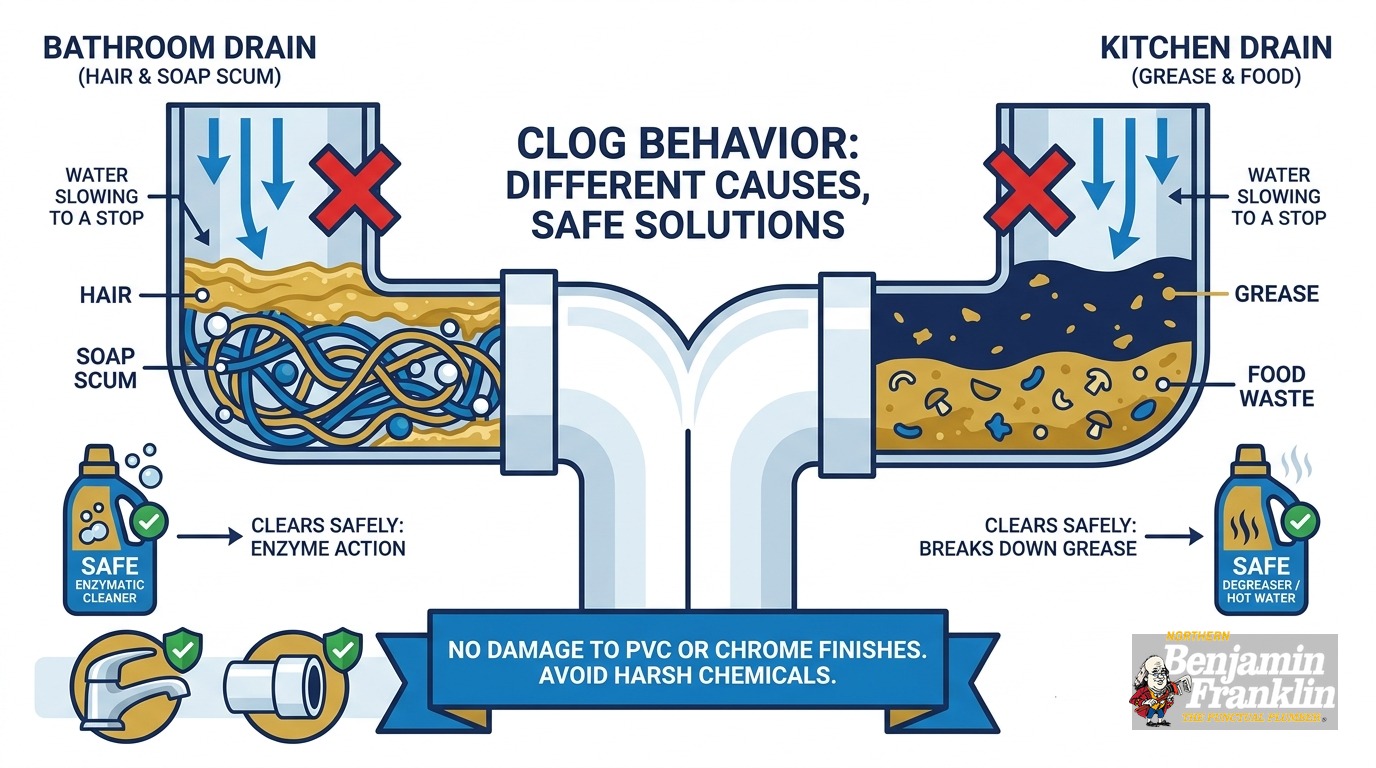
Your kitchen drain handles grease, food particles, and detergent. Your shower drain handles hair, skin cells, body oils, and soap residue. These are different materials. They clog differently. They respond to different treatments.
Kitchen grease is made of triglycerides. Alkaline cleaners dissolve triglycerides through a process called saponification. The fat reacts with a high-pH base to form water-soluble soap. Hot water helps because it keeps grease liquid and mobile.
Shower residue works nothing like that. Hair is keratin, a structural protein. Soap scum is calcium stearate: a mineral salt that forms when calcium ions in your water react with the fatty acids in bar soap or body wash. That is a fundamentally different chemical reaction. The treatment logic for a kitchen drain is the wrong tool for a shower drain.
This mismatch is why so many Twin Cities homeowners clear their shower drains in January and deal with the same slow drain again by March. The standard six-step list - boiling water, baking soda, vinegar, plunger, snake, chemical cleaner - gets applied to every drain in the house. It does not explain which step targets which component, or what can damage your pipes in the process. Most of those steps address one component of a shower clog at best. Some make the situation worse.
Understanding what is actually in the clog is the shortest path to clearing it for good.
What Is Actually Inside a Shower Clog?
A shower clog is almost always two materials working together: keratin protein from hair and calcium stearate from soap scum. These components require different treatments. Most DIY approaches target only one, which is why the drain slows again within weeks.
Keratin: the hair component. Hair is made of keratin, the same protein as your fingernails. It tangles easily and catches on rough pipe surfaces. It forms a mesh that traps everything else passing through the drain. Alkaline chemicals containing sodium hydroxide can break keratin down. They hydrolyze the protein’s peptide bonds into water-soluble fragments. This is the chemical mechanism behind most commercial drain openers.
Calcium stearate: the soap scum component. Soap scum forms when the calcium and magnesium ions dissolved in your water react with the fatty acids in bar soap, shampoo, or body wash. The result is calcium stearate: an insoluble, waxy mineral salt. It coats pipe walls, trap hardware, and any hair mesh already in the drain. It is not organic matter. Alkaline drain cleaners cannot dissolve it. Enzyme cleaners cannot digest it. Removing it requires mechanical disruption, an acid treatment, or a chelating agent.
The two components reinforce each other. The calcium stearate coating creates a rough, sticky surface that catches new hair faster. The hair mesh traps more soap scum as water flows through. Clear one without addressing the other and the cycle restarts within weeks.
There is one more material worth noting. Kitchen grease is a triglyceride - it responds to alkaline saponification in a way that shower scum does not. This is why advice written for a kitchen sink does not translate to a shower drain. The molecules are different. The reactions are different.
Does Baking Soda and Vinegar Actually Clear a Shower Clog?
No. The fizzing reaction neutralizes both ingredients and produces mostly CO2 and water. Neither baking soda nor vinegar dissolves calcium stearate or breaks down keratin efficiently. The fizz may loosen surface debris, but it does not clear a real clog.
Baking soda is sodium bicarbonate, a mild base. Vinegar is dilute acetic acid. When they meet, they neutralize each other. Carbon dioxide gas escapes as bubbles. The reaction leaves behind a weak sodium acetate solution. Drain chemistry references are clear on this point: neither ingredient acts meaningfully on calcium stearate or hydrolyzes keratin at household concentrations.
The fizz creates some mechanical turbulence in the pipe. That turbulence can move loose debris sitting near the top of a partial clog. This is why some homeowners notice minor improvement after trying this method. But the fizz does not clean the coating off pipe walls. It does not break down a compacted hair mesh.
If baking soda and vinegar are already part of your regular drain maintenance and the drain keeps slowing down, this is the explanation.
Are Chemical Drain Cleaners Safe for Shower Drains?
It depends on the cleaner, your pipe material, and how often you use it. No single off-the-shelf cleaner addresses both components of a shower clog.
Most commercial drain openers use sodium hydroxide (NaOH) as their active ingredient. NaOH is highly alkaline. It does dissolve keratin by hydrolyzing the protein into water-soluble fragments. For a hair clog, it is chemically effective on that one component.
The problems are threefold.
First, NaOH does not dissolve calcium stearate. Soap scum is an inorganic mineral salt. If your slow drain has significant soap scum buildup, a caustic cleaner addresses only half the problem.
Second, NaOH drain cleaners are exothermic: they generate heat while dissolving organic material. That heat compounds the thermal stress on PVC pipes and joints. Repeated use softens and weakens PVC fittings over time. A plumber diagnosing a leak near a drain joint sometimes traces the cause back to this combination: chemical exposure plus heat stress, repeated over years.
Third, concentrated acids and bleach can pit and etch chrome and brass drain hardware. Standard commercial drain cleaners are a long-term risk to chrome finishes.
Enzyme-based drain cleaners are a gentler option for regular maintenance. They break down organic material including hair, skin cells, and body oils without generating heat and without harming PVC or septic systems. Many carry an EPA Safer Choice label that verifies safer chemical ingredients. The trade-off: enzymes cannot act on calcium stearate, so they do not address the soap scum layer on their own.
What Actually Works on Hair vs. Soap Scum
For a drain that has slowed but is not completely blocked, work through these steps in order.
Step 1: Physical removal first. Pull the drain cover. Remove any visible hair with a drain claw or a zip-it style tool. This eliminates the keratin mesh that anchors the rest of the buildup. These tools cost a few dollars and reach several inches into the trap arm. Skip this step and every chemical you pour in has to fight through the hair before it reaches the pipe walls.
Step 2: Address the soap scum layer. Once the hair is out, the calcium stearate coating on the pipe walls is the target. An enzyme cleaner soaked overnight can loosen the organic material bonded into the scum layer: body oils, skin cells, residual soap. For a heavier mineral deposit, a dilute citric acid solution or plain white vinegar left to soak - not the baking-soda-plus-vinegar combination - can begin dissolving the calcium stearate slowly. Neither is fast. Neither replaces a mechanical snake on a significant buildup.
Step 3: Flush with warm water, not boiling. The next section explains why boiling is a problem. Warm tap water is sufficient to carry loosened material through the trap.
For prevention: a mesh drain cover is the single most effective maintenance step available to a homeowner. It catches hair before it enters the pipe. Wiping visible soap scum off the drain cover and surrounding tile weekly keeps the load on the drain lower over time. It is a small habit with a measurable effect.
Under Minnesota law, homeowners may perform limited plumbing work on their own primary residence. Basic drain clearing is well within that scope. Anything involving the drain line itself, a trap replacement, or work past the trap arm is a job for a licensed plumber.
Is It Safe to Pour Boiling Water Down a Shower Drain?
Not if your home has PVC drain lines, and most Twin Cities homes built after the mid-1970s do. Boiling water is 212°F. PVC begins to soften between 140°F and 175°F.
Oatey, a pipe manufacturer, confirms this directly: boiling water can warp PVC pipe walls and loosen joints, especially under sustained contact. One pour may not cause visible damage. Repeated pours over months can weaken the joints in ways that show up as leaks later.
Cast iron drain pipes, common in Minneapolis and St. Paul homes built before 1960, handle heat without this concern. Copper does too. But if your home has PVC drain lines, warm tap water - around 120 to 140°F - is the safe upper limit. It flushes loose debris without approaching PVC’s stress range.
If you are not sure what your drain lines are made of, a plumber can identify the material in a few minutes. Our post on how long home pipes last covers the main pipe materials found in Twin Cities housing stock, what each handles, and what the typical lifespan looks like for homes of different ages.
Does Water Hardness in the Twin Cities Make Soap Scum Worse?
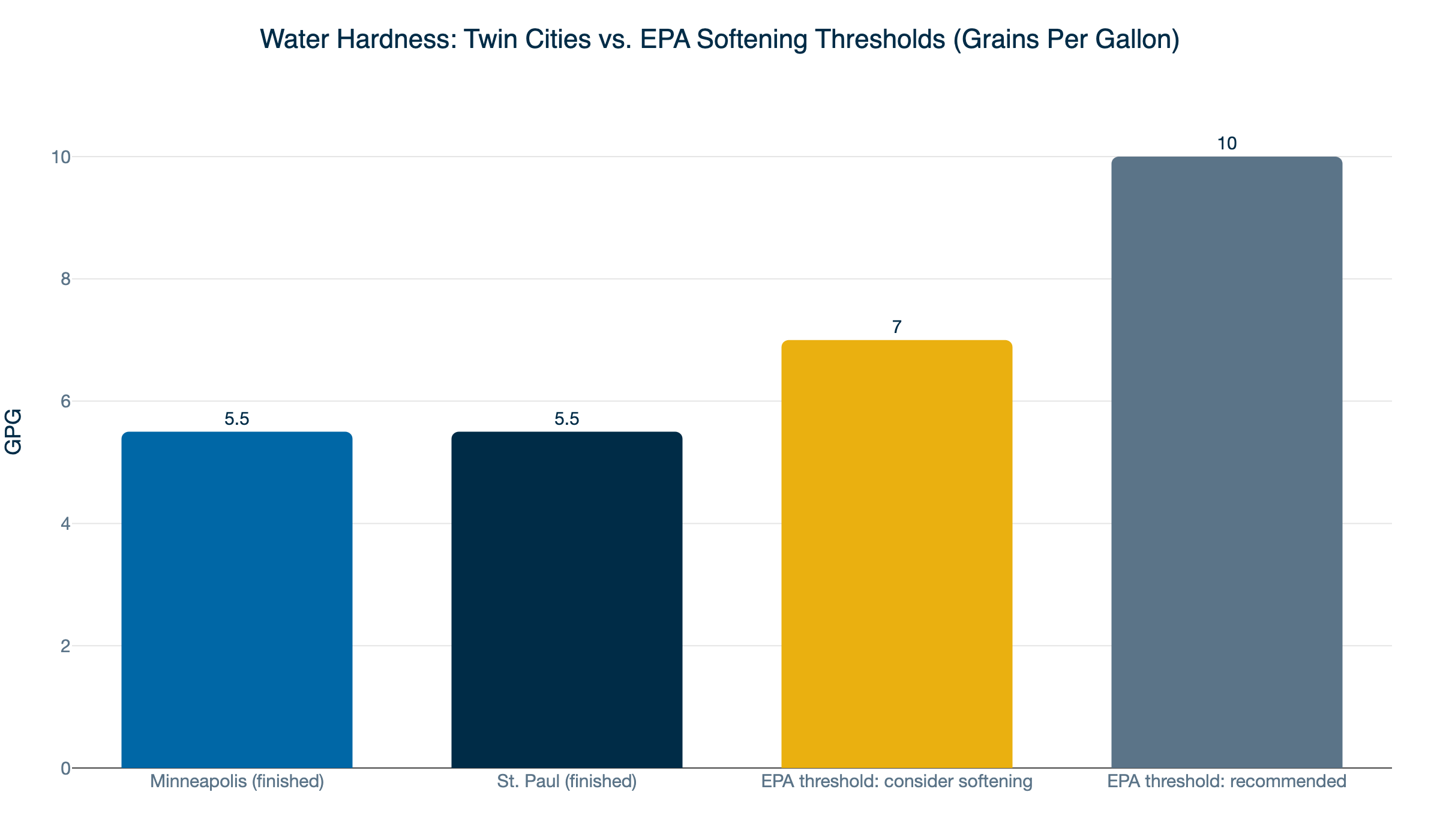
Yes, especially in outer-ring suburbs. Minneapolis and St. Paul treat their municipal water to about 5.5 grains per gallon, below the level where significant scaling occurs. Many suburbs drawing on groundwater supply 10-20+ grains per gallon, which produces more calcium stearate per shower and faster drain buildup.
Minneapolis finishes its water at approximately 5.5 grains per gallon (GPG) through lime softening of Mississippi River water. St. Paul Regional Water Services treats to approximately 5-6 GPG through a similar process. Both are below the EPA’s 7 GPG threshold where water softening may begin to benefit a home.
The suburban picture is different. Many outer-ring suburbs draw on glacial aquifer groundwater. These include Eagan, Lakeville, Woodbury, Eden Prairie, and Maple Grove, among others. That groundwater is naturally hard. The EPA’s 2026 water softener guidance identifies 10 GPG as the level where softeners are typically recommended. These suburbs frequently supply water in or above that range.
More calcium and magnesium ions in your water means more calcium stearate forms per shower. A suburban home without a water softener accumulates soap scum faster than a comparable household in Minneapolis or St. Paul. The drain slows sooner. It also clears less completely with the same DIY effort, because the soap scum layer rebuilds quickly between cleanings.
This is one reason a whole-home water softener is worth evaluating for suburban homeowners who deal with recurring drain slowdowns, scum buildup on tile and glass, or shortened fixture life. The calcium stearate problem does not go away entirely with a softener, but it becomes significantly more manageable.
When Should I Call a Plumber for a Slow Shower Drain?
Call a plumber when the drain stays slow after clearing visible hair and running an enzyme soak. Multiple drains slowing at the same time, or gurgling sounds from other fixtures, both point to a deeper issue that DIY tools cannot reach.
Most single-fixture slowdowns are a clog in the trap arm: the short horizontal section of pipe between the drain opening and the vertical stack. A drain claw reaches this area. If the drain returns to normal flow after clearing visible hair, you have handled it.
Call a plumber when:
- The drain remains slow after removing visible hair and trying an enzyme treatment. This usually means the soap scum layer is significant, or there is a mechanical obstruction further in the line.
- Multiple drains in your home are slow or backing up at the same time. That pattern points to a main-line blockage, not a single-fixture clog. No fixture-level tool resolves a main-line problem.
- You hear gurgling in the toilet or another fixture when the shower runs. This is a sign of a venting problem or a partial blockage further down the drain stack. Our post on gurgling drains and plumbing vent problems explains what causes that sound and what a fix involves.
- The drain has been slow for more than a few weeks despite multiple DIY attempts. A mechanical obstruction - a piece of dropped hardware, a misaligned pipe, a root intrusion - does not respond to cleaners or shallow snaking at the drain level.
- You are in a home built before 1970 with cast iron or galvanized steel drain lines. These materials develop interior scale and corrosion over time that narrows the pipe from the inside. A drain claw removes the surface clog but does not touch the buildup on the walls. If slow drains are recurring in an older home, a camera inspection of the line is worth scheduling.
A drain clearing service from a licensed plumber reaches further into the line than any consumer tool. It also confirms whether the blockage is at the fixture, the trap arm, the branch line, or the main stack - which determines what the fix actually is.
Address the Slow Drain Before It Becomes a Blocked Drain
A shower that drains slowly still drains. That makes it easy to leave for next weekend. But the same chemistry that slowed the drain keeps building up whether or not you notice it. Calcium stearate does not dissolve on its own between showers. Hair continues to catch on the rough surface. The window between a little slow and standing water at your ankles is shorter than most homeowners expect.
Clearing a slow shower drain early - before it backs up - is a 10-minute job with a drain claw and an enzyme soak. Clearing a fully blocked shower drain after it has backed up into adjacent tile grout is a different situation entirely.
When the DIY steps are exhausted, or when you need a plumber the same day, the team at Northern Benjamin Franklin Plumbing is locally owned and operated here in the Twin Cities. We know the pipe materials in this market, the water conditions in each part of the metro, and how the two interact. We schedule in windows that work for your day. We show up in the window we commit to. That is the On-Time Guarantee(R). If there is any delay, it’s you we pay!
Call us at (763) 296-1844 or book online.
Frequently Asked Questions
Does baking soda and vinegar actually unclog a shower drain? +
Are chemical drain cleaners safe to use in a shower with PVC pipes? +
Why does my shower drain slow down again after I clear it? +
When should I call a plumber for a slow shower drain? +
Need a technician now?