
Sediment in Hot Water from Tap: 3 Causes, 3 Fixes
Key Takeaways
- The first test: does the same sediment appear in cold water? If yes, the water heater is not the source.
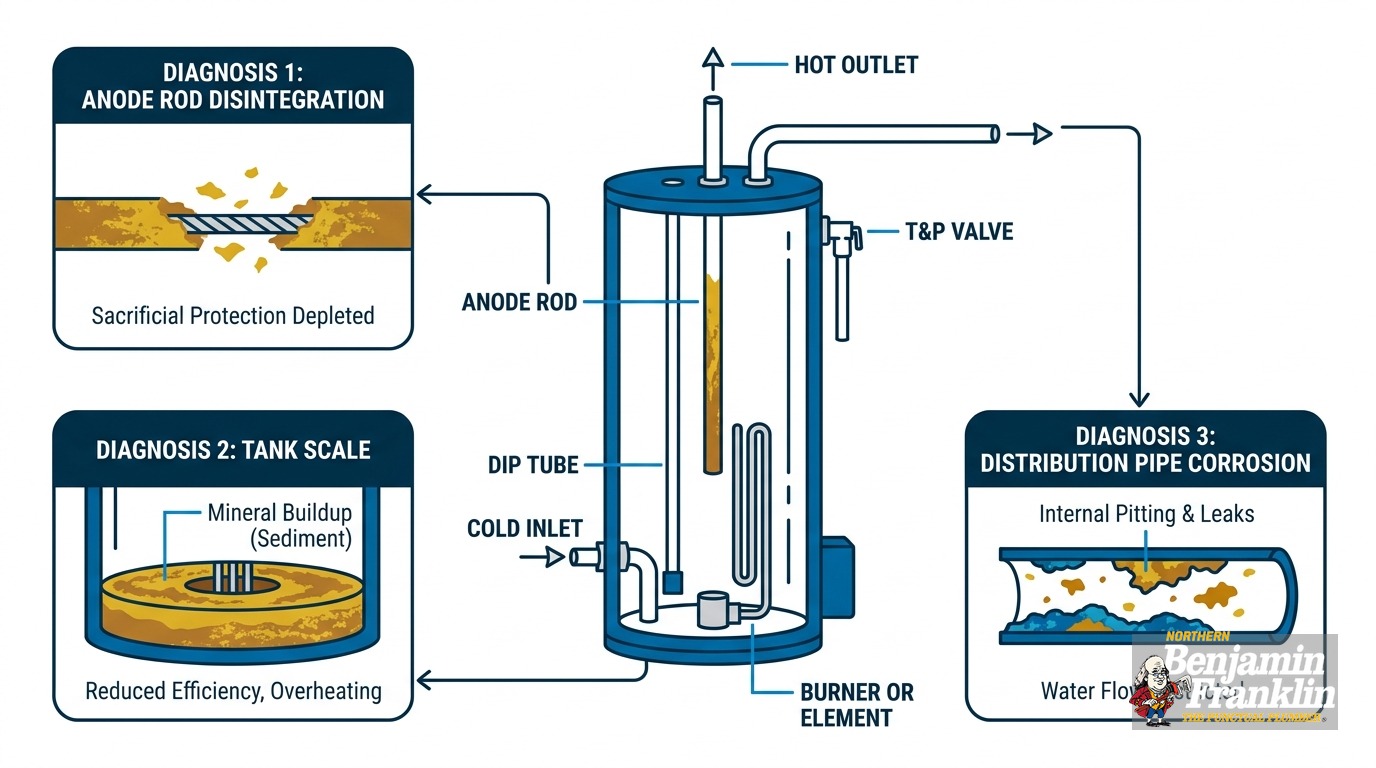
- Hot-water-only sediment comes from one of two places: calcium carbonate scale on the tank floor, or a disintegrating anode rod.
- Tan or sandy particles that settle quickly = calcium scale. Gray, metallic, crumbly grit that worsens after idle time = spent anode rod.
- A water softener accelerates anode rod depletion. If you have one, inspect the rod on a shorter schedule.
- Twin Cities homeowners replace water heaters 35% more often than the national average due to scale damage from regional hard water.
- Minnesota requires a permit for water heater replacement. A licensed plumber pulls it as part of the job.
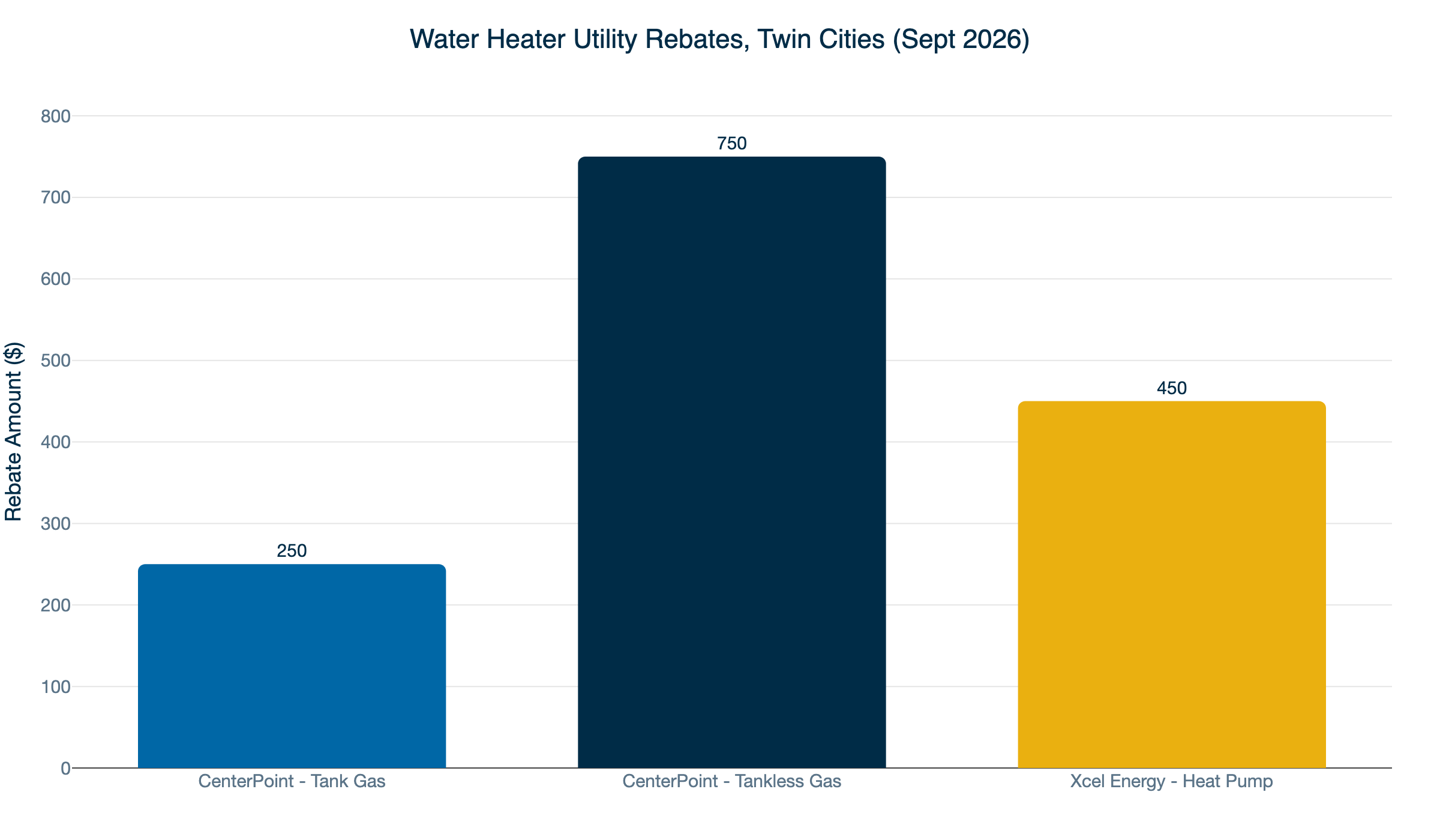
- CenterPoint Energy and Xcel Energy both offer rebates if you need a new unit.
You hold a glass of hot water up to the light and something is floating in it. Or you find grit at the bottom of a pan after boiling water on the stove. Sediment in hot water from tap is not automatically a water heater problem. It is a symptom with three distinct mechanical sources, each requiring a different fix. Knowing which one is responsible saves you from flushing a tank that does not need it - or missing one that is months from failing.
This guide walks you through a three-question protocol you can run yourself in under 10 minutes.
Is the Sediment Appearing in Hot Water Only, or Both Hot and Cold?
If sediment shows up only in hot water, the source is inside the water heater or the pipes immediately downstream. If it appears in both hot and cold taps, the heater is almost certainly not the cause. The source is upstream: corroding supply pipes, a deteriorating galvanized main, or a municipal distribution issue. A two-minute cold-tap glass test answers this before you go any further.
Fill a clear glass from a cold tap in the same room as the affected hot tap. Hold it to the light. Let it rest for two minutes without disturbing it. Then compare it to a glass of hot water from the same fixture. If both glasses carry similar particles, stop here. You are not dealing with a water heater problem.
A 2023 EPA review found sediment-related turbidity violations affected more than 1,000 public water systems. If neighbors are reporting the same issue, contact your water utility before spending money on the heater. Iron, manganese, and copper in municipal water carry EPA secondary standards only - they are aesthetic concerns at typical household concentrations, not enforceable health limits. But identifying the source is still the right first move.
If only the hot tap shows sediment, move to the next question.
What Does Sediment in Hot Water from the Tap Actually Look Like?
Particle appearance separates the three main sources more reliably than almost any other observation. Tan or sandy grains that settle quickly in a clear glass point to calcium scale. Gray or metallic, crumbly fragments that worsen after the tank sits idle point to a spent anode rod. Rust-brown flakes with a metallic taste, present in both hot and cold, point to corroding galvanized pipe.
Field diagnosis confirms this pattern: color and texture map reliably to source.
Fill a clean, clear glass from the hot tap after letting the water run for 20 seconds. Set it on a white surface in natural light and let it rest for five minutes before examining it.
Here is what to look for:
- Tan or sandy particles that drift to the bottom and look like fine beach sand or grain: calcium carbonate scale breaking loose from the tank floor.
- Gray or metallic, crumbly flakes - think pencil shavings or corroded metal fragments: anode rod disintegration. These appear more heavily after the heater has sat idle, such as after returning home from a trip.
- Rust-brown or reddish flakes with a metallic taste, also visible in the cold-water glass: corroding galvanized steel pipe upstream of the heater.
The third type, rust-brown in both taps, confirms the water heater is not the source. In that case, skip ahead to the pipe corrosion section below, or read our full guide to galvanized pipe replacement in older Twin Cities homes.
What Causes Tan or Sandy Sediment in Hot Water?
Tan, sandy particles in hot-water-only are almost always calcium carbonate scale. Hard water deposits calcium on the tank floor over time. Heat causes it to crystallize and harden into a layer. As the layer thickens, fragments break loose and exit through the hot-water outlet. The fix is a flush, but the underlying driver is water chemistry.
Minneapolis treated water runs at 5.4 gpg (92 ppm) as of May 2025. St. Paul’s Saint Paul Regional Water Services softens to a similar range. Both cities draw from the Mississippi and treat at the plant. For homes on those supplies, hardness is moderate but not zero. Scale still builds, just more slowly.
In the suburbs, the picture is different. Homes on private wells or on municipal supplies that do not soften can face 16+ gpg. Brooklyn Park municipal supply has tested at 547.8 ppm. Some private well water in the metro reaches 35 gpg. At those concentrations, scale accumulates fast, and the six-month flush interval matters.
Sediment left unflushed can shorten a water heater’s typical 8-12 year lifespan to six years or fewer. The scale layer acts as insulation between the burner and the water, forcing the heater to run longer and hotter. The tank floor overheats and fatigues over time.
An annual flush can recover up to 15% of energy efficiency. The DOE recommends flushing every 6-12 months, with the shorter interval for water above 7 gpg. If you have never flushed a tank you have owned for three or more years, it is overdue. Our post on flushing water heater sediment from the tank walks through the procedure step by step.
One caution on DIY flushing: a tank that has gone years without maintenance can have scale hardened into a thick, compacted layer. Opening the drain valve may produce only a trickle because sediment blocks the port. A professional flush uses higher-pressure techniques to clear that buildup and can assess whether the tank floor has been damaged by the heat stress. If scale returns quickly after a flush, or the flush barely moves the sediment, a whole-home softener or pre-filter addresses the source rather than the symptom. Our water softeners page covers options matched to Twin Cities hardness levels.
What Causes Gray or Metallic Grit in Hot Water?
Gray, metallic, crumbly particles that worsen after the tank has sat idle mean the anode rod is spent. The anode rod is a sacrificial magnesium or aluminum rod threaded into the top of every tank heater. It corrodes so the tank steel does not. When it disintegrates completely, it crumbles into grit and exits through the hot-water outlet. The tank is now corroding unprotected.
Every tank water heater ships with an anode rod. Without it, the tank would rust through from the inside within a few years. The rod works by being chemically sacrificed in place of the tank steel. It depletes gradually, and the homeowner rarely knows it until it fails.
The idle-tank test is the most reliable field indicator. If you return home from a trip and the first hot water you draw carries noticeably more grit, or a faint sulfur-adjacent odor, the rod is disintegrating. Particles settle to the tank floor while the water sits still. They resuspend when you open a hot tap.
Replacing a spent anode rod can double the remaining service life of the tank, per DOE guidance. The rod should be inspected starting around year two or three and replaced when worn to a thin wire core. Many homeowners never do this because there is no external indicator. Checking it requires draining part of the tank and removing the rod through the access fitting at the top.
Once the rod is gone, the follow-up question is whether the tank is still worth saving. A plumber can inspect the interior. If the steel floor shows pitting or significant corrosion, a new rod slows further damage but does not reverse it. A tank past 10 years old with a never-inspected anode has likely been corroding unprotected for years. At that stage, replacement is often the more cost-effective call.
Does a Water Softener Make Sediment Worse?
In one specific way, yes. Softened water is more chemically aggressive toward anode rods. The ion-exchange process removes the minerals that would otherwise buffer the water, producing water that depletes the sacrificial rod faster than untreated hard water would. Homeowners who install a softener without adjusting their inspection schedule frequently find a consumed rod ahead of schedule.
This is one of the most common causes of premature anode rod failure in the Twin Cities. A homeowner installs a softener to protect pipes and appliances from scale - which is the right call for water above 7 gpg. But the softened water then attacks the rod. Magnesium anode rods deplete significantly faster in softened water according to corrosion research.
The fix is a shorter inspection cycle. If you have a softener, start checking the rod at year one or two, not year three. Some manufacturers and plumbers recommend powered anode rods (also called impressed-current or electronic anodes) for homes on heavily softened water. A powered anode uses a small electrical current to protect the tank and does not deplete the same way a sacrificial rod does. Ask about this option during your next service visit.
For more on how water hardness interacts with water heater longevity, see our post on anode rods, hard water, and water heater life.
How Old Is Your Water Heater, and When Was the Anode Last Checked?
Age and maintenance history often resolve ambiguous particle appearance. A tank past eight years with a never-inspected anode rod almost certainly has a depleted rod. A tank under five years old showing sandy tan sediment is more likely dealing with scale. Age alone does not determine the problem, but it narrows the field considerably before you open the tank.
A standard tank water heater lasts 8-12 years with proper maintenance. Most reach the end of that range without the anode ever being inspected. The rod depletes faster in hard water, in softened water, and in tanks running at high temperature settings. None of those conditions are visible from the outside.
If your tank is between five and eight years old and shows gray metallic grit, an anode inspection is the right next step. If the tank is past 10 years old and shows the same grit, the decision becomes more complex. A plumber can pull the rod and assess the tank floor. That visit tells you whether a rod replacement saves the tank or whether a new unit is the better investment.
If your tank is past 12 years old - regardless of what you see in the water - it is worth having it evaluated on its own merits. Most units beyond that threshold are operating on borrowed time, even with proper maintenance.
Why Twin Cities Homes See Sediment in Hot Water More Often
The Twin Cities sits in a region of historically hard groundwater. Even homes connected to Minneapolis or St. Paul city water receive finished water at 5-5.4 gpg. Homes on private wells or suburban supplies that do not soften at the plant can face concentrations of 16+ gpg or well above.
Twin Cities homeowners replace water heaters 35% more often than the national average. Scale damage is the primary driver. This is not a national average mapped onto a local address. It is a regional pattern with predictable consequences.
Older housing stock compounds it. Roughly 65% of Minneapolis homes predate 1980. Many still have galvanized steel supply pipes. At 16.2 gpg, galvanized pipes in pre-1980 homes can lose 30-40% of flow capacity within 8-12 years. If sediment appears in cold water too, and you are in a pre-1980 Minneapolis or first-ring suburb home, galvanized pipe corrosion is the leading suspect. Flushing the water heater does nothing for that.
The combination of hard regional groundwater, aging pipe infrastructure, and a wide range of treatment levels across the metro means there is no single Twin Cities answer. Your address matters. A home in south Minneapolis on city water faces a different situation than a home in Chaska on a private well.
What Should You Do Once You Know the Source?
The fix depends entirely on which source the diagnostic identified. Scale calls for a flush and possibly water treatment. A spent anode rod calls for an inspection, and likely a replacement of rod or tank. Galvanized pipe corrosion calls for repiping. Each problem has one correct response. Taking the wrong action costs money and leaves the real problem in place.
Scale: Schedule a professional flush. For homes above 7 gpg, flush every six months. For moderate-hardness city water, annually is the minimum. If the flush barely moves a compacted layer, water treatment addresses the source rather than the symptom.
Spent anode rod: Call a licensed plumber to inspect and replace it. Do not treat this as a DIY project if the rod has been in place for five or more years. The access fitting can be corroded into place, and over-torquing it can crack the tank. During the same visit, ask the plumber to assess the tank floor condition. That single inspection determines whether a rod replacement saves the tank.
Galvanized pipe corrosion: A whole-house repipe is the only lasting fix. Flushing the water heater accomplishes nothing here because the heater is not the problem. Repiping also resolves low pressure, chronic discoloration, and metallic taste across all taps simultaneously.
Northern Benjamin Franklin Plumbing is locally owned and operated in the Twin Cities. Our team diagnoses the source, explains the options, and gets the work done on time. We back every visit with our On-Time Guarantee(R): we arrive in the window you pick, or we pay you $5 for every minute we are late, up to $300. “If there is any delay, it’s you we pay!” Financing is available for larger repairs like repiping or a full water heater replacement.
Call (763) 296-1844 or book online.
Do You Need a Permit to Replace a Water Heater in Minnesota?
Yes. Minnesota Plumbing Code (MN Rules Chapter 4714) requires a plumbing permit for water heater replacement. Gas units also require a separate gas permit under MN Rules Chapter 1346. Work must be done by a licensed plumber or a homesteading homeowner performing the work on their own property. When you hire a licensed plumber, permit pulling is part of the job.
The permit requirement exists to ensure the installation meets current code: the temperature and pressure relief valve, the expansion tank if you are on a closed system, and proper venting for gas units. Skipping it voids most manufacturer warranties. It can also create a problem when you sell the home, since a permit-free replacement shows up in a buyer’s inspection.
You do not arrange the permit separately when you work with a licensed plumber. They handle it.
Are There Rebates If You Need a New Water Heater?
Yes, for qualifying units. CenterPoint Energy and Xcel Energy both offer rebates as of September 2026. The federal 25C/25D tax credits expired December 31, 2025. Minnesota HEAR/HOMES rebate programs have not launched as of June 2026, with the state still awaiting DOE approval. Confirm current eligibility directly with your utility before committing to a unit.
Xcel Energy offers $400-$500 for heat pump water heaters installed by a participating contractor.
These figures belong to the utilities, not to us. Rebate amounts and terms change, and programs sometimes run out of funds mid-year. Check directly with CenterPoint or Xcel before purchasing a unit. When you call us, ask about financing options for the portion not covered by rebates.
Sediment in hot water from tap has a specific answer once you work through the three questions: which taps, what color and texture, and how old is the tank. Each question eliminates a source. The diagnostic takes less time than the first service call, and it tells you exactly which repair to authorize - and which ones to skip.
Northern Benjamin Franklin Plumbing handles water heater service, anode rod inspections, flush maintenance, and full replacements across the Twin Cities and greater Minnesota. Call (763) 296-1844 or book your appointment online.
Frequently Asked Questions
How do I tell if sediment in my hot water is from the anode rod or calcium scale? +
Can a water softener cause more sediment in my water heater? +
Does sediment in hot water mean I need a new water heater? +
Is it safe to drink hot water that has sediment in it? +
Need a technician now?