
Pipe Leak Behind Wall Minnesota: How Plumbers Find It

Key Takeaways
- Soft or stained drywall, peeling paint, a musty smell that will not clear, and an unexplained water bill increase are the most common warning signs of a hidden pipe leak.
- Licensed plumbers use thermal imaging cameras, acoustic leak detectors, and moisture meters to pinpoint leaks before cutting any wall.
- The EPA estimates the average household’s leaks waste more than 9,300 gallons of water per year. Fixing correctable leaks saves about 10% on water bills.
- The CDC recommends cleaning up and drying out within 24-48 hours after water intrusion to prevent mold growth.
- Any repair that opens a wall and replaces or reroutes supply piping in Minnesota requires a permit under MN Rules Chapter 4714.
- Both Minneapolis (104 ppm) and Saint Paul (90 ppm) have moderately hard water, which accelerates mineral corrosion in older copper pipes.
- Homeowner’s insurance typically covers sudden accidental leaks. Gradual leaks that went unaddressed are often denied on neglect grounds. Acting early protects your claim.
You cannot see it, but the signs are usually there. A soft spot on the drywall. Paint bubbling near the baseboard. A water bill that has climbed two months in a row with no change in your habits. A pipe leak behind a wall in a Minnesota home can run for weeks before anyone connects the dots. By the time the damage is obvious, it has usually spread well beyond the pipe.
This guide explains how plumbers find a hidden leak without demolishing a room, why the first 24-48 hours matter, and what the permit and insurance picture looks like in Minnesota.
What Are the Warning Signs of a Pipe Leak Behind a Wall?
Look for soft or discolored drywall, peeling paint, a musty smell near a specific wall, unexplained wet spots at the baseboard, or a water bill that keeps rising without a change in your habits. Any two of these signs in the same location are a reason to call a plumber the same day.
Hidden leaks rarely announce themselves all at once. One sign is easy to dismiss. Here is what to watch for and what each one usually means.
Drywall and paint changes. Press gently on the suspect area. Soft drywall means moisture has soaked into the material. Paint that blisters or peels from the surface - especially if it returns after you paint over it - indicates moisture working through from inside the wall cavity.
Persistent smell. A musty or earthy odor near a specific wall, cabinet, or closet that ventilation does not clear points to trapped moisture. Mold and mildew produce that smell as they grow, and they can take hold long before you see any visible damage.
Water bill increase. The EPA notes that many homes have leaks wasting significant amounts of water per day, and a family of four using more than 12,000 gallons per month likely has a significant leak somewhere. If your bill has gone up two consecutive months without a change in usage, water is leaving the system somewhere you are not using it.
Unexplained sounds. Running water when everything in the house is off, or a faint hissing near a particular wall, is worth investigating. Turn off the ice maker, the irrigation controller, and any whole-house appliance that uses water before concluding the sound has no source.
Flooring damage. Laminate that has begun to lift, hardwood that has buckled along a seam close to a wall, or tile grout that has cracked near an interior or exterior wall can all indicate water draining down from a leak above floor level.
How Do Plumbers Find a Hidden Leak Without Opening the Wall?
A licensed plumber uses a pressure test to confirm the leak is in the supply system, then applies thermal imaging, acoustic detection, and moisture metering to locate it. In most cases this produces one targeted cut rather than a stretch of demolished drywall.
The process starts with isolation. The plumber shuts off the water at the main, attaches a pressure gauge to an accessible fitting, and watches whether the reading holds. A pressure drop confirms a breach somewhere in the line. This step rules out drain leaks and condensation and narrows the search to supply piping before any detection tool comes out.
Thermal imaging comes next. A thermal camera reads surface temperature differences on the wall face. Water in a supply line is a different temperature than the surrounding drywall and framing. That difference registers as an anomaly on the camera’s display as the plumber sweeps the wall, narrowing the search zone from an entire wall to a few square feet.
Acoustic detection refines the location. Pressurized water escaping through a breach makes a sound - a hiss, a drip, a vibration - that travels through framing and drywall. An acoustic sensor amplifies that signal. The plumber moves it across the wall surface and the reading peaks near the source.
A moisture meter finishes the job. A non-invasive model measures the moisture content of the drywall without puncturing it. Elevated readings define the boundary of the wet zone and tell the plumber how much wall needs to open after the pipe is repaired.
Combined, these three tools give a skilled plumber a confident location before a single cut is made.
What Is the Best Service for Identifying Leaks Behind Walls or Floors?
Professional leak detection - sometimes called electronic leak detection or non-invasive leak detection - is the right call when a leak is not visible. It combines thermal imaging, acoustic sensors, and moisture metering with a licensed plumber’s working knowledge of how supply lines are typically routed in different eras of home construction.
General contractors and home inspectors can identify visible water damage. They cannot pressure-test a supply system or read the acoustic signature of a pressurized breach through drywall. A plumber with professional detection equipment finds the source faster, with less wall damage, and tells you what caused the failure - not just where it is.
That last detail matters more than it might seem. A pinhole from mineral corrosion and a failed fitting have different repairs. A pinhole in a 1960s copper line in a home with hard water may mean the rest of that run deserves attention too. A failed fitting is usually a targeted fix. Without knowing the cause, you may address the symptom and miss the underlying problem.
For Twin Cities homeowners: look for a licensed Minnesota plumber specifically. The Minnesota Department of Labor and Industry issues plumbing licenses, and the permit that follows any wall-opening repair is tied to that license. Unlicensed work cannot be permitted and may not survive an insurance or resale inspection.
The Mold Clock: Why 24-48 Hours Is the Number That Matters
Finding a pipe leak behind a wall quickly is not only about saving drywall. It is about stopping mold before it establishes.
The CDC recommends cleaning up and drying out within 24-48 hours after water intrusion to prevent mold from taking hold. Once mold is established behind a wall, the scope of work changes significantly. Remediation typically requires removing the drywall, treating the framing, and replacing any insulation that has absorbed moisture. That work goes well beyond the plumbing repair.
The health impact is real. The CDC links indoor mold exposure to upper respiratory symptoms, coughing, wheezing, burning eyes, and skin rash in otherwise healthy adults. For anyone with asthma, allergies, or a compromised immune system, the effects can be more severe and can include lung infections.
A hidden leak that ran for two weeks before anyone noticed has had fourteen times the window recommended to dry out. That does not guarantee mold is present - ventilation, temperature, and humidity all factor in - but the risk compounds with every day the moisture stays in the wall.
The practical rule: when you notice a warning sign, call the same day.
What Happens If Water Gets Behind Brick or Masonry?
Water behind brick keeps moving. Brick is porous and carries moisture inward toward framing and insulation. The difference from drywall is that brick hides the damage longer. By the time you see a visible sign on the exterior - efflorescence on the face or staining around a mortar joint - moisture may have been present inside the wall for weeks.
For older Twin Cities homes with brick exterior walls, a supply line leak in an exterior wall cavity can feed the masonry from the inside. Minnesota’s freeze-thaw cycle accelerates the damage. Water that works into a mortar joint expands when it freezes, opening the joint a little wider each cycle. That pattern repeats every winter until the joint is visibly compromised.
The plumbing repair is the same as for any wall: locate the source, open a targeted section, obtain a permit, repair or reroute the pipe, dry the cavity, and confirm mold is not present. What differs is that the masonry may need separate attention afterward - tuck-pointing the damaged joints and sealing the face to slow future moisture entry.
If you see unexplained interior staining near an exterior brick wall in a home where the supply lines are more than 30 years old, it is worth calling a plumber and a mason in the same week.
Does a Pipe Repair Behind a Wall Require a Permit in Minnesota?
Yes. Any repair that opens a wall and replaces or reroutes supply piping requires a plumbing permit under Minnesota Rules Chapter 4714, administered by the Minnesota Department of Labor and Industry. A licensed plumber handles the permit as part of the job. You do not pull it yourself.
The permit exists to protect you. It means the work is done by a licensed professional and inspected before the wall is closed. That record matters in two real situations.
First, insurance claims. Documentation of permitted, inspected work is a much stronger position than a receipt from an unlicensed handyman. Insurers look at the quality and legality of prior repairs when evaluating a related water damage claim.
Second, resale. Unpermitted plumbing work is a common trigger for a buyer’s request to re-open the wall, a price reduction, or a requirement to redo the work with a permit before closing. A permit costs far less than any of those outcomes.
Also worth noting: MN Rules 4714.0609 requires supply piping inside exterior walls to be insulated or heat-taped. If the leaking pipe was in an exterior wall and that protection was missing or had deteriorated, the repair is the right time to bring the insulation into compliance and prevent the same failure next winter.
Will Homeowner’s Insurance Cover a Hidden Pipe Leak?
It depends on the claim type. A sudden, accidental event - a burst pipe, a blown fitting - is typically covered under a standard homeowner’s policy. A gradual leak that went unaddressed for months is often denied on neglect grounds. Acting at the first warning sign is the most effective way to keep a future claim viable.
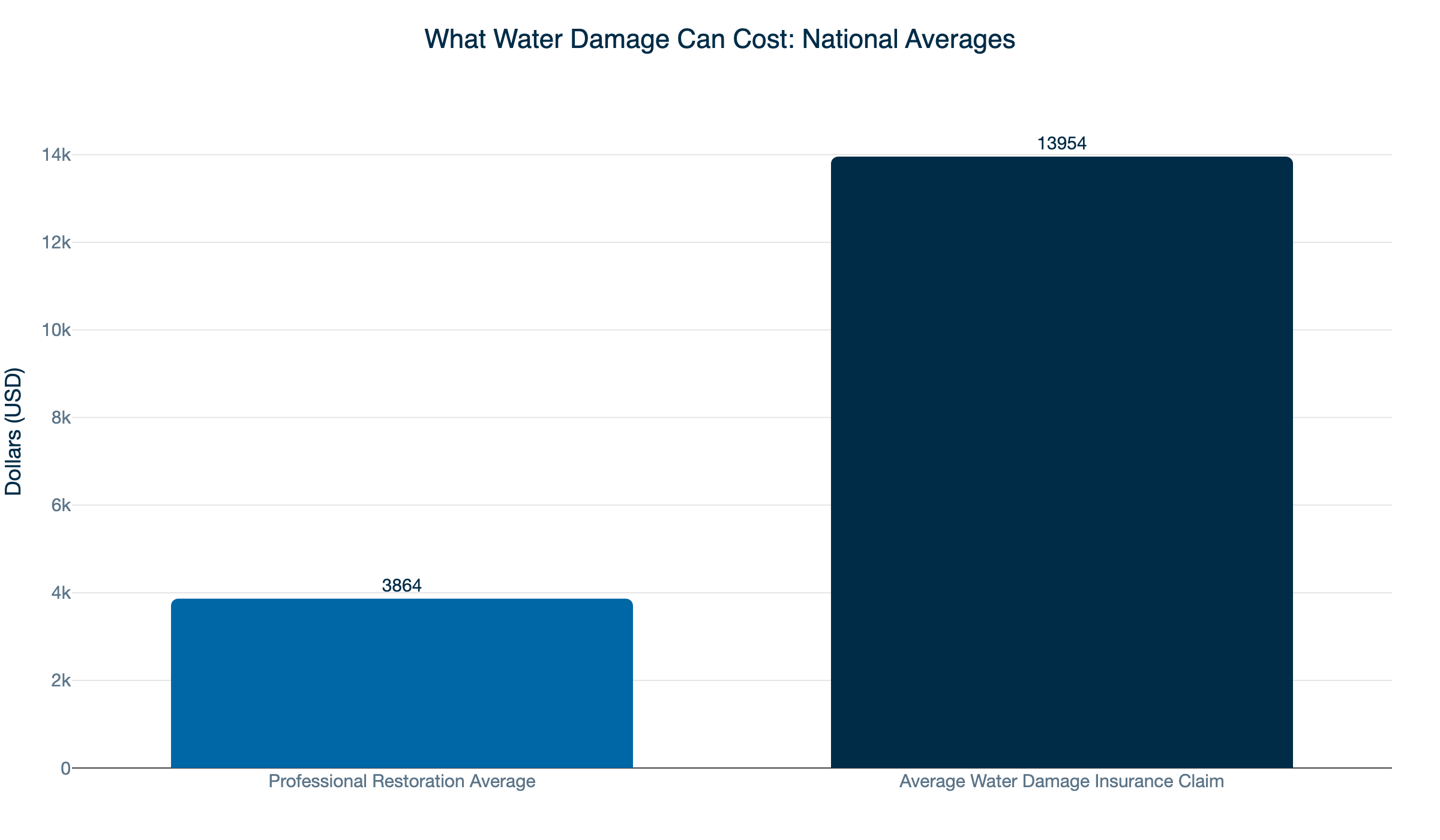
Water damage and freezing claims averaged $13,954 per claim across insured homes, per the Insurance Information Institute. Professional restoration work alone averages $3,864, ranging from $1,383 to $6,378 depending on the scope, according to the same source. A standard homeowner’s policy is designed to help absorb that kind of exposure when the event is sudden and the homeowner acted promptly.
The gradual-leak denial scenario works like this. A slow drip runs behind a wall for months and causes mold and structural damage. The insurer reviews the claim and finds evidence the homeowner had warning signs well before the loss date: a water bill that climbed months earlier, staining visible in older photos. The insurer denies on the grounds that a reasonable homeowner would have noticed and acted before the damage reached this level.
Water and freezing claims account for a large share of all home insurance claims, making them the second-leading cause of claims behind wind and hail. About 1 in 60 insured homes files one each year. This is not a rare event, and it is exactly the kind of claim that turns on whether the homeowner acted quickly.
Why Twin Cities Homes Carry Extra Risk
A few factors specific to the Twin Cities make hidden pipe leaks more likely here than in most other metro areas.
Water hardness. Minneapolis treated water runs hard and Saint Paul is comparably hard. Both cities draw from the Mississippi River and both are classified moderately hard. Over years, mineral scale builds inside copper supply lines, narrows the bore, and raises the effective pressure at constriction points. That accelerates pinhole corrosion. Our guide to copper pipe pinhole leaks in Minnesota covers what to look for and when a full repipe makes more sense than a targeted patch.
Housing stock age. A large share of Twin Cities homes were built between the 1950s and 1970s with copper supply lines that are now 50 to 70 years old. Copper at that age, in moderately hard water, without a water softener, is at elevated corrosion risk. A single pinhole in a run that old is often the first of several.
Exterior wall exposure. Minnesota’s frost depth in the Twin Cities zone is 42 inches. Supply piping inside exterior walls must be insulated or heat-taped under state code. When that protection has deteriorated or was never installed, the pipe faces freeze-thaw stress every winter. That stress opens micro-fractures that eventually become leaks. Our post on protecting crawl space pipes through a Minnesota winter goes deeper on how freeze cycles damage supply piping in Minnesota homes.
December is when in-wall freeze risk peaks for supply lines in exterior and exterior-adjacent walls. Why December pushes your plumbing to the edge is worth reading before the cold arrives.
What to Do Right Now If You Suspect a Leak
Check your water meter. Turn off every water source in the house: every faucet, the ice maker, the irrigation controller, and any appliance that uses water. Find your meter - typically at the street curb or in the basement utility area - and watch it for 15 minutes. If the dial or digital display moves with everything off, water is leaving the system somewhere.
Find your main shutoff valve. If you have a visible wet area or any sign of active leaking, shutting off the main stops the flow immediately. Locate it now, before you need it in a hurry.
Call the same day. The 24-48 hour mold window makes this a same-day call, not a next-week appointment. Northern Benjamin Franklin Plumbing is locally owned and operated in the Twin Cities. Our leak detection service uses the non-invasive tools described in this post to locate the source before any wall is opened. We back every visit with the On-Time Guarantee(R): arrive in the window you choose, or we pay you $5 for every minute we are late, up to $300. If there is any delay, it’s you we pay!
Call (763) 296-1844 or book online. The sooner a plumber locates the leak, the smaller the repair, the smaller the mold risk, and the stronger your position if an insurance claim follows.
Frequently Asked Questions
How do I trace a plumbing leak inside a wall? +
Can I fix a pipe leak behind a wall myself? +
Need a technician now?