
Bidet Installation Plumber Twin Cities: Do You Need One?
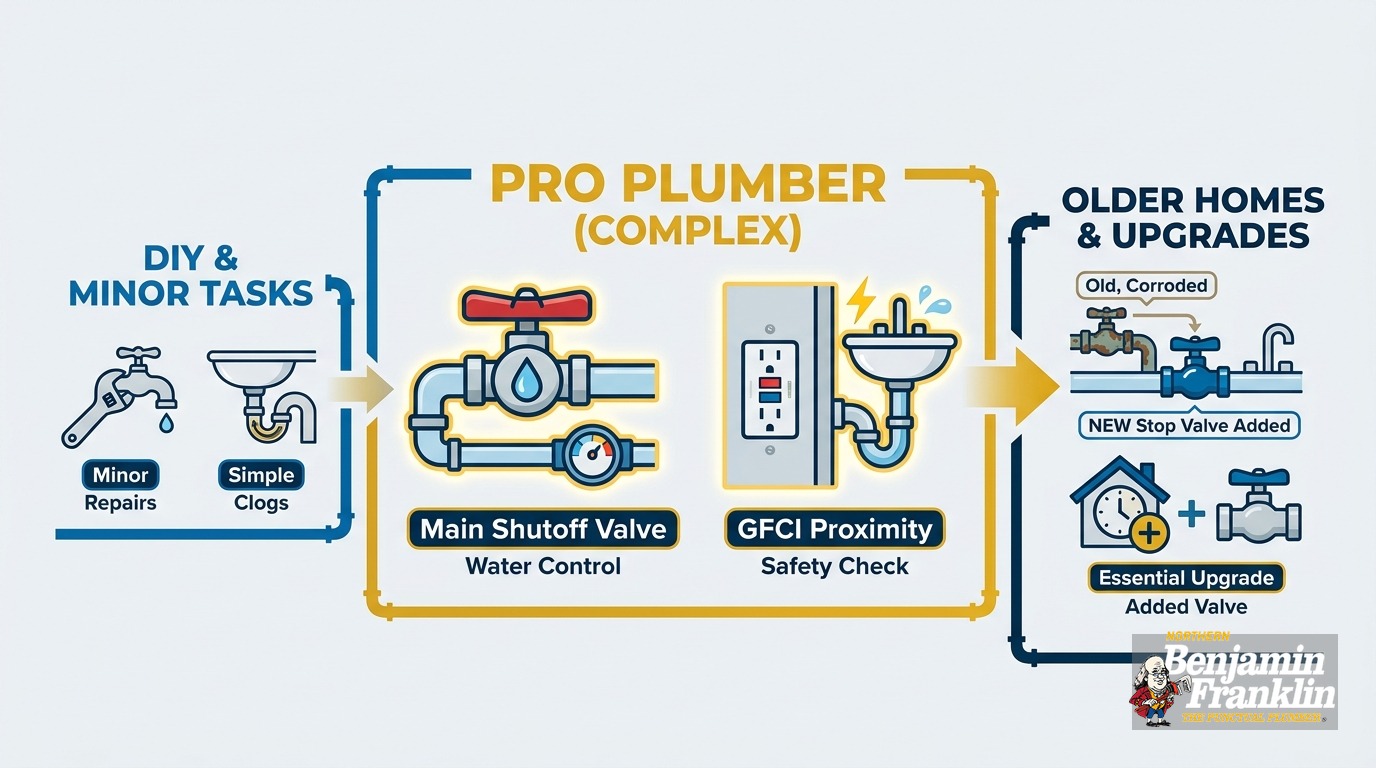
Key Takeaways
- A bidet attachment or seat is typically DIY if your toilet shutoff valve closes cleanly and a GFCI-protected outlet is within reach.
- Twin Cities homes built before roughly 1980 often fail both tests. Aging gate valves and original angle stops seize when turned. Pre-GFCI bathrooms often lack a compliant outlet near the toilet.
- On most bidet calls, the plumber is not installing the bidet. They are replacing a seized shutoff valve, upgrading a brittle supply line, or adding a valve where none exists.
- Standalone floor-mount bidets always require a licensed plumber and a Minnesota plumbing permit.
- Minneapolis water runs at about 6.1 grains per gallon; St. Paul at about 5 GPG. That moderate hardness causes scale buildup in bidet fittings over time.
- Call (763) 296-1844 or book online before you buy a unit to confirm what your bathroom actually needs.
Most homeowners searching for a bidet installation plumber in the Twin Cities are asking one question: do I actually need a plumber, or can I handle this myself? The answer comes down to two things your bathroom may or may not have. If both are in place, a bidet attachment is a legitimate weekend project. If either one is broken or missing, a professional comes first.
What separates the Twin Cities from the generic how-to guides is the housing stock. A significant portion of the metro was built before 1980. That changes the calculation in ways the national guides do not address.
Do I Need a Plumber to Install a Bidet?
It depends on the bidet type and the condition of your existing rough plumbing. A bidet attachment or seat is often a DIY project if the toilet shutoff valve closes cleanly and a GFCI outlet is nearby. A standalone floor-mount bidet always requires a licensed plumber and a Minnesota permit.
Bidet seats and attachments mount on the toilet and tap the existing fill valve supply line with a T-adapter. The work is closer to swapping out a toilet supply hose than to new plumbing. The BuildWithRise installation guide puts the install at around 30 minutes on a bathroom with working hardware.
That phrase, “working hardware,” is carrying a lot. National how-to guides assume a functional shutoff valve and a code-compliant outlet. In a pre-1980 Twin Cities bathroom, those assumptions frequently do not hold. The guides note this in a single sentence and move on. The rest of this post does not.
A standalone floor-mount bidet is a different job entirely. It needs dedicated hot and cold supply lines and its own drain connection tied into the stack. Minnesota Plumbing Code Chapter 4714 requires a permit for any fixture installation, addition, or alteration. That job belongs with a licensed plumber.
What Are the Two Preconditions Your Bathroom Must Pass?
Before you order hardware, your bathroom must clear two checks: the toilet shutoff valve closes fully and reopens without leaking, and a GFCI-protected outlet is within cord reach of the toilet seat for electric units. Pass both and a bidet attachment is a DIY project. Fail either one and a professional comes first.
Test the shutoff valve before you buy anything. It is the small handle or knob on the supply line at the wall or floor behind your toilet. Turn it clockwise. It should move freely and stop the water. Open it back. If it is stiff, stuck, or shows any leak at the stem, that valve needs to be replaced before any bidet hardware is connected.
For electric seats, locate the nearest outlet. A GFCI-protected outlet has a small test and reset button on the face plate. If no outlet exists near the toilet, or if the existing one lacks GFCI protection, a licensed electrician handles that before the seat is installed.
Non-electric bidet attachments skip the electrical check entirely. Cold water only, no outlet needed.
The problem with skipping these checks is that the failure happens at the worst moment. You have already bought the hardware. You have already disconnected the supply line. The valve lets go when you finally turn it and now you are managing a water emergency instead of a Saturday project. Two minutes checking the valve before you order anything is the right sequence.
What Is a Toilet Shutoff Valve and Why Does It Matter?
The toilet shutoff, also called an angle stop, is the valve on the supply line at the wall or floor behind the toilet. A bidet install requires you to close it, add a T-adapter to the supply connection, and reconnect the line. If the valve cannot close fully or the packing fails when turned, water runs until the main shutoff is cut.
The angle stop is typically a 1/2-inch inlet, 3/8-inch compression outlet valve. Modern installations use a quarter-turn ball valve: one handle movement stops the water. In older homes, the standard was a multi-turn gate-style valve that requires 8 to 12 full turns to close. These have often not been turned since the day they were installed.
Multi-turn valves and aging angle stops corrode from the inside. The stem packing hardens. Mineral deposits work into the seat and threads. When the valve is turned for the first time in 20 or 30 years, the packing can fail or the stem can crack. Water flows until the main shutoff is found and cut.
This failure mode is common in older Twin Cities homes. Our post on what to do when a shutoff valve is stuck or corroded covers the warning signs and what repair looks like. If your valve shows any of those signs, replace it before the bidet project starts, not during it.
Why Do Older Twin Cities Homes Fail the Shutoff Test?
Homes built before about 1980 commonly have gate-style shutoff valves, original angle stops, and rigid chrome supply lines. These parts were made to last, but not to be exercised repeatedly. Moderately hard municipal water works mineral scale into the stems over years of disuse. Replacing them before a bidet project is routine prep, not a surprise add-on.
Minneapolis water hardness sits at about 6.1 grains per gallon, per the city’s January 2025 monthly water analysis. St. Paul finished water runs around 5 GPG after lime softening at the treatment plant. At 5 to 6 GPG, the water is moderately hard. That is below the level that usually demands a whole-home softener, but it is enough to leave mineral scale inside small fittings and on valve stems over years of service.
A 1955 Minneapolis home may have its original angle stop, never touched since a renovation in the 1970s. The supply line may be the original rigid chrome, which becomes brittle compared to modern braided stainless. When a plumber arrives for a bidet prep visit, the first move is turning the valve by hand. If it does not move freely, replacing it on that same visit is the right call. That is also the right time to replace the aged angle stop and upgrade the supply line to braided stainless.
Some older bathrooms have no individual toilet shutoff at all. The supply line runs directly from a stub-out in the floor or wall with no valve in the run. Adding one requires cutting into the supply line, connecting the new valve, and in Minnesota, pulling a plumbing permit.
What Electrical Work Does an Electric Bidet Require?
Electric bidet seats need a 120V outlet within cord reach of the toilet, on a GFCI-protected circuit. Under NEC 210.8(A)(1), all 125V to 250V bathroom receptacles require GFCI protection. Any new outlet added for a bidet must meet current code regardless of when the bathroom was originally wired.
Minnesota adopted the 2023 NEC. The NEC GFCI requirement applies to all bathroom receptacles. NEC 210.11(C)(3) also requires at least one 20-amp circuit serving bathroom receptacle outlets.
Existing outlets are not required to be upgraded unless the circuit is altered. But any new outlet added specifically for the bidet must land on a GFCI-protected circuit. GFCI bathroom wiring requirements apply to new work even when the surrounding electrical dates from an earlier era.
The electrical scope and the plumbing scope are separate. A licensed electrician handles the outlet installation. A plumber handles the shutoff and supply line. If your bathroom already has a functioning GFCI outlet close to the toilet, the electrician may not be needed at all. A non-electric bidet attachment removes the electrical question from the conversation entirely.
When Does Bidet Work Require a Permit in Minnesota?
Under Minnesota Plumbing Code Chapter 4714, any installation, addition, alteration, or replacement of a plumbing fixture requires a permit. Adding a shutoff valve where none exists and installing a standalone bidet both trigger that requirement. A bidet seat or attachment using the existing shutoff and supply connection typically does not.
Homeowners who live in the home can pull their own plumbing permit for work they do themselves. Licensed contractors must hold a Plumbing Contractor (PC) license and a licensed Master Plumber of Record on the job. When a plumber performs the shutoff replacement or the standalone bidet rough-in, the permit is part of their scope.
Minnesota Plumbing Code 4714.0410 also sets a maximum discharge temperature for bidets: 110 degrees Fahrenheit, controlled by an ASSE 1070-rated limiting device or a code-compliant water heater. This matters for standalone units connected to a hot water supply. Cold-water-only bidet attachments are outside the scope of that requirement.
Knowing whether a permit is required before work begins saves time and avoids stop-work situations. A plumber who discovers mid-project that a permit was not pulled has a problem. Confirming the scope upfront is the right order of operations.
Which Types of Bidet Need a Licensed Plumber?
Not every bidet is the same scope of work. The type determines whether you need a plumber, an electrician, or both, and whether a permit enters the picture at all.
Non-electric bidet attachment (cold water only): Taps the existing toilet supply line with a T-adapter. DIY if the shutoff valve closes cleanly. No permit needed when no new plumbing is added. No electrician needed.
Electric bidet seat: The plumbing side mirrors the non-electric: T-adapter to the existing supply line. A licensed electrician handles any new GFCI outlet required. If the shutoff valve is seized or absent, a plumber replaces or adds it first, which may trigger a permit. The seat plugs in once both trades have finished.
Standalone floor-mount bidet: New hot and cold supply lines, a dedicated drain connection, and a permit. Always a licensed plumber. This is the same category as having a plumber install a new toilet in an existing bathroom: rough-in plumbing, permit, inspection.
Wall-hung or integrated bidet toilet: Similar scope to the standalone. New supply rough-in, dedicated drain, electrical connection, permit. These units often have manufacturer-specific installation requirements and benefit from a plumber familiar with the model.
The dividing line is the drain. A seat or attachment uses the toilet’s existing trap and drain. Any fixture that needs its own drain connection runs through the permit and licensed-plumber requirement.
What Does a Plumber Actually Do on a Bidet Call?
The plumber is not installing the bidet. They are getting the rough plumbing to a state where the DIY install can proceed safely, or where the full standalone rough-in can be inspected and approved. On a typical older-home call in Minneapolis, Coon Rapids, or Bloomington, the visit covers several concrete steps.
First, inspect the shutoff valve. Turn it by hand in both directions. Confirm it closes fully and reopens without a leak at the stem. If it is stuck, corroded, or a gate-style multi-turn type, replace it with a quarter-turn ball valve on the same visit.
Second, check the supply line. If it is the original rigid chrome, replace it with braided stainless. A chrome line from the 1960s can be brittle. Disconnecting it to install a T-adapter is sometimes enough force to crack it.
Third, if no shutoff exists, add one. This means cutting into the supply line, installing the new valve, and pulling a permit. The plumber handles the permit filing.
Fourth, for standalone bidet installations: rough in hot and cold supply lines to the bidet location, tie into the existing drain stack, pull the required permit, and schedule the inspection before any wall is closed.
The bidet attachment or seat hardware sometimes goes on during the same visit. More often, the homeowner finishes that step once the plumbing is confirmed and the water is back on.
Northern Benjamin Franklin Plumbing is locally owned and operated in the Twin Cities. Our On-Time Guarantee(R) means we arrive in the window you choose, or we pay you $5 for every minute we run late, up to $300. “If there is any delay, it’s you we pay!” Call (763) 296-1844 or book online to schedule a shutoff valve inspection before your bidet project begins.
What About the Cost of Bidet Installation?
Cost depends entirely on what the rough plumbing needs before any bidet hardware goes on. A functional shutoff and no valve work means minimal or no plumber involvement. A seized valve, a missing angle stop, and a brittle chrome supply line means a full service call. Call (763) 296-1844 for a quote tied to what your bathroom actually has.
A bidet attachment on a fully functional toilet with an existing working shutoff and no electrical needs is close to a zero-labor plumbing project. The hardware goes on. The homeowner handles it.
The invoice grows when the shutoff needs replacement, when a new valve must be added to a supply run that has none, or when the supply line is original chrome and needs upgrading. These are real plumbing jobs. Labor, materials, and permit cost vary with the condition of the existing rough plumbing, the pipe material in the wall, and access.
We do not publish a flat rate because a 1963 St. Paul bathroom with an original gate valve and no individual toilet shutoff is not the same job as a 2004 Maple Grove home where the shutoff turns freely. The right number comes from assessing your actual bathroom, not from a national average.
For context on how permit-required plumbing projects are scoped in older Twin Cities homes, our post on sewer cleanout installation in older homes walks through a similar category of work: what the plumber evaluates, why pre-1980 housing changes the scope, and how permit requirements apply to work that may not look complicated from the outside.
Call (763) 296-1844 or book online. We will tell you what your bathroom needs before you buy the hardware.
Hard Water and Your Bidet Over Time
Minneapolis and St. Paul water at 5 to 6 GPG is not aggressive enough to demand a softener for most homeowners, but it accumulates inside small fittings. The T-adapter, spray nozzle, and internal filter screen on a bidet seat are exactly where scale builds up over months of use.
Non-electric attachments are easy to disconnect and soak in a descaling solution once or twice a year. Electric seats typically include a nozzle self-clean cycle, but the inlet filter screen should be checked annually in moderately hard water. Scale on a small screen reduces flow pressure before any other symptom appears.
The longer concern is the shutoff valve. A new quarter-turn ball valve installed as part of the bidet prep will move freely for years. An original gate valve left in place continues to accumulate scale. The next time that valve needs to be turned, for a repair or another project down the road, it carries the same failure risk it carried on day one.
If hard water is causing repeated problems elsewhere in the house, aerator clogs, buildup on showerheads, sediment accumulating in the water heater, a softener evaluation may be worth folding into a larger plumbing visit. That is a separate project from the bidet, but the same underlying water chemistry runs through both.
Frequently Asked Questions
Will a plumber install a bidet? +
How much do plumbers charge to install a bidet? +
How much does it cost to install a bidet toilet? +
Need a technician now?