
Garbage Disposal Humming but Not Working: Jam or Dead Motor?
Key Takeaways
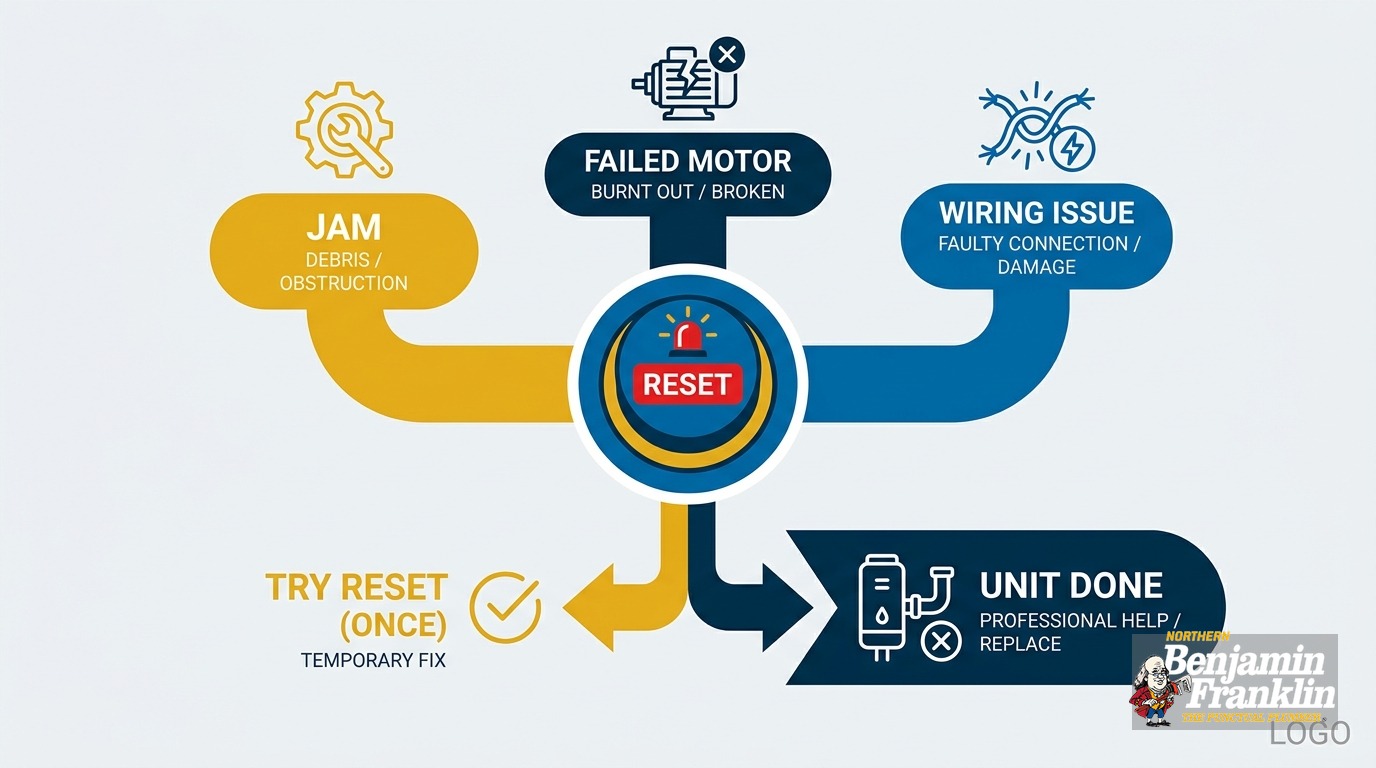
- A humming disposal has one of three causes: a jammed flywheel, an electrical fault, or a failing motor. The reset button’s position before you press it tells you which.
- Reset button popped out (~1/4 inch): Thermal overload tripped. Classic jam. Clear the flywheel, then press reset.
- Reset button flush with the housing: The overload did not trip. Check for a tight mechanical jam first, then the GFCI outlet, then the start capacitor.
- Reset won’t stay in after you clear the jam: Motor is drawing excess current with the flywheel free. The unit is failing and needs replacement.
- A flat, steady hum usually means a solid object is wedged tight. A hum with a rattle or clatter usually means loose debris.
- Age gates the decision: under five years, almost always a jam. Over ten years with repeat reset trips, the unit is in its end-of-life window.
- Minneapolis and St. Paul water runs 7-7.6 grains per gallon. Mineral scale from that water accelerates false-jam symptoms in older units.
- Disposal replacement in Minneapolis does not require a plumbing permit. Many surrounding suburbs do. Confirm with your city before work starts.
What Causes a Garbage Disposal Humming but Not Working?
Your garbage disposal is humming but not working. The motor has power. You can hear it drawing current. But the grinding plate will not turn.
That hum is not random noise - it is a specific message. The electrical path to the motor is intact. What it cannot do is drive the flywheel through whatever is stopping it. Depending on which cause you are dealing with, the fix takes five minutes or the unit is done.
The gap in most online guides is that they walk you through the Allen-wrench-and-reset-button steps as if every humming disposal has a jam. That is true most of the time. But if those steps did not solve it, or if the reset button keeps tripping, you are in a different diagnostic branch that needs a different answer.
This post frames the diagnosis as a decision tree. The first branch point is the reset button’s position before you touch it. That single observation routes you to the right fix without wasted steps.
What Does the Reset Button Tell You Before You Touch It?
Quick answer: A button popped out roughly 1/4 inch means the thermal overload tripped from stall heat - you almost certainly have a jam. A flush button means the overload never triggered, pointing to a very tight jam, a tripped GFCI, a wiring fault, or a failing start capacitor. Most homeowners treat the reset as a fix step. It is actually a diagnostic instrument.
The reset is a thermal overload protector built into the base of the unit. When a disposal jams, the motor keeps trying to turn against a locked load. Stall current runs 3-5 times normal running current, so the motor heats up within seconds. The overload trips, cutting power to protect the windings, and the button pops out roughly 1/4 inch from the housing. It will not reset until the motor cools - typically 10-15 minutes.
What each state means:
Button popped out: Thermal overload tripped. The motor stalled, overheated fast, and the safety cut in. This is the most common pattern. Start with the jam-clearing steps in the next section.
Button flush: The overload did not trip. Either the stall resolved before the motor could overheat (a very tight jam that stopped the motor almost instantly), or the problem is a tripped GFCI outlet, a wiring fault, or the start capacitor. None of those causes the button to pop.
Button won’t stay in after clearing the jam: You freed the flywheel, waited for cooling, pressed reset, it clicked in - and when you restored power the unit hummed and the button popped back out within seconds. No mechanical obstruction. No GFCI trip. The motor is drawing excess current with no jam to explain it. That is motor failure.
Understanding which of those three states you are in before you do anything else routes you correctly the first time.
Is Your Garbage Disposal Humming Because of a Jam?
Quick answer: Most likely yes. A jam is by far the most common reason a garbage disposal hums but will not spin. Clearing it takes a 1/4-inch Allen wrench and about five minutes. If the reset button was popped when you found it, start here.
A solid object - a bone fragment, a fruit pit, a coin, or a small utensil - falls between the impeller and the shredder ring. The motor tries to drive the flywheel. It cannot. It stalls, overheats, and the thermal overload trips.
Steps to clear a jammed disposal:
- Kill power at both points. Turn off the wall switch, then flip the circuit breaker for the disposal. Do not rely on the switch alone.
- Find the hex socket on the bottom of the unit. It sits centered on the base plate. Almost every residential disposal has a 1/4-inch socket there. If the unit came with a wrench, it is the short L-shaped hex key in the box. Any standard Allen key works.
- Work the flywheel with the wrench. Turn back and forth, not in one direction only. You may feel the resistance give way when the object breaks free. Keep working until the flywheel rotates freely in both directions.
- Inspect the drain opening with a flashlight. If you can see what caused the jam, use tongs or needle-nose pliers to remove it. Never put your fingers into the disposal for any reason.
- Wait for the motor to cool. If the reset button is popped out, give it 10-15 minutes.
- Press the reset button firmly. You will feel a click. If it pops back out immediately, skip to the motor failure section below.
- Run cold water, then switch the unit on. Cold water solidifies grease and helps flush debris. Let the disposal run 30-60 seconds after the grinding noise stops.
If the unit runs normally after those steps, you are done. Running cold water after every use and cutting hard or fibrous foods into smaller pieces before they go down significantly reduces the frequency of future jams. Our Twin Cities garbage disposal maintenance guide covers the full routine.
What Does the Hum Sound Like? Two Diagnostic Clues
Quick answer: A flat, continuous hum means a solid object is fully wedged between the impeller and the shredder ring. A hum with a rattle, clunk, or rhythmic clatter means loose debris that is not fully blocking rotation - those jams often clear faster once you insert the wrench.
Sound gives you a second data point before you open the cabinet.
A flat, steady hum indicates a solid object is firmly lodged and blocking all rotation. The motor is working as hard as it can and getting nowhere. This is the pattern most likely to overheat the motor and pop the reset button.
A hum with a rattle or rhythmic clatter means the debris is not fully wedged. The flywheel may be turning partially on each cycle. This pattern often clears with less effort - the object dislodges as soon as you give the flywheel a little movement with the wrench.
A third sound is relevant to the motor failure cases covered later: grinding or rattling that started weeks or months before the disposal stopped working entirely. That is bearing wear announcing itself before the motor fails. If your disposal was audibly rough for a while and then one day just hummed without spinning, the bearing deterioration explains the sequence.
What If the Reset Button Is Flush but the Disposal Still Hums?
Quick answer: The overload did not trip, which means the stall may have been too fast for heat to build, the GFCI outlet may have tripped, or the start capacitor is failing. Work through those in order before calling for service.
This is the diagnostic branch that most guides skip entirely.
Try the Allen wrench anyway. A very tight jam can stop the motor so instantly that the overload has no time to trip. Even with the button flush, run through the jam-clearing steps above. If the flywheel was stuck and you freed it, test the unit again.
Check the GFCI outlet. Under NEC 2023, all kitchen receptacles require GFCI protection - including the disposal outlet, whether the unit is cord-connected or hardwired through a GFCI breaker. A GFCI outlet that trips when you flip the disposal switch is flagging an electrical fault, not a mechanical one. Find the GFCI outlet (often under the sink or on a nearby counter), press its Reset button, and try the disposal again. A GFCI that keeps tripping on disposal startup is a signal to stop using the unit and have a licensed plumber or electrician inspect the wiring.
The start capacitor. If the flywheel turns freely, the GFCI is not tripping, the wiring looks solid, and the unit still hums without spinning, the start capacitor is the first suspect on units 8 or more years old. The capacitor provides the brief current surge that gets the motor from rest to running speed. When it fails, the motor receives steady power and hums but cannot overcome starting inertia. The part itself runs $5-15. But distinguishing a failing capacitor from a seized bearing or early motor failure is a judgment call that a plumber can make faster under the sink than most homeowners can from above.
What If the Reset Button Won’t Stay In After You Clear the Jam?
Quick answer: The motor is still drawing excess current even with the flywheel moving freely. That is motor failure. InSinkErator’s own support documentation states directly: if a disposal continues to hum when it turns freely, a new disposal is necessary. No reset will change that.
Here is the sequence that triggers this section: you cleared the jam, the flywheel turns freely in both directions, you waited 15 minutes for the motor to cool, you pressed the reset and it clicked in - and the moment you restored power and flipped the switch, the unit hummed and the button popped back out within seconds.
The motor is the diagnosis. Damaged windings, a bearing seized enough to create electrical drag, or a motor that has simply reached the end of its service life - any of those conditions makes the motor draw current above the overload threshold with no mechanical jam to explain it.
Signs that confirm the motor is done:
- Acrid burnt-plastic smell when the unit is off. Motor winding insulation has degraded. This smell is distinctive and does not come from food residue.
- Reset pops within one or two seconds of power restoration. The motor cannot approach running speed before it is already drawing too much current.
- Grinding or rattling noise in the weeks before failure. Bearing wear announces itself before the motor dies. If your disposal was audibly unhealthy for a while before it started humming and stalling, the bearing deterioration explains the progression.
Motor replacement costs more than disposal replacement for most residential units. When the motor is the problem, replacement is the answer.
When Should You Replace a Garbage Disposal Instead of Repairing It?
Quick answer: Replace if the unit is over 10 years old and the reset keeps tripping without a clear jam, if the motor smells burnt, or if the reset pops immediately after you confirm the flywheel is free. Repair if the unit is under five years old and a single identifiable jam is the clear cause.
The NAHB Study of Life Expectancy of Home Components puts the average garbage disposal lifespan at 12 years, with an industry range of 8-15 years. Budget 1/3-1/2 HP models sit at the low end, typically 5-8 years. Premium 3/4-1 HP units reach 12-15 years.
Use age as the first gate:
Under 5 years: Almost always a jam, a tripped GFCI, or a capacitor issue. Repair is almost always the right call. Call for service if the steps above do not resolve it.
5-8 years: Mostly still repairable. Clear the jam and monitor. If the reset keeps tripping over the following weeks with no identifiable obstruction, the unit is entering early aging territory. The economics of repair versus replacement are worth discussing with a plumber at that point.
8-12 years: The capacitor is the first component to evaluate. A $5-15 capacitor swap at year 8 is a reasonable call. At year 11 with a humming motor, a burnt smell, or the second tripping episode in six months, replacement makes more financial sense.
Over 12 years: Replace. Even if this specific hum turns out to be a clearable jam, the unit is past its median lifespan. Entry-level replacement disposals run $80-120, plus roughly 30 minutes of installation labor.
Frequency matters more than isolated incidents. One jam at year four is normal wear. Two jams in three months at year nine, or any jam at year 12 after years of smooth operation - look at the pattern alongside the age.
Our garbage disposal installation and replacement service includes a direct condition assessment so you get a straight repair-or-replace answer before any work begins.
Does Twin Cities Hard Water Speed Up Garbage Disposal Failure?
Quick answer: Yes. Minneapolis and St. Paul water runs 7-7.6 grains per gallon of hardness. Over years of use, mineral scale deposits on the shredder ring and grinding chamber. On units 8 or more years old, that scale can narrow the interior clearance enough to create false-jam symptoms under grinding load, even when the flywheel turns freely by hand.
This is the one angle no national guide covers, and it matters specifically if you live in the Twin Cities metro.
Minneapolis water hardness sits at approximately 120 ppm or 7 grains per gallon; St. Paul runs about 130 ppm or 7.6 GPG - both classified as moderately hard. Every grinding cycle sends that mineral-laden water through the disposal chamber. Over years, calcium and magnesium deposit as scale on the shredder ring and interior walls.
Here is the diagnostic problem that creates: on a new disposal, the clearance between the impeller and the shredder ring is designed for food waste. On a unit with 8-10 years of scale buildup, that clearance has narrowed. Turn the flywheel by hand and it spins freely - the scale is not blocking it at low force. Run the disposal under actual grinding load, and the motor now works against tighter tolerances and stalls.
This is the false-jam pattern: you clear what looks like a jam, the flywheel is free, the reset holds - and the same thing happens again the following week. No object came back. The scale did not go anywhere.
The ice-and-salt treatment can knock some surface scale loose: run the disposal with a cup of ice and two tablespoons of coarse salt, then flush with cold water. On a unit already 8-10 years old with a documented false-jam history, this buys weeks, not years. Hard water accelerates the aging timeline, and a water softener on a new replacement unit slows that accumulation going forward.
For more on what Twin Cities water hardness means for your plumbing and appliances, see our post on water hardness in Minneapolis and St. Paul.
Do You Need a Permit to Replace a Garbage Disposal in the Twin Cities?
Quick answer: In Minneapolis, no. Disposal replacement and new installation in one- and two-family dwellings is exempt from the plumbing permit requirement per Minneapolis Construction Code Services. In many Twin Cities suburbs, including Coon Rapids and Minnetonka, a permit is required. Confirm with your city before any work starts.
This matters more than most homeowners expect.
An unpermitted installation does not necessarily invalidate the work, but it creates a documentation gap that can surface during a home sale inspection. Some homeowner’s insurance policies require permitted work for interior system replacements. A five-minute call to your city’s building and inspections department removes any ambiguity before a job starts.
If you are within Minneapolis proper, you are in the clear for a disposal swap. If you are anywhere in the surrounding suburbs - and the Twin Cities metro covers dozens of cities with their own municipal codes - assume a permit is required unless you confirm otherwise. The list of suburbs that require one is not short.
When our team handles a garbage disposal replacement or new installation in a suburb that requires a permit, we pull the permit as part of the job. You do not need to track down the city requirements on your own.
Call Northern Benjamin Franklin Plumbing
Most garbage disposal humming-but-not-working situations end one of two ways: a five-minute jam fix or a clear sign the unit is done. The reset button tells you which branch you are on. The age of the unit and the sound of the hum sharpen the decision from there.
If you cleared the jam and the disposal is running normally, you are done. If the reset keeps tripping, the motor smells burnt, the unit is approaching 10-12 years, or you simply want a straight answer from someone who does this every day - that is what we are here for.
Northern Benjamin Franklin Plumbing is locally owned and operated, serving Minneapolis, St. Paul, Blaine, Bloomington, Brooklyn Park, Coon Rapids, Maple Grove, and the surrounding Twin Cities metro. We show up in the window we commit to. That is the On-Time Guarantee(R): if there is any delay, it’s you we pay!
Call us at (763) 296-1844 or book online.
Frequently Asked Questions
Why is my garbage disposal humming but not spinning? +
How do I fix a jammed garbage disposal that hums? +
How long does a garbage disposal last? +
Does hard water in Minneapolis or St. Paul affect garbage disposal life? +
Do I need a permit to replace a garbage disposal in Minneapolis? +
Need a technician now?